What’s on My Hook, Loom and Wheel

In my last post, I shared some of the lessons I’ve learned throughout my crafting journey. This week, I thought I’d open the door to my studio and give you a glimpse of what’s currently keeping my hands busy.

If you’ve read my blog for a while, you’ll know that I rarely have just one project on the go. When I first learned to knit and crochet as a child, my Mum insisted that I finish one project before starting another. It was a sensible rule… but one that didn’t survive into adulthood!

These days, I have works in progress strategically dotted around the house so that, whatever the mood or the weather, there’s always something waiting for me.

On my loom this week

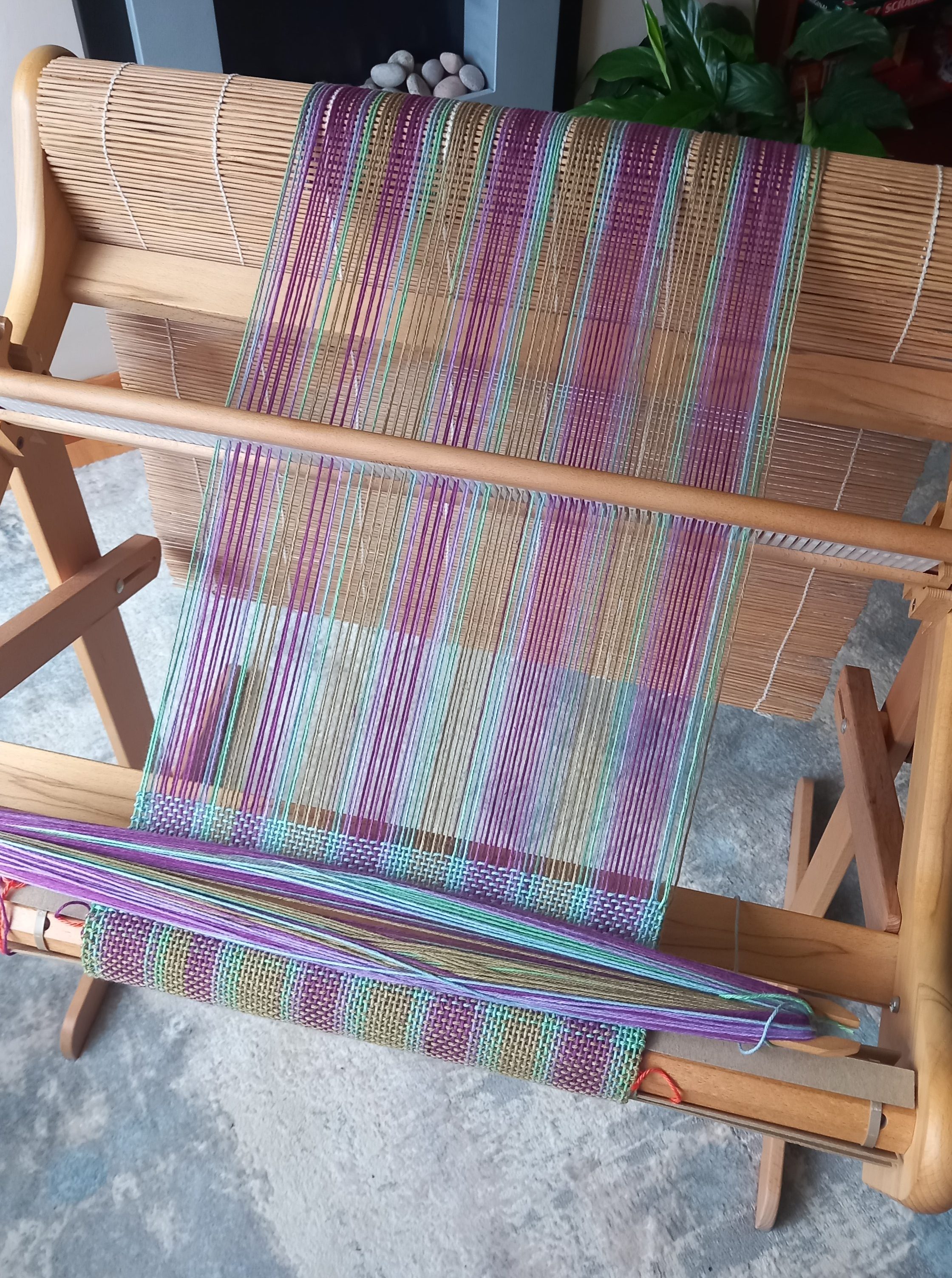
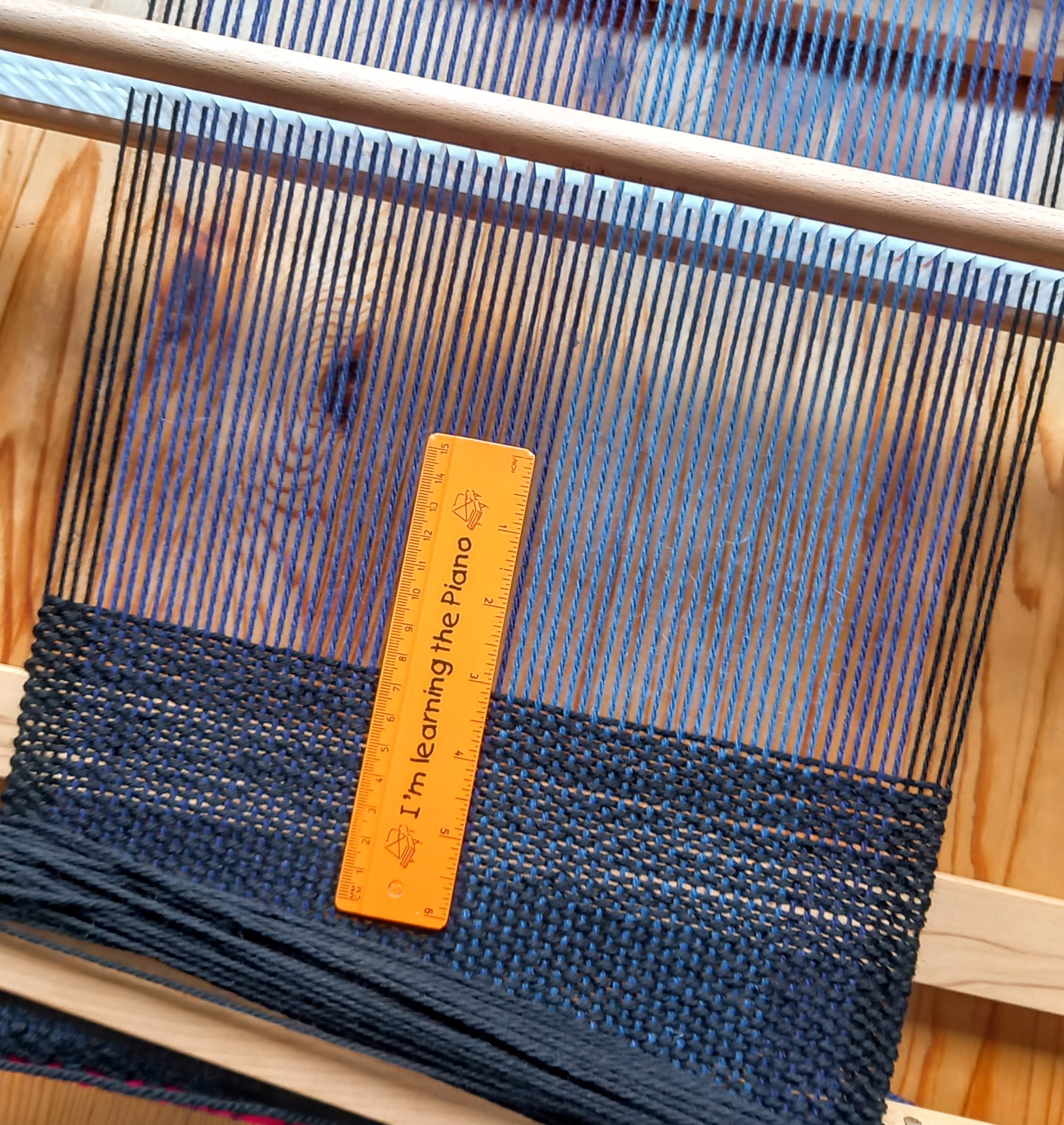
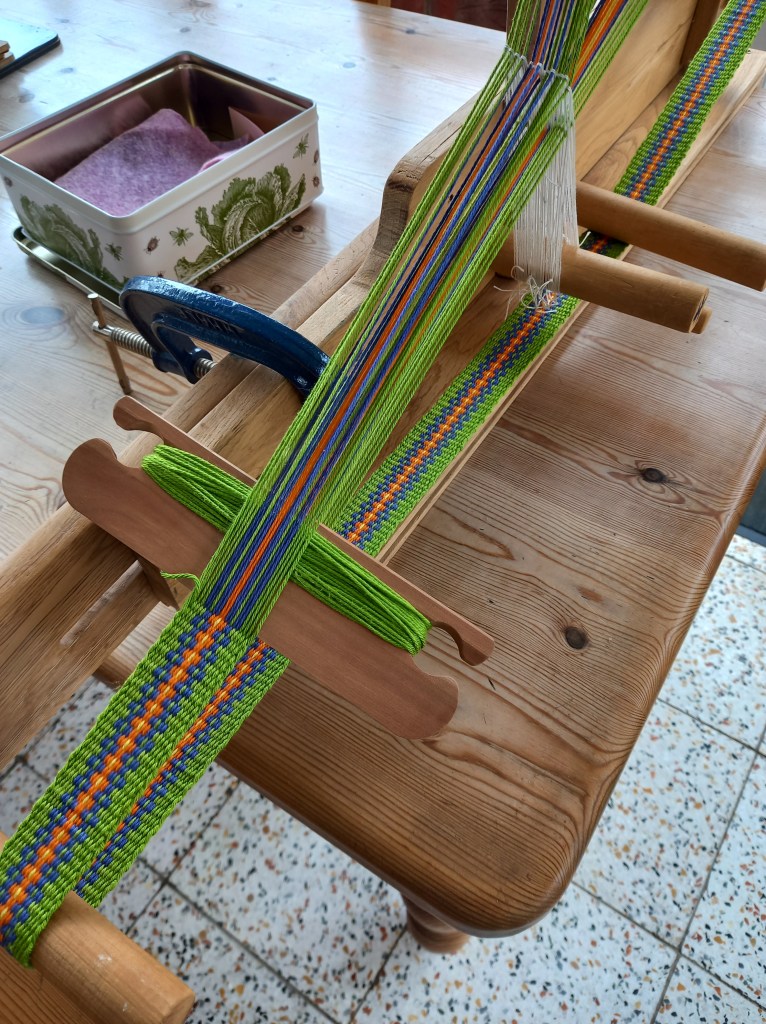
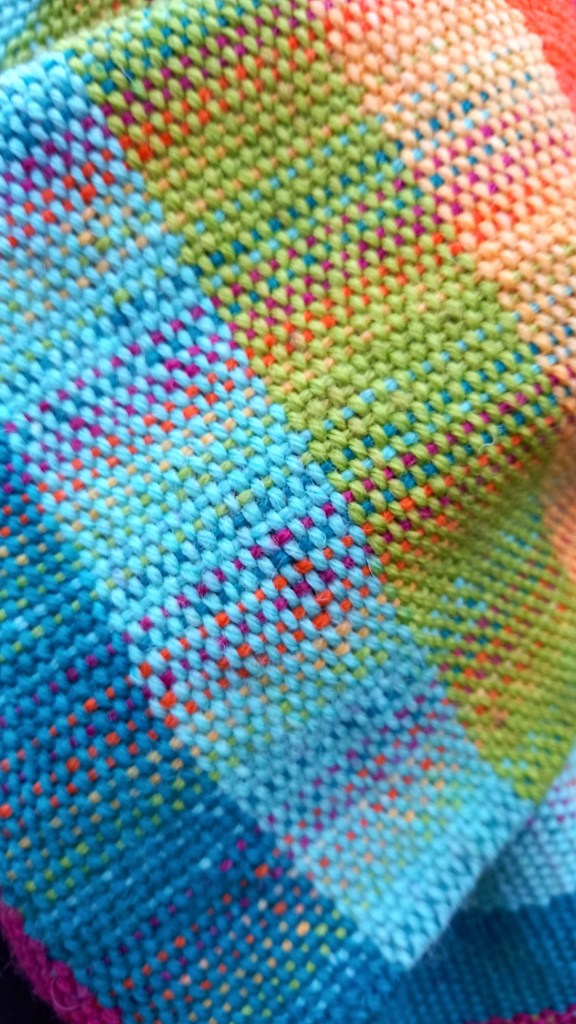
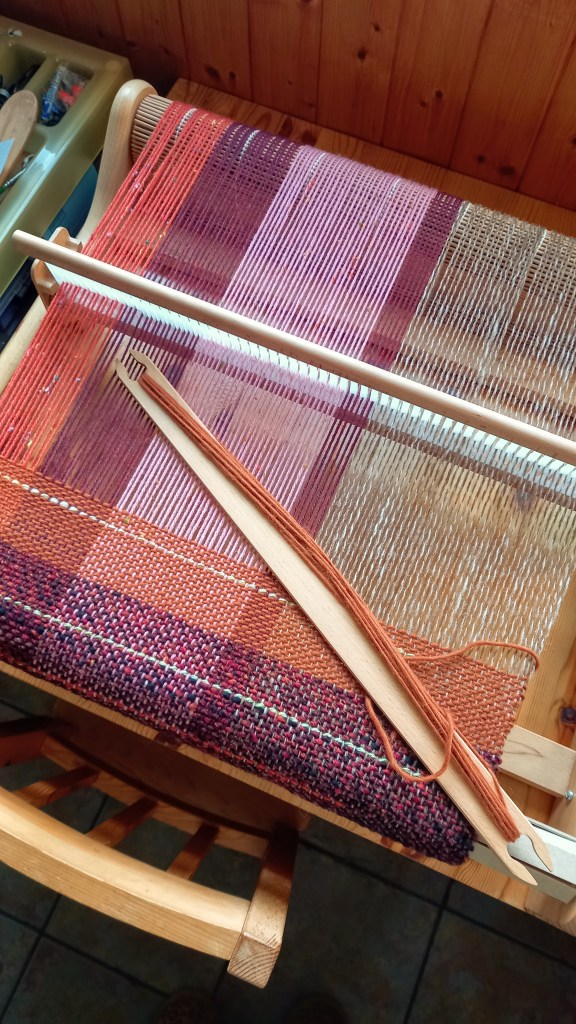
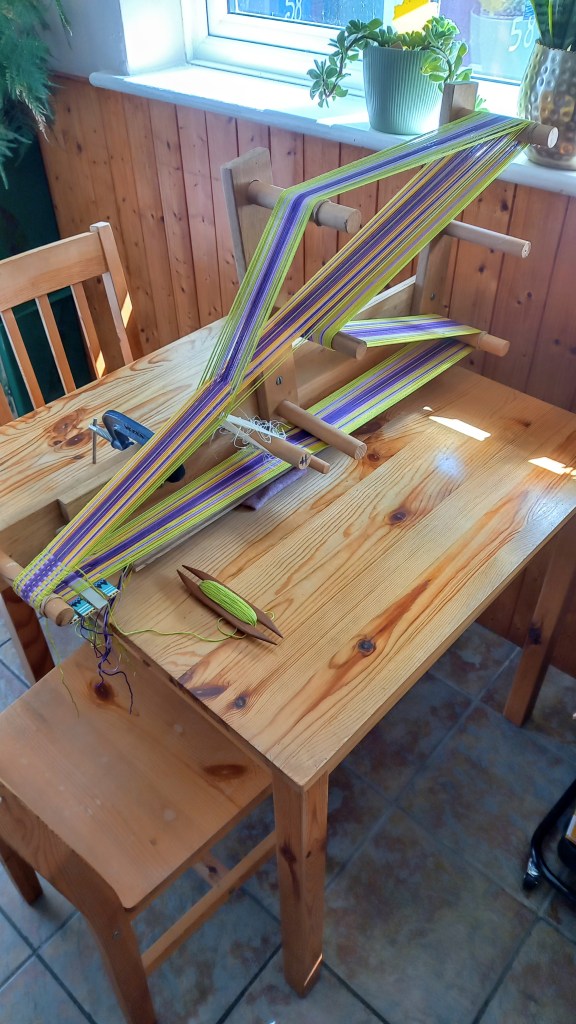
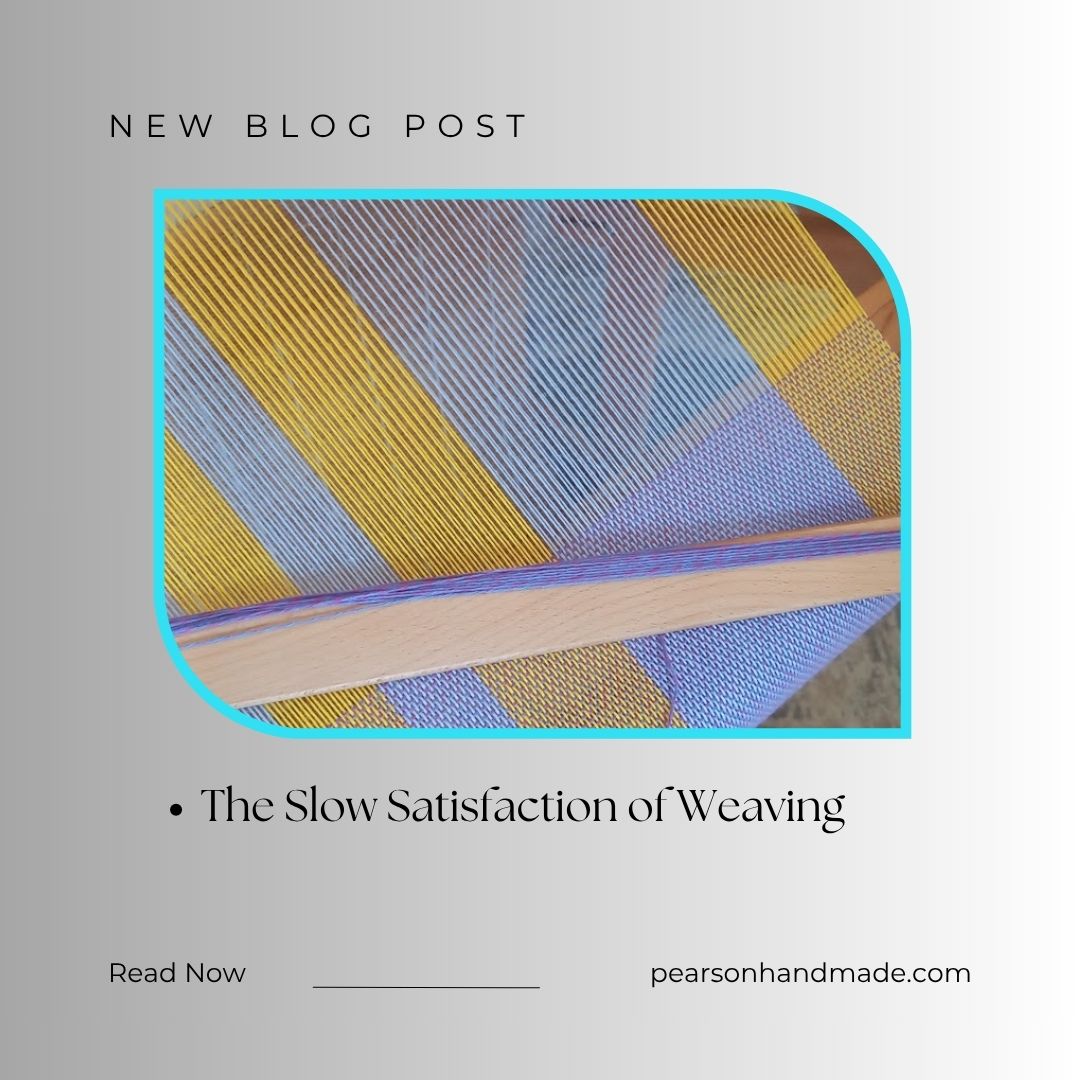
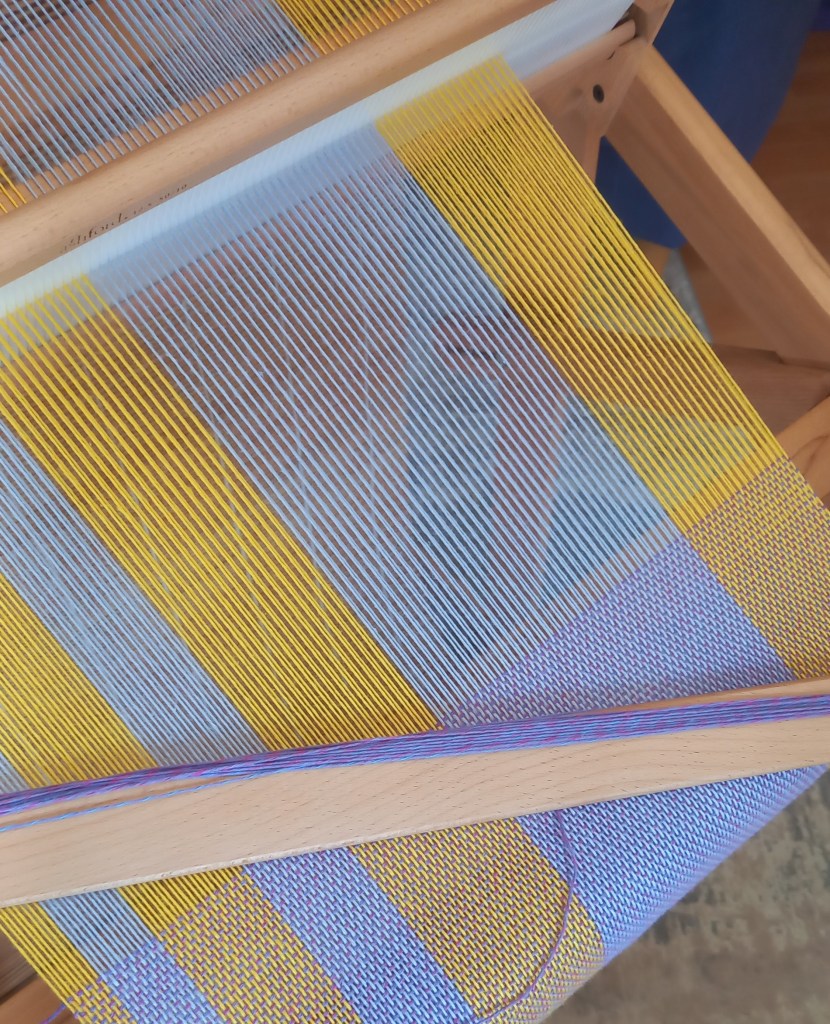
Recently I’ve been weaving with a lot of aran and DK handspun, so I fancied a change. This project uses commercial fingering-weight sock yarn, and I decided to challenge myself by warping my loom with the finest heddle I own.

I’ll admit, the warp took far longer than I’d expected. Setting it up became a project in itself, completed over several sessions with plenty of tea breaks in between.

I’ve used two solid colours for the warp, paired with a long-gradient yarn for the weft. Because it’s a cotton and acrylic blend rather than wool, the threads behave very differently—they don’t have that slight “stickiness” that wool naturally provides, so the weaving feels quite different.

My only regret is that I didn’t make the warp a little wider. I suspect I’ll have far more of the beautiful gradient yarn left over than I’d planned. Still, every project teaches me something, and that’s all part of the fun.

On my wheel this week

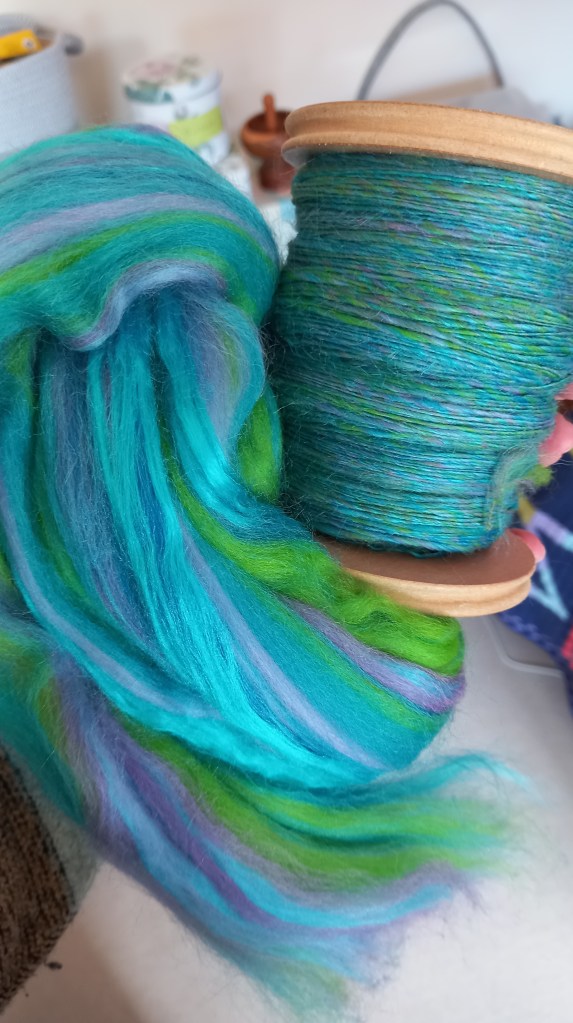
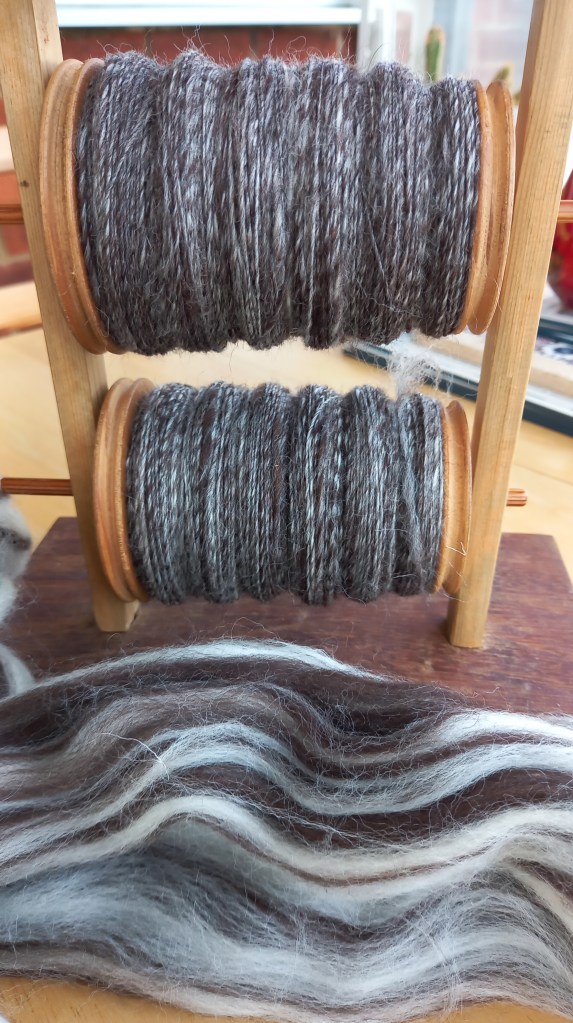
I’m nearing the end of spinning 200g of one of my favourite fibre blends in a colourway I’ve never tried before.

The combed tops came from Velvet Sixpence, and I picked them up at Wonderwool Wales earlier this year. Watching the colours blend together has been an absolute joy, and I’m especially pleased with how consistent the yarn has become as my spinning continues to improve.

I’m already wondering what it might become. A scarf? A waistcoat? Something else entirely? For now, I’ll just enjoy finishing the spin before making any decisions.

On my hook this week

This is where my inability to stick to just one project really becomes obvious.

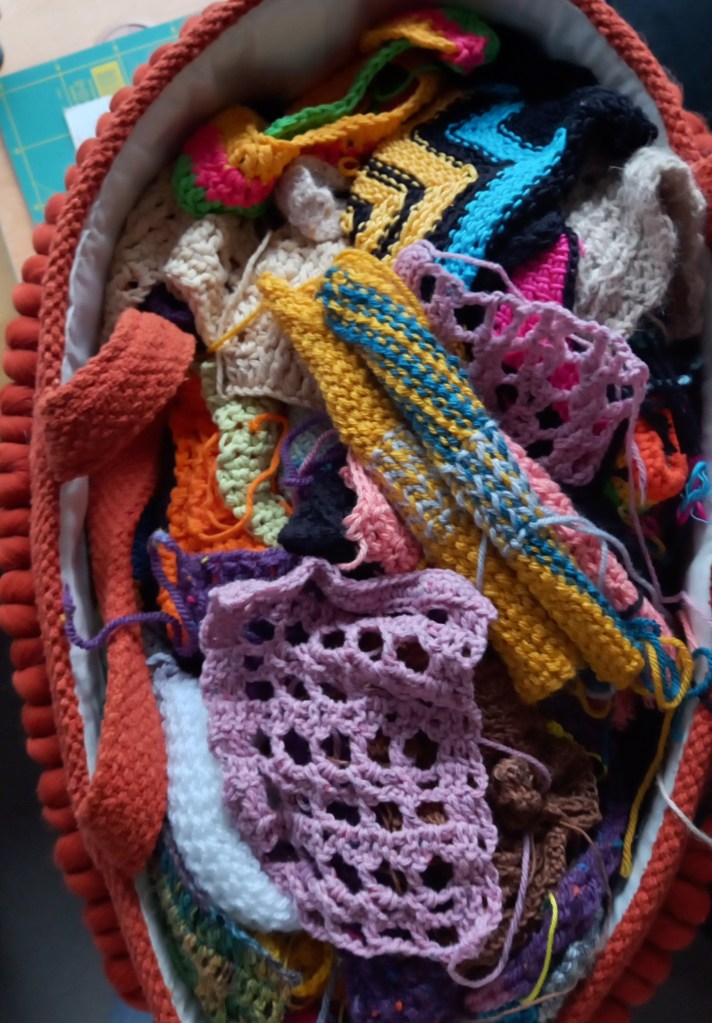
Each crochet project lives in its own storage crate, making it easy to pick up whichever one suits the moment.

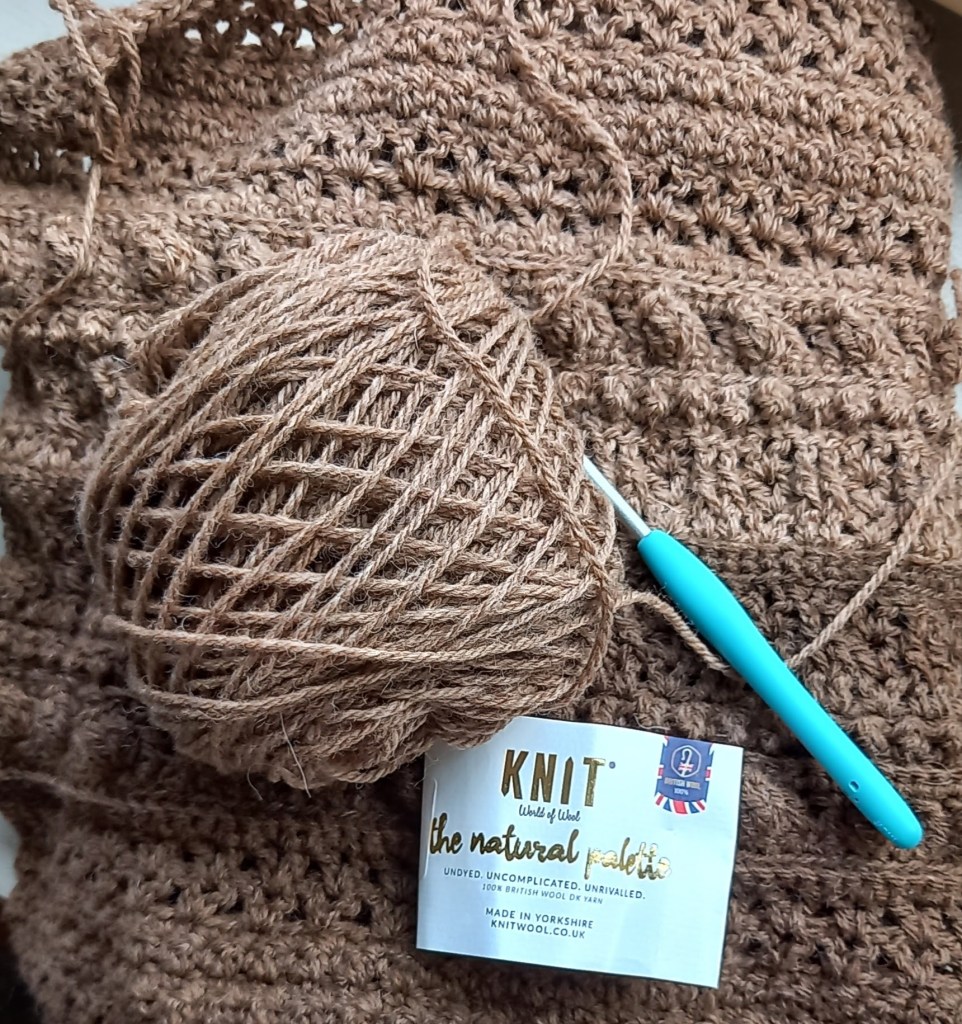
The largest is a cosy winter throw worked in beautiful undyed yarn from World of Wool. Unsurprisingly, it’s not getting as much attention as it deserves during the current heatwave—having a growing blanket spread across your lap isn’t the most appealing way to spend a warm afternoon!

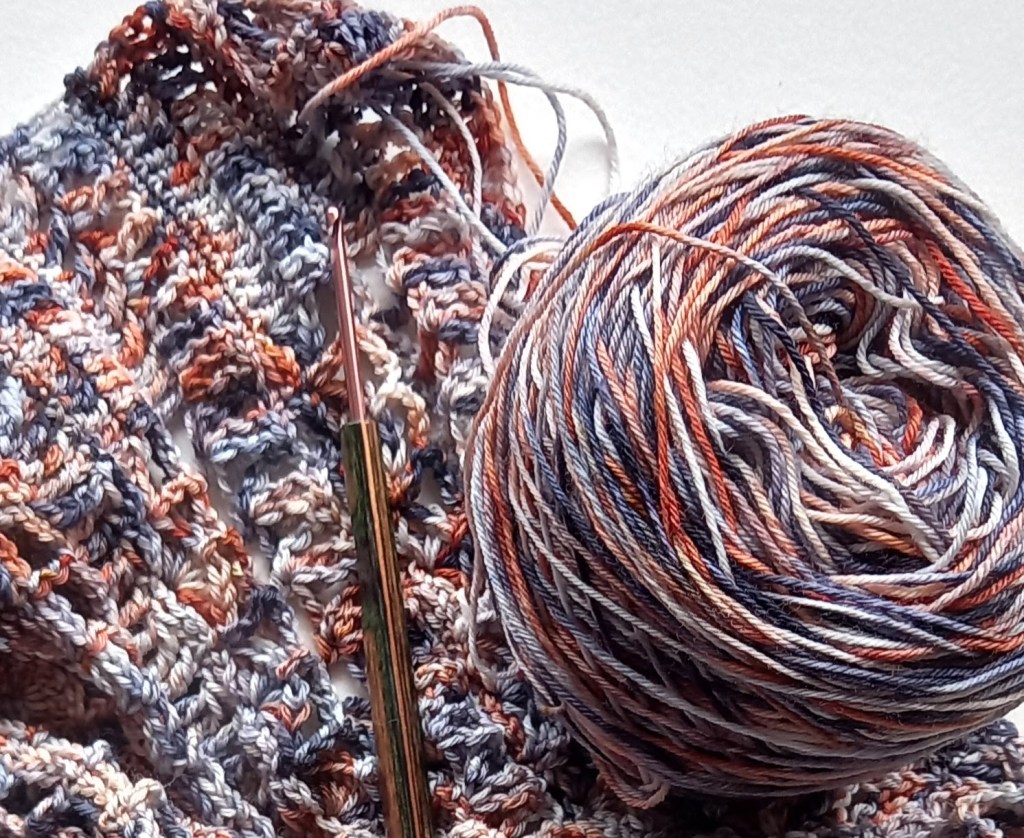
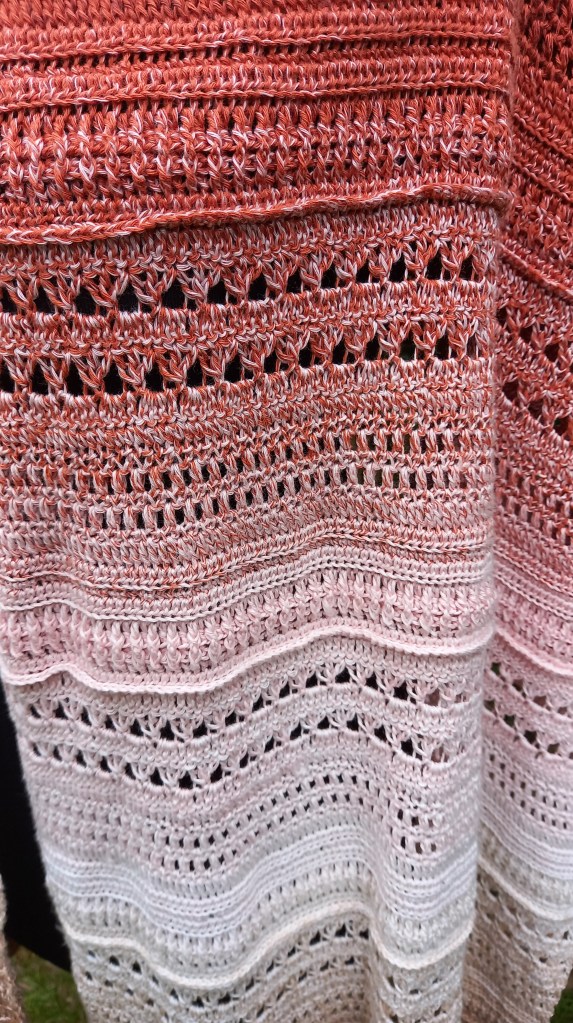
Alongside that, I’m crocheting a lightweight crop top using a gorgeous indie-dyed sock yarn, which feels much more appropriate for the season.

I also have outlines prepared for two future designs, although I’m doing my best to resist starting them just yet.

Then there’s the project sitting firmly in the “naughty corner”: a Fair Isle knitted waistcoat that I started for myself last winter. The yarn is beautiful, but Fair Isle needs concentration, and somehow it doesn’t feel like a summer activity. I’m fairly sure it’ll find its way back into my hands once the evenings start drawing in again.

Other creative projects

It almost feels like a confession at this point, but yes, there are even more creative projects quietly waiting their turn.

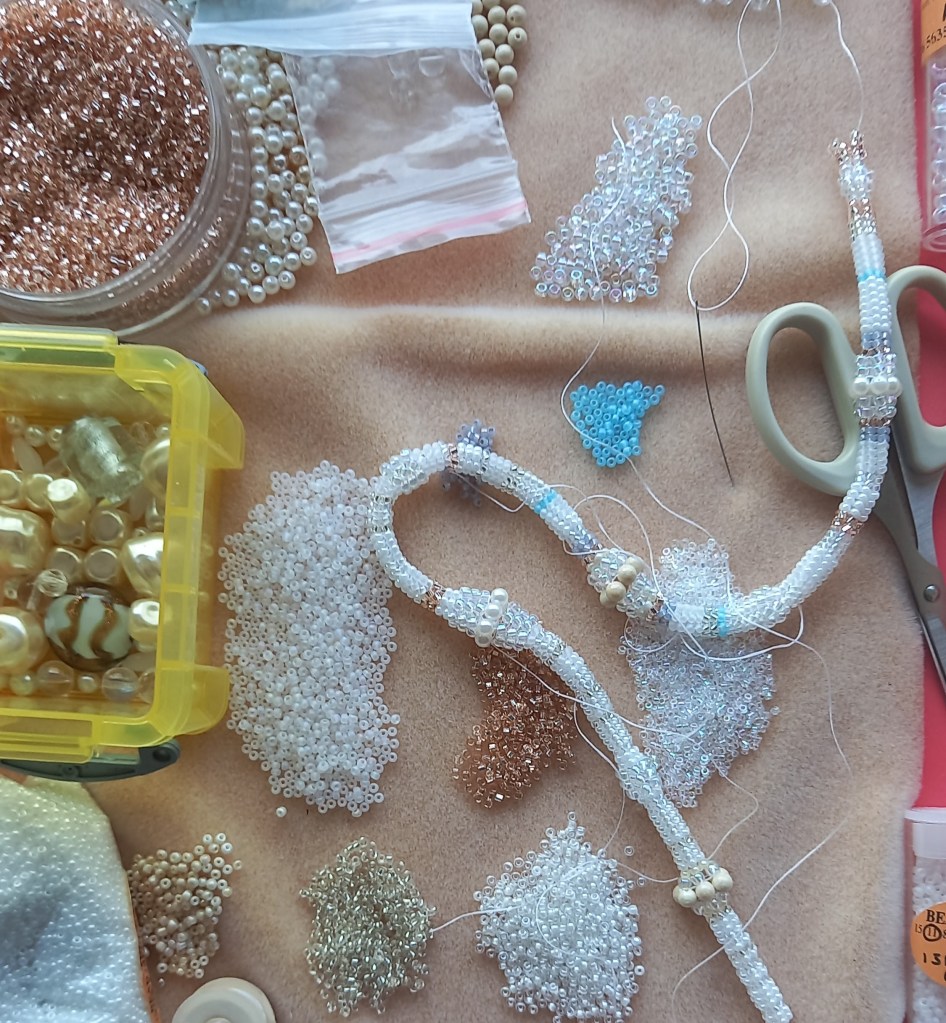
Every now and then I enjoy beading, and thanks to my Mum I inherited enough beads to keep me occupied for several lifetimes. On those days when it’s simply too hot to work with wool, sitting outside in the shade with a tray of beads is a wonderfully relaxing alternative.

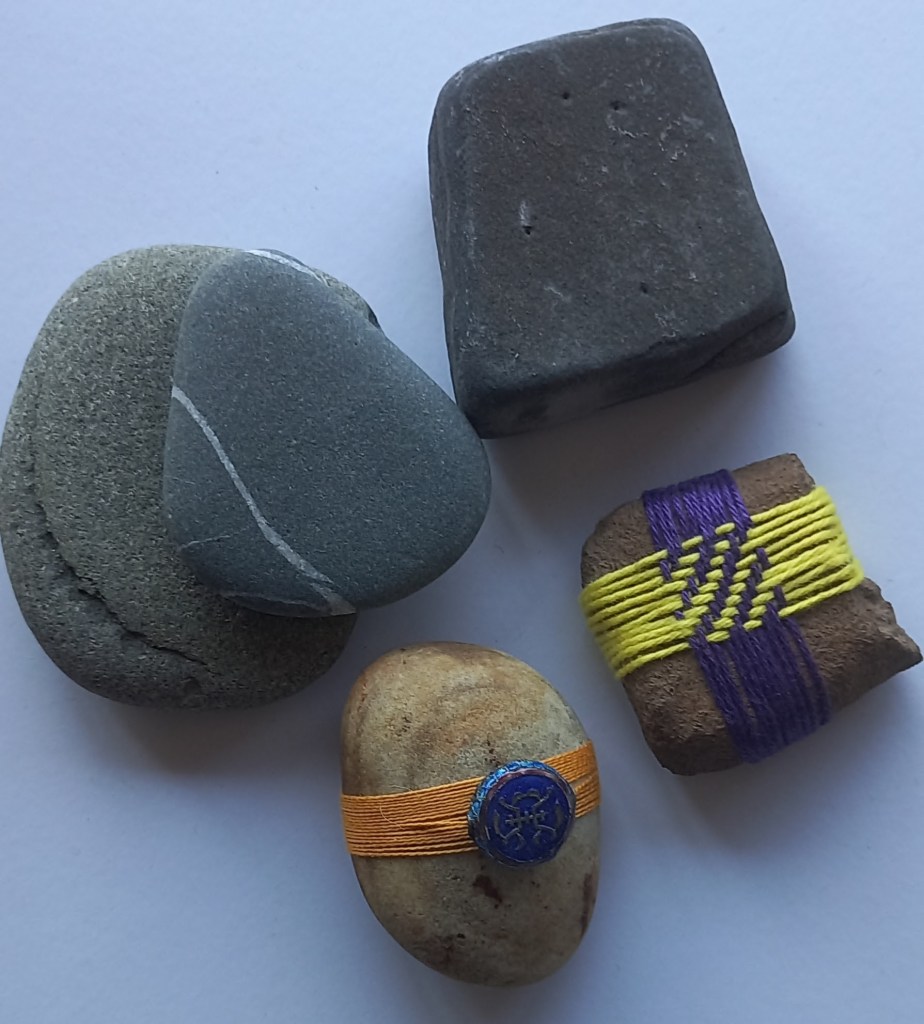
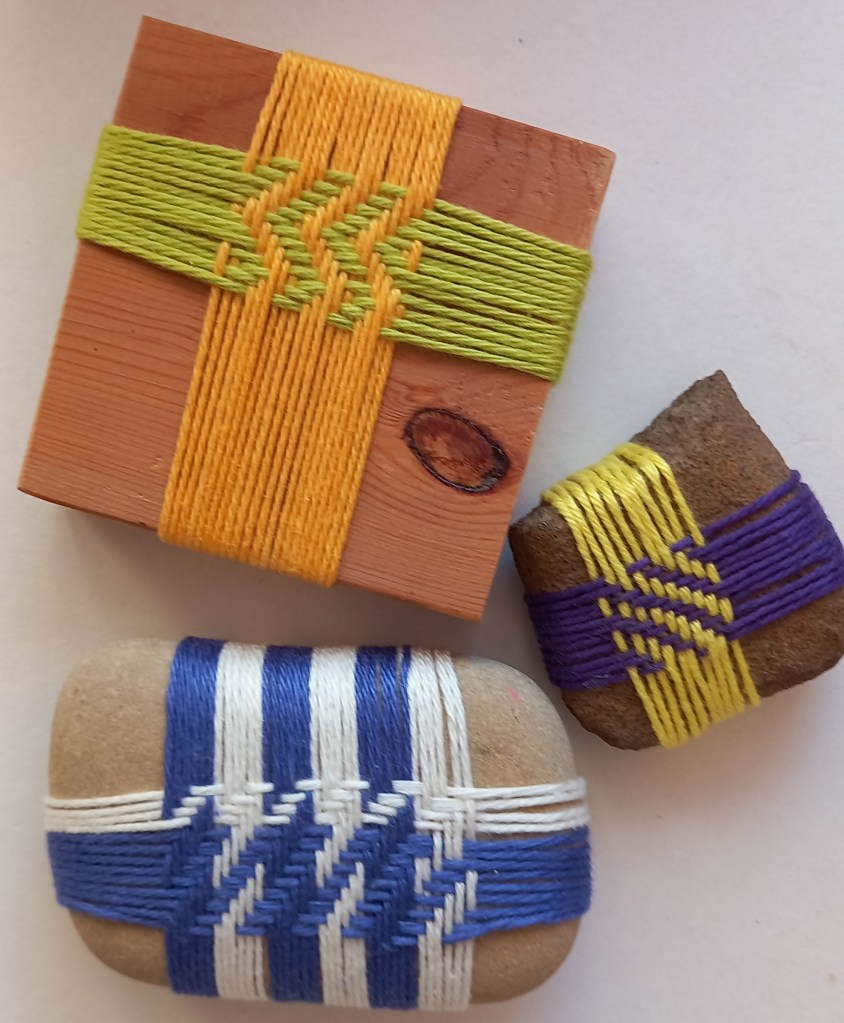
I also have a growing collection of smooth stones waiting to be wrapped and woven with the shorter lengths of yarn from my stash—a perfect way to use up leftovers while creating something completely different.

And finally, there’s my long-planned freeform crochet project. The yarn scraps are sorted, the sample motifs are ready, and the hessian bag they’re destined for is waiting patiently.

All I need now is the one thing every crafter wishes they had a little more of: time.

If you’d like to follow these projects as they evolve, I share regular updates every Work in Progress Wednesday on Facebook and Instagram. I’d love for you to join me there and see what I’ve been making each week.

Until next time, happy crafting!

Sue
Five Things I’ve Learned Since I Started Designing

In my last post, I wrote about the importance of fibre when I’m choosing what to make. This time, I want to explore some of the things I’ve learned since I started designing crochet patterns and weaving.

When I first began, I assumed that most of what I needed to learn would be about stitches, yarn, and techniques. While those things are certainly important, some of the biggest lessons have come from entirely unexpected directions.

1. Gauge Really Does Matter

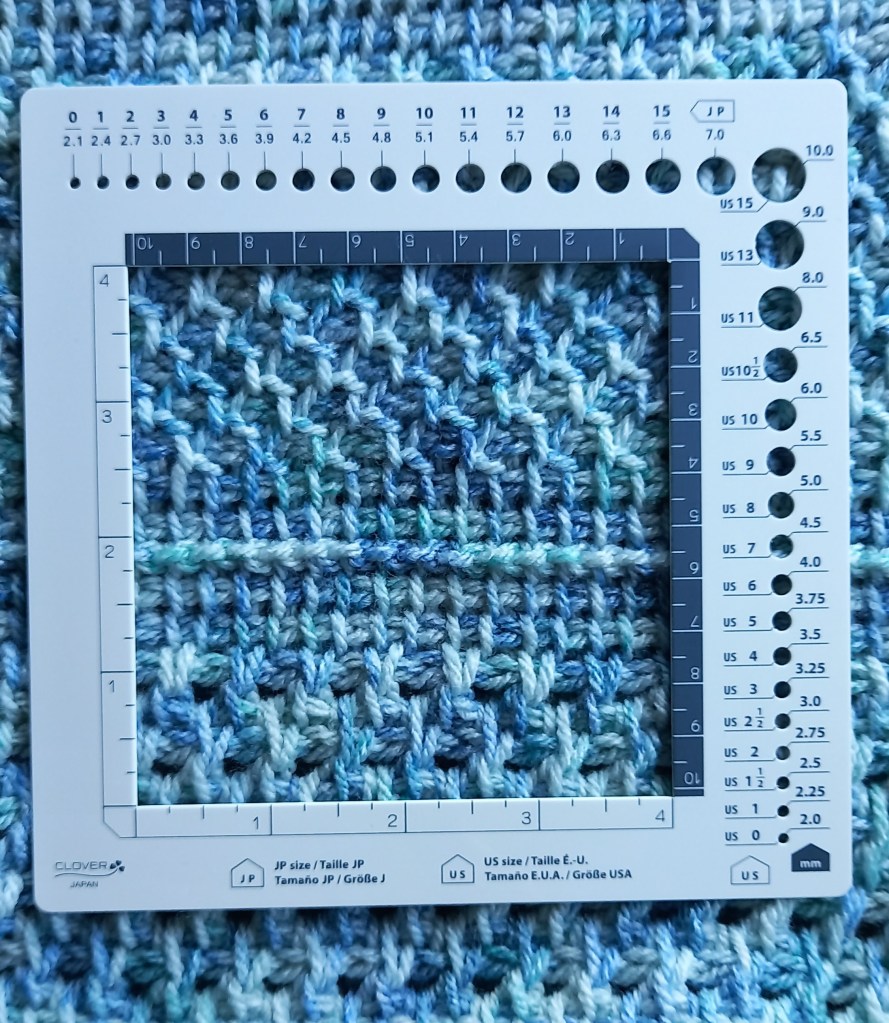
Let’s start with gauge: that line in every good pattern that tells you how many stitches and rows should fit into a specific measurement. It’s also the line that many people are tempted to skip over.

As a designer, I tend to create items where gauge isn’t absolutely critical—blankets, throws, ponchos, shawls and wraps. If your tension is slightly different from mine, the finished item will still work. Even so, I always include gauge information because it helps people understand how the fabric should behave and gives the pattern a level of professionalism.

Where gauge becomes essential is in fitted garments. I don’t design those, but I do make them, and I always take the time to check my gauge first. It might feel like an extra step, but it’s far quicker than spending weeks making something that turns out to be two sizes too small—or large.

Weavers have their own version of gauge: picks per inch, which measures how many rows of weft yarn fit into an inch of cloth. I’ve learned that consistency is the key here. Keeping your picks per inch reasonably even throughout a project produces a balanced fabric without unexpectedly dense or loose areas. A small ruler tucked beside the loom can be surprisingly useful.

2. Writing a Pattern Is Harder Than Making the Item

Creating something with yarn and a hook is one skill. Explaining clearly how someone else can create the same thing is another entirely.

When I’m making a piece, I know what I mean and where I’m going next. The challenge comes when I have to write those decisions down in a way that makes sense to someone who has never seen the project before.

I’ve learned that good pattern writing is really about communication. Sometimes that means adding extra photographs. Sometimes it means drawing a chart to show stitch placement. Occasionally it means recording a short video demonstration.

When I first started designing, I never imagined I’d be learning how to edit photographs, create charts, or upload videos to YouTube. Yet all of those skills have become part of the process.

3. Simplicity Is Often More Difficult Than Complexity

One lesson that surprised me is that simple designs are not necessarily easier to create than complicated ones.

When a design contains lots of texture, colour changes, or intricate stitch patterns, small imperfections can disappear into the overall effect. A simple design has nowhere to hide. Every detail matters.

The same applies to pattern writing. Clear, straightforward instructions often take longer to write than complicated ones because they require careful thought and editing. I’ve learned that simplicity is usually the result of refinement rather than a lack of effort.

4. Photography Matters More Than I Expected

A beautiful design can easily be overlooked if the photographs don’t show it at its best.

I take all my photos using my phone and natural light. Early on, I discovered that artificial lighting can dramatically alter colours, especially pinks and oranges. Even now, I find myself watching the weather and the light, ready to dash outside with a project when conditions are just right.

I’ve also learned that bright sunshine isn’t always ideal. Soft, indirect light tends to reveal texture and colour far more accurately.

Perhaps the hardest lesson has been becoming comfortable in front of the camera myself. I’m much happier photographing yarn than being photographed wearing my own designs, but I’ve come to realise that people like seeing how a finished piece looks on a real person. It’s still a work in progress, but I’m getting there.

5. Everyone Crafts Differently

Perhaps the most important lesson of all is that there is no single “right” way to crochet or weave.

People hold their hooks differently. They tension yarn differently. They learn in different ways. Some love charts; others prefer written instructions. Some enjoy following a pattern exactly, while others use it as a starting point for their own creativity.

As a designer, that’s something I’ve learned to embrace. My job isn’t to tell people how they should make something. It’s to give them the tools and information they need to make it successfully in their own way.

Still Learning

Many of these lessons have come from books, workshops, fellow crafters, and sometimes from mistakes I’d rather not repeat. The funny thing about designing is that every new project teaches me something new.

That’s one of the reasons I enjoy it so much.

If you’re interested in quick tips and small lessons I’ve picked up along the way, I share a crafting tip every Monday on Facebook and Instagram. Why not pop over and take a look?

Happy crafting,

Sue

Why I Make What I Make

In my last post, I wrote about mistakes. This time, I want to explore why I choose to make the things I do.

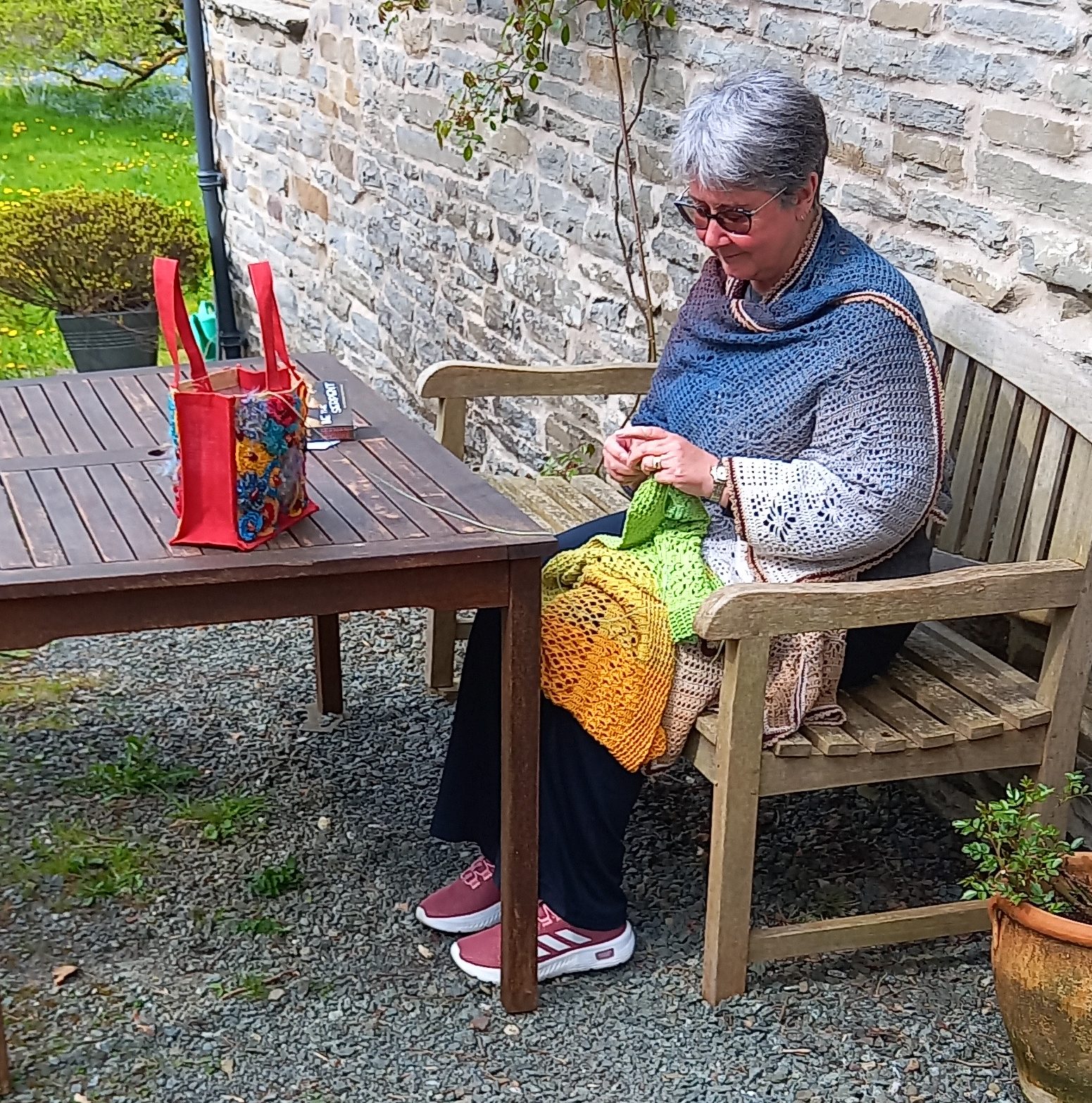
At its heart, I think I make because I need something for my hands to do. My family laugh because I can rarely sit down, whether alone or with other people, without pulling a project bag onto my lap. I like to joke that if my hands are busy with yarn then I can’t be eating biscuits, although we all know that isn’t entirely true.

My patterns tend to focus on functional items using simple shapes with plenty of texture because those are the projects I most enjoy making: scarves, shawls, cushions, hats and bags. I’m always drawn to pieces that are practical but still interesting to work on.

To reach a finished design, I usually create a collection of small samples to test stitches, textures and colour combinations. Some makers unravel their swatches and reuse the yarn immediately, but I prefer to keep mine until the project is complete. Afterwards, because I try to work with as little waste as possible, the samples often find their way into a freeform crochet piece instead.

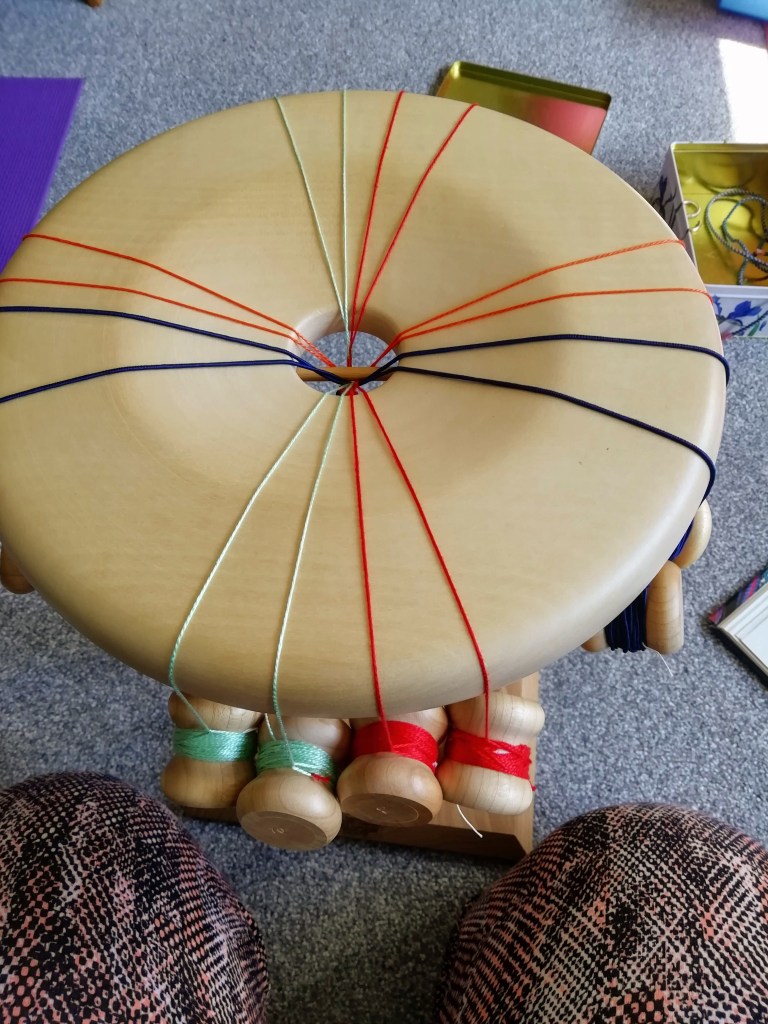
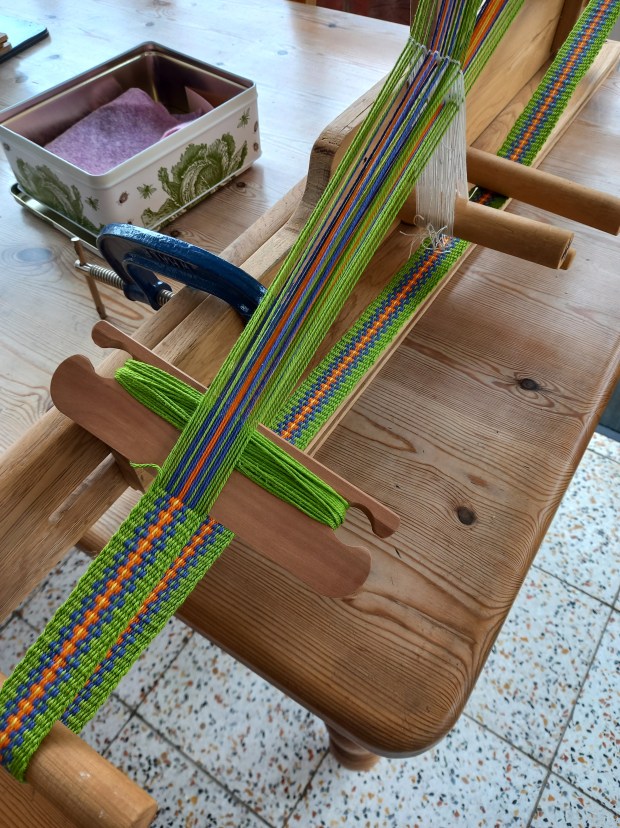
During the lockdowns, I also began exploring weaving, starting with an inkle loom that my husband made for me from scraps of wood found in his shed. Originally, I simply wanted to weave sturdy straps for bags, and the inkle loom does that beautifully. I use mercerised cotton almost exclusively because the colours are vibrant and the fibre stands up well to the tension of weaving.

Once I had been bitten by the weaving bug, I moved on to a rigid heddle loom. This is where I allow myself even more freedom to experiment. I like working with the fibres I already have available and seeing where they lead me. Most of the time I sit down to weave without a fixed plan and simply enjoy the process. Sometimes that results in a beautiful scarf or shawl — still keeping to those simple shapes I love — and sometimes it produces an uneven piece of cloth that ends up cut apart and reused elsewhere.

Then there is spinning. I began with a drop spindle and eventually progressed to an Ashford Traveller 3 spinning wheel. Spinning has opened up another layer of creativity for me. I choose fibres and colours simply because they appeal to me, even though they often transform completely once spun. I’m still learning constantly, but I can now produce a yarn that is not only usable, but genuinely enjoyable to crochet and weave with.

In the end, everything comes back to the same simple thing: keeping my hands busy. The difference now is that I can do that using yarns I have spun myself, textures I have chosen deliberately, and fabrics that have evolved through exploration and play.

Whatever you decide to make, happy crafting

Sue
Colour Stories

In my last post, I wrote about tools as companions. This time, I want to talk about the colours I choose—and those I tend to avoid.

When I first learned to knit and crochet, and to read a pattern, I always used the colours shown. Partly because I knew they worked—they were often what drew me to the design in the first place—and partly because I didn’t yet have the confidence to choose differently.

Later, as a young mum, I was fortunate enough to complete a City and Guilds course in Design and Embroidery. That experience changed everything. I discovered that colour could be playful, surprising, even a little daring. I learned that mixing and blending shades could create something entirely new—and that nothing is ever truly wasted. Even the things that don’t work out can be taken apart, reimagined, and used again.

I think that freedom has stayed with me.

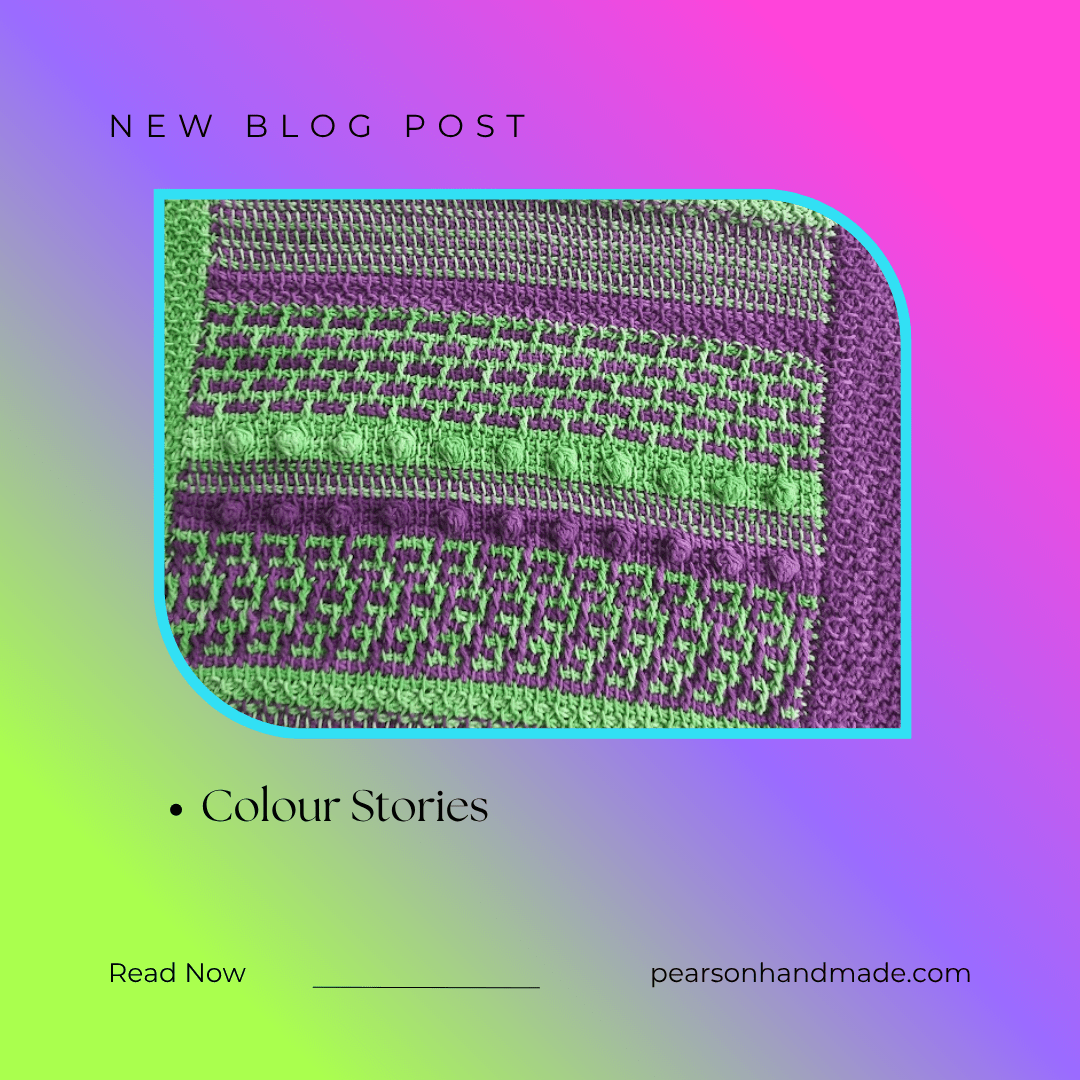
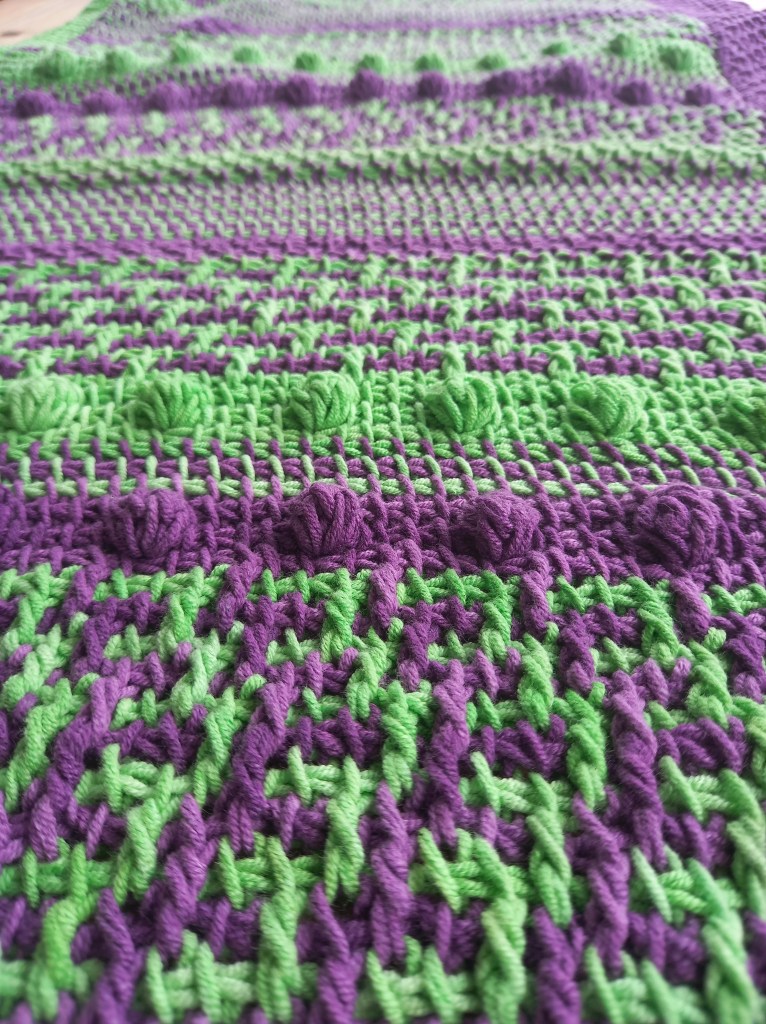
Purple has always been my ‘go-to’ colour. If I’m ever unsure where to begin, I start there. One of my early designs paired a rich purple with jade green—a combination I still love. A quick glance at a colour wheel shows they sit opposite each other, and I’ve often returned to that balance of contrast and harmony in my work.

Sometimes, when I’m lucky enough to work to a brief, the colours are chosen for me. While that can feel limiting at first, it often leads me somewhere unexpected—combinations I might never have picked, but which come together beautifully.

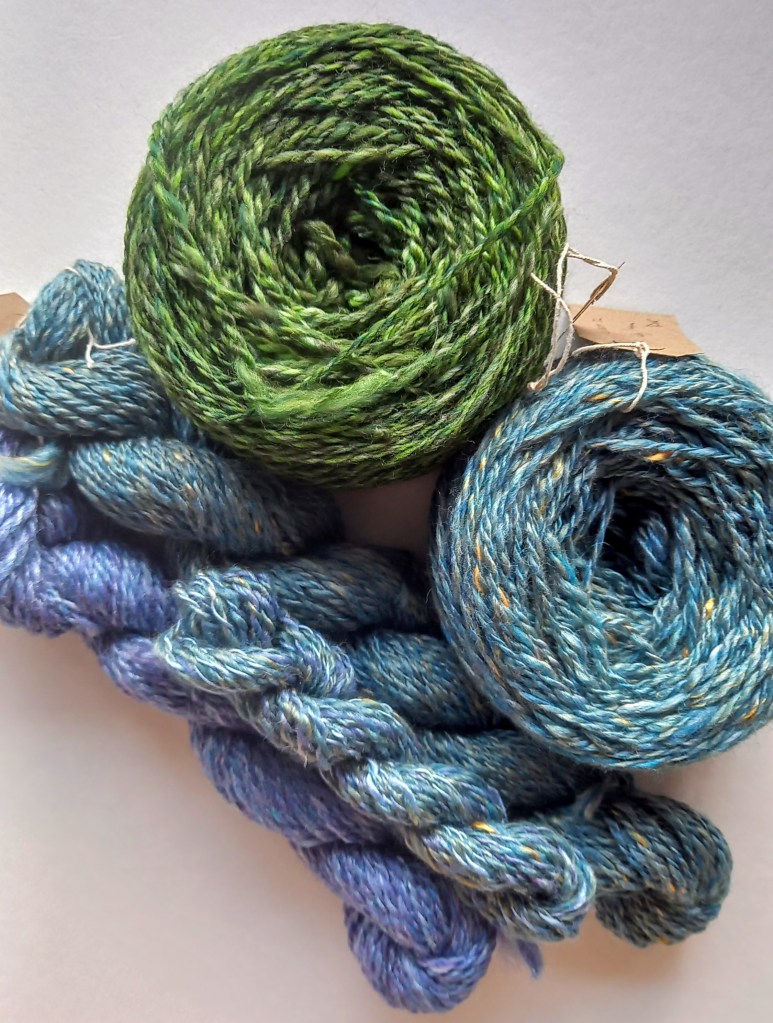
I also love the quiet magic of gradient yarns, where one shade gently becomes another, shifting the whole mood of a piece without any effort on my part.

And then there are the impulse purchases—the skeins that are simply too beautiful to leave behind. Those often sit for a while before revealing what they want to become. I’ve learned not to rush that process.

There are still colours I feel less at home with. Red, for instance, has never been an easy choice for me. But I’m beginning to explore it more, especially in blends where it softens into orange or deepens into something richer. Perhaps it’s just a matter of time.

Weaving, too, has taught me that colour behaves differently depending on how it’s used. The interplay between warp and weft can soften, sharpen, or completely transform a palette. Colours you expect to dominate may recede, while quieter tones come forward.

In the end, I think colour is deeply personal. There are no right or wrong choices—only the ones that resonate with you.

Whatever colours make you smile, those are the ones to use.

Happy crafting

Preparing to Craft

In my last blog post, I shared a few thoughts about different types of fibres. This week, I’d like to look at some of the small but important steps to take before you settle down to spend time crafting. For me, preparation is not a chore to rush through, but a quiet part of the making process in its own right.

Gauge

Sometimes gauge matters, and sometimes it really doesn’t. If you’re planning to make a fitted garment, it’s worth taking the time to work a sample using your chosen yarn and hook or needles. Nobody enjoys making a gauge swatch, but it’s far worse to spend hours on a project that turns out far too big or far too small.

For items such as blankets, throws, or cushion covers, gauge is usually less critical. A few extra rows or stitches more or less will often make up any discrepancy. I have a small mountain of gauge samples and swatches which, when the mood takes me, I add to whichever freeform crochet project I’m working on.

Yarn Balls and Skeins

Some balls of yarn are designed for a centre pull, and others really aren’t. I quite like a centre pull, as it stops the yarn rolling around while I’m working. Sometimes you’re lucky and find the end with very little fuss; other times you’re rewarded with an impressive yarn barf, feeling as though you’ve disembowelled the ball entirely.

Some crafters wind all their yarn into neat cakes as a matter of course. I’m not one of those people — I tend to take my chances. That said, if you’re working with skeins, they absolutely must be wound into a ball or cake before use. Skipping this step is almost guaranteed to lead to tangled fibre and hours of unnecessary frustration.

Read the Pattern

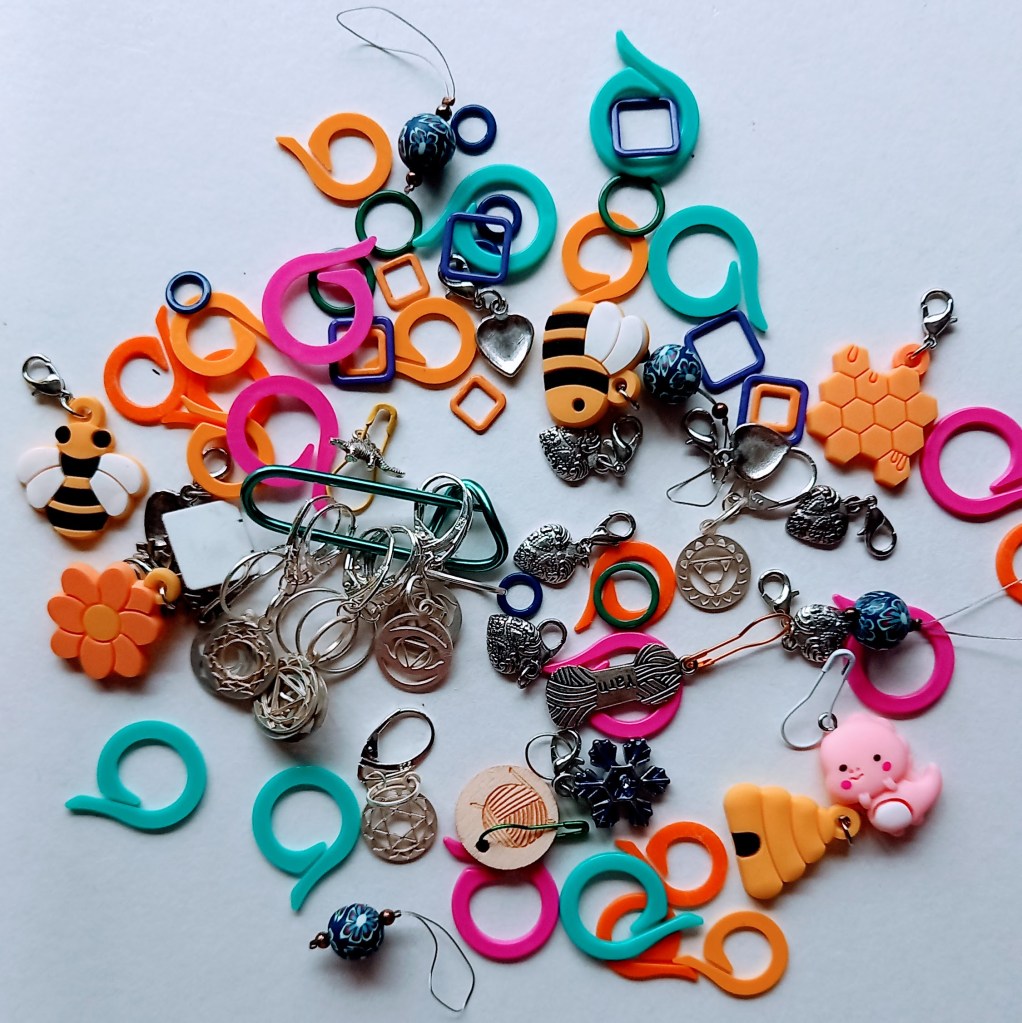
Before you begin, take a moment to read the pattern properly and make sure you have everything it calls for. Alongside needles or hooks, does it require stitch markers, cable needles, stitch holders, or beads? There’s nothing more frustrating than getting into a good rhythm, only to have to stop and wait for the shops to open because you’re missing a crucial item.

Spinning Fibre

When spinning, I usually work with combed tops. The best advice I ever received was to pre-draft — gently easing the fibres apart along their length between your hands, working down the fibre and back again. It makes the spinning process feel much easier and more controlled.

Once you’ve filled a bobbin with singles, let the fibre rest for at least 24 hours before plying. That pause really does make a difference.

Weaving Fibre

I weave on a rigid heddle loom, and once I’ve chosen the yarn for my warp, my next decision is the size/dent of the reed. I have a bamboo blind, cut to size, on the back beam, so that when I wind on the warp, the yarn spreads evenly. The warp has a huge impact on the finished fabric, so it’s worth taking your time here.


However you choose to spend your crafting time, I hope these reflections encourage you to enjoy the preparation as much as the making itself.

Happy crafting — and next time, I’ll be turning my focus to the tools I find most useful.

Sue

Crocheter or Weaver – Which Are You?

Last week, I wrote about blocking and how to give your finished projects a truly professional finish. This week, I’m exploring the two crafts I spend most of my time with: crochet and weaving. Both bring me so much joy, but in very different ways.


Crochet: My First Craft Love

My mum taught me to crochet when I was in Primary school. I still remember making long chains to use as ties for a classroom project! Crochet has stayed with me ever since—partly because it’s incredibly versatile, and partly because it’s so portable. One hook and a ball of yarn can go anywhere.

Over the years, I’ve explored lots of different crochet styles, and each one offers something unique:

Standard Crochet

Probably the most familiar style, with a huge range of stitches to create texture, lace, or dense fabrics—whatever your project calls for. Patterns range from simple and soothing to wonderfully challenging, using both written instructions and charts.

Tunisian Crochet

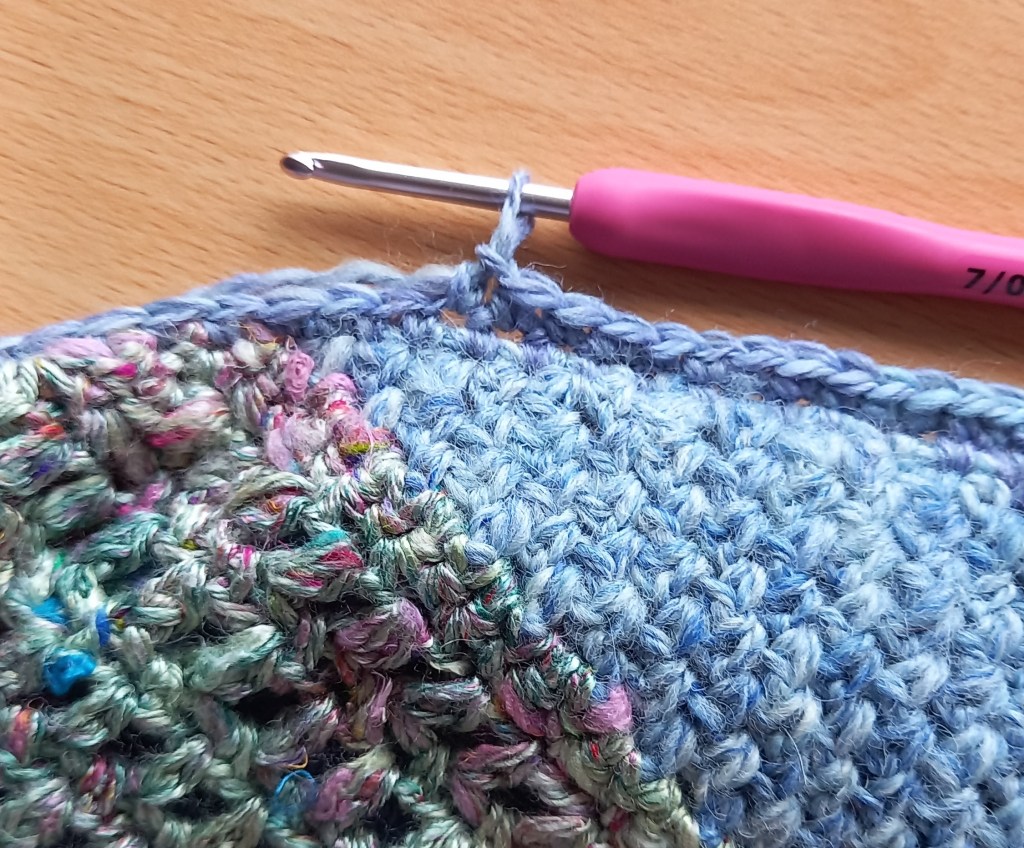
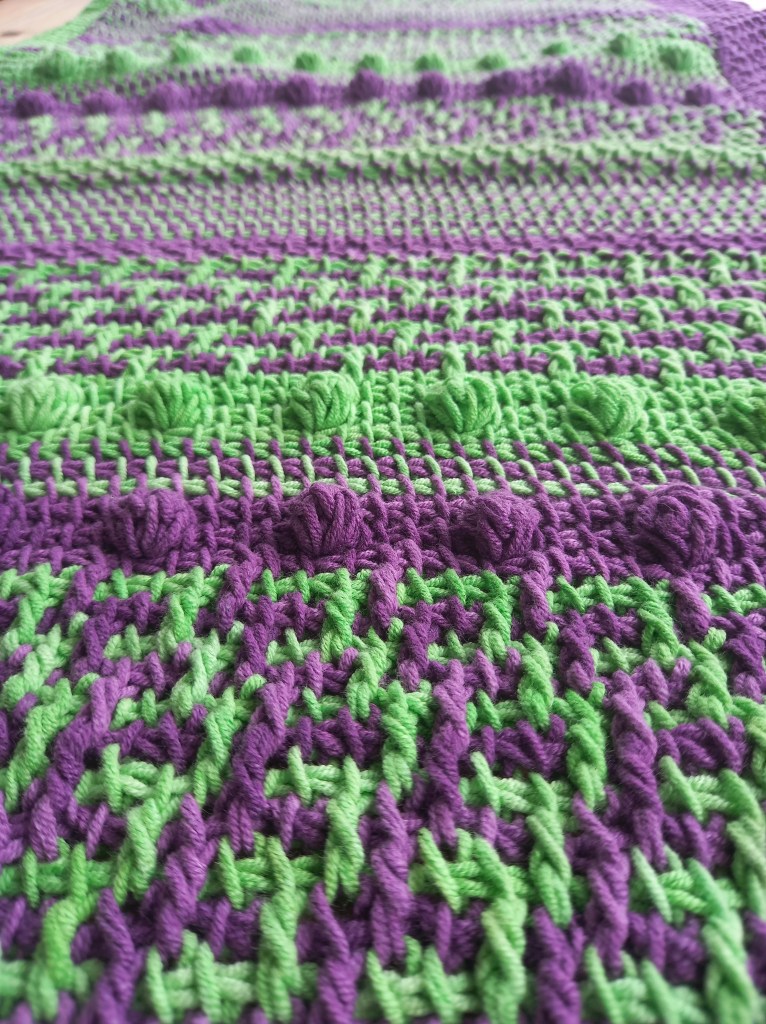
One of my favourites. This style uses a long hook (or one with a cable) to hold multiple loops, almost like a hybrid of crochet and knitting. When worked flat, you keep the right side facing and alternate a Forward Pass and Return Pass. It’s also lovely worked in the round for throws or tall cowls. I learned this technique from books and from Toni Lipsey’s excellent YouTube tutorials.

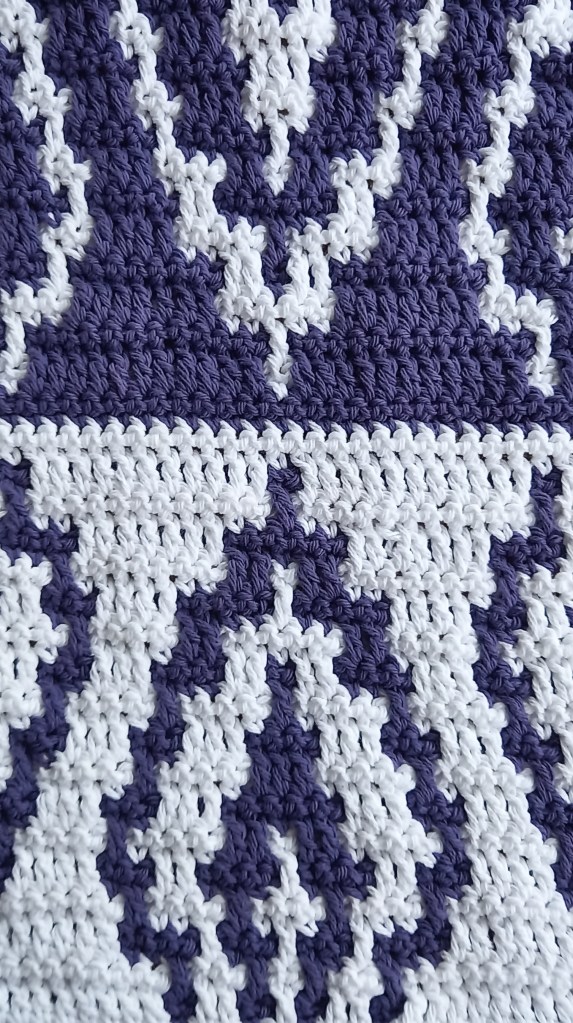
Mosaic Crochet

There are two main types: inset and overlay mosaic.

  • Inset mosaic uses simple stitches and two colours on alternate rows—no endless ends to sew in! Esme Crick’s Mosaic Crochet Workshop is a fantastic introduction.
  • Overlay mosaic is more complex and creates those dramatic, slanting patterns. Each row is cut at the end, so there are plenty of ends to deal with, but the results are stunning. Alexis Sixel’s Dark and Dramatic Mosaic Crochet is a brilliant guide.

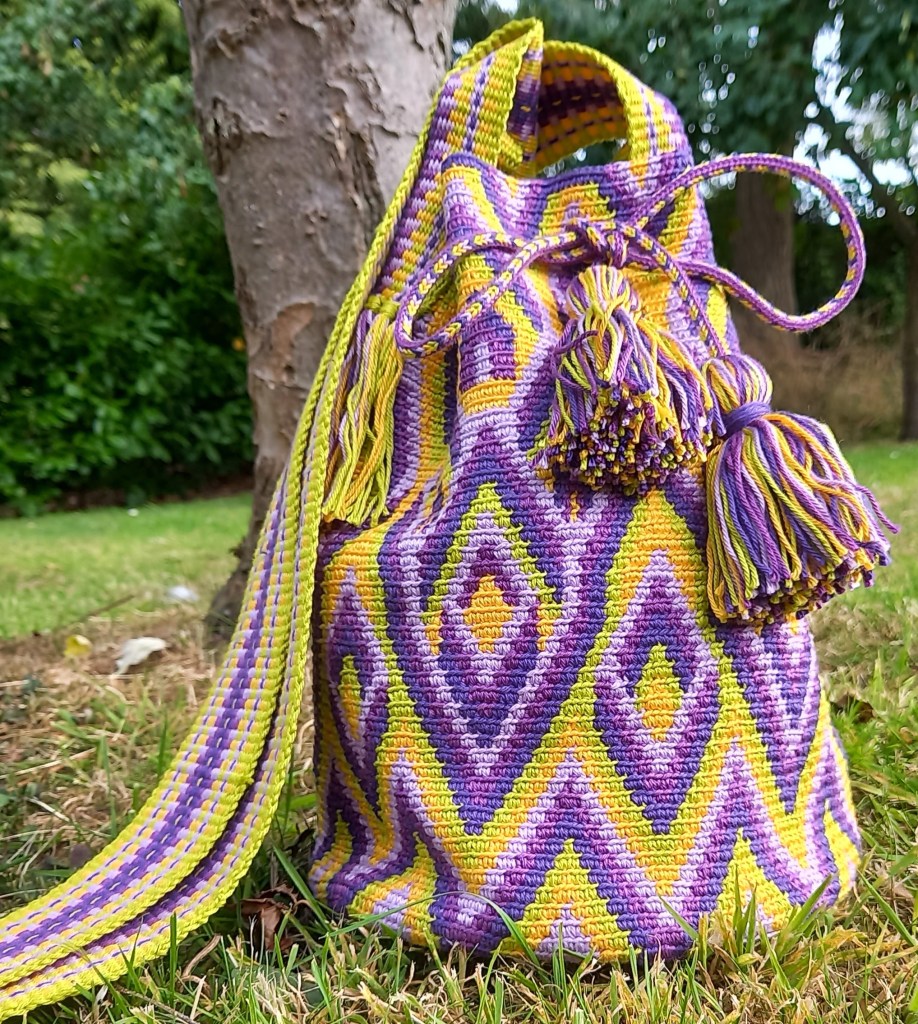
Mochila Bag Crochet

This technique creates sturdy drawstring bags, often paired with a woven strap—a perfect blend of the two crafts I love. It’s a slow, meditative process, and I can’t recommend Marion Verloop’s Facebook group, Mochila Style Crochet, highly enough—the files section is a treasure trove.

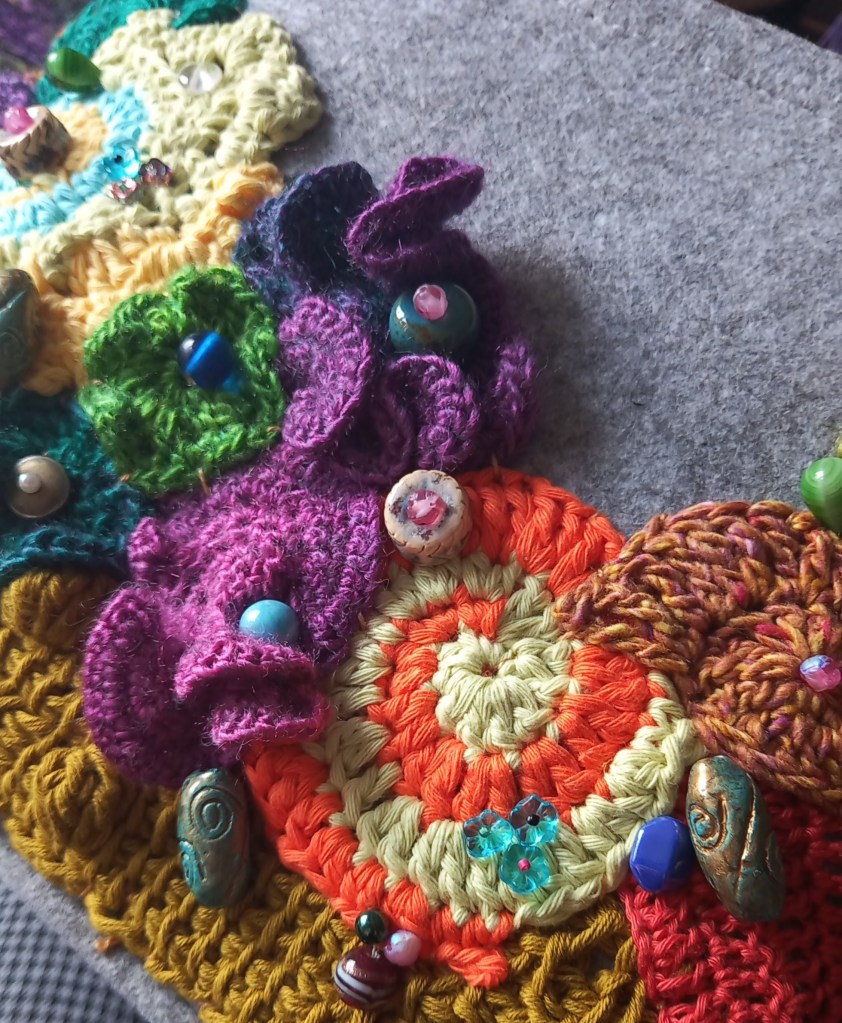
Freeform Crochet

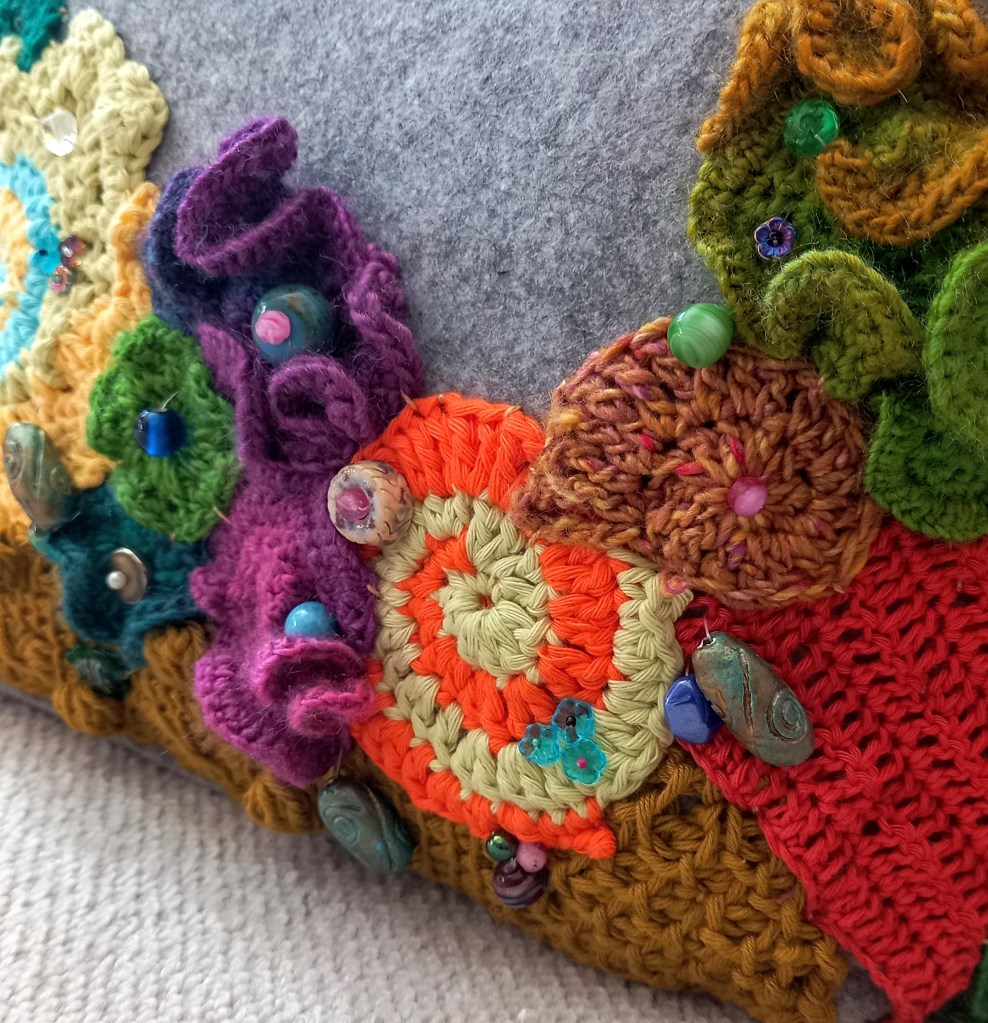
Anything goes! I learned freeform crochet at my local wool shop, and I love making small motifs and joining them onto bags or felt boxes as decoration. It’s improvisational, creative, and wonderfully freeing.


Weaving: A Newer Creative Journey

Compared to crochet, I’m still relatively new to weaving.

I first learned inkle weaving when I discovered Mochila bags, as it’s the traditional technique for making the straps. My husband even built me a loom from shed scraps during the Covid lockdown—and it’s still going strong!

In the summer of 2024 I moved on to a rigid heddle loom so I could create scarves and shawls. Mine lives on the kitchen table, always warped and ready to go. I’ve experimented with patterns, but I’ve realised that for me, weaving is a way to decompress. Rather than counting picks or following charts, I weave whatever I’m feeling, usually resulting in organic, random stripes in beautiful yarns.

Lately, I’ve also started exploring off-loom weaving, using interesting stones I find on my walks as the base. These tiny woven pieces scratch a completely different creative itch, and for these, I do enjoy following a set pattern. If you’re curious, Lark and Bower offer excellent online classes.


Whichever craft speaks to you—crochet, weaving, or both—I hope you find joy in the making.
Happy crafting until next week, when I’ll be sharing some of my favourite colour combinations.

Sue