One little stitch, so many ways to add texture.
The Humble Bobble
In my last post, I wrote about the joy of those smaller projects that take a little less time than the big blankets and winter throws. Lately, I’ve been thinking about some of my favourite crochet stitches, particularly the ones that add surface texture to my designs. One of the elements I find myself returning to again and again is the humble bobble.
There is something very satisfying about surface texture on a garment or a throw. I’ve watched visitors, including my grandchildren, take a throw off the arm of the sofa and drape it over their lap, and their hands automatically drift towards the textured areas. There is something about crochet that makes you want to touch it, and I think texture has a lot to do with that.
Of course, a “bobble” isn’t really one particular stitch. There are several different ways of creating that lovely raised texture, each with a slightly different character. Here are a few of my favourites.
Mock Bobbles
This is one of my favourites, although I only discovered it relatively recently.
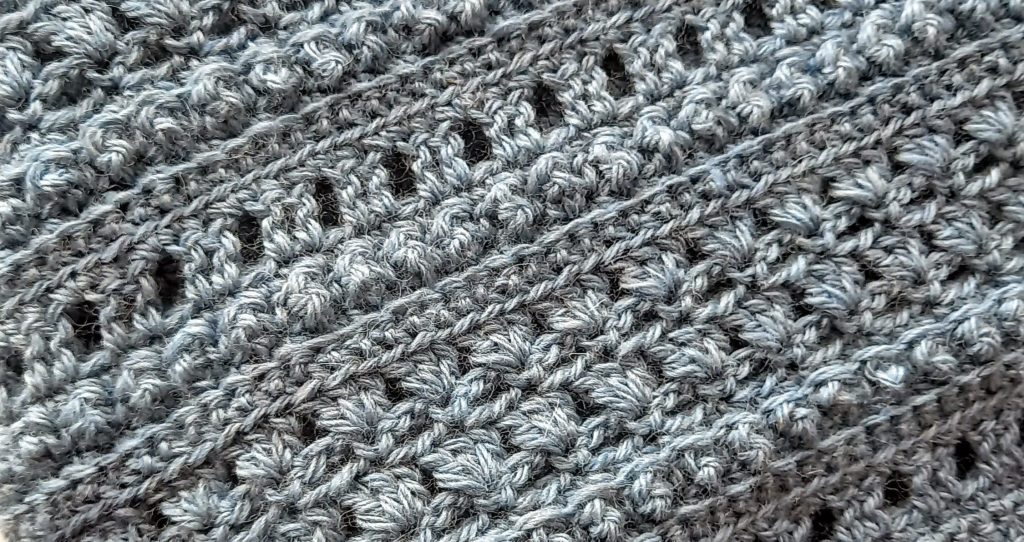
Working with the wrong side of the work facing you, you make a short stitch – a UK double crochet or US single crochet – followed by a very long stitch, a UK double treble or US treble. Repeat that across the row.
The very long stitch folds over to the front of the work, creating a surprisingly effective little bobble.
I love this technique because it gives you texture without the bulk of some of the more traditional bobble stitches. It’s also wonderfully simple once you’ve got the hang of what is happening.
Clusters
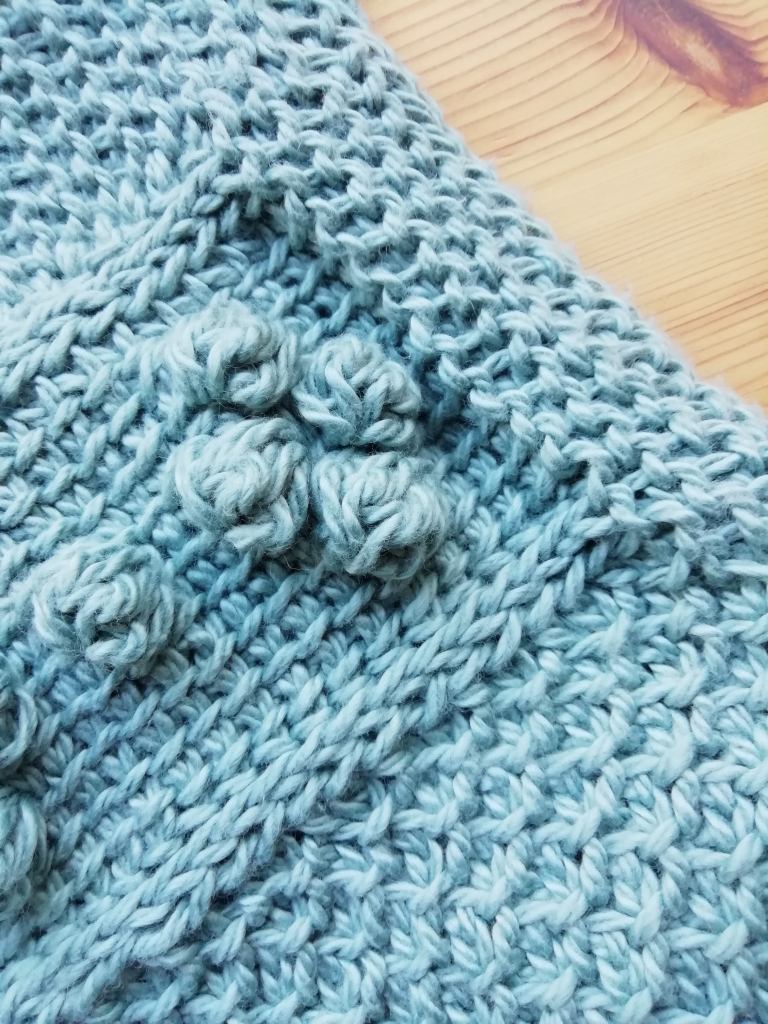
Clusters produce a much rounder, more pronounced bobble, particularly when they are followed by a UK double crochet.
Clusters are worked with the wrong side of the work facing you, with several UK treble crochets worked into the same base stitch and then closed together. The following, shorter, double crochet pulls those longer stitches down, encouraging the bobble to pop through to the right side of the work.
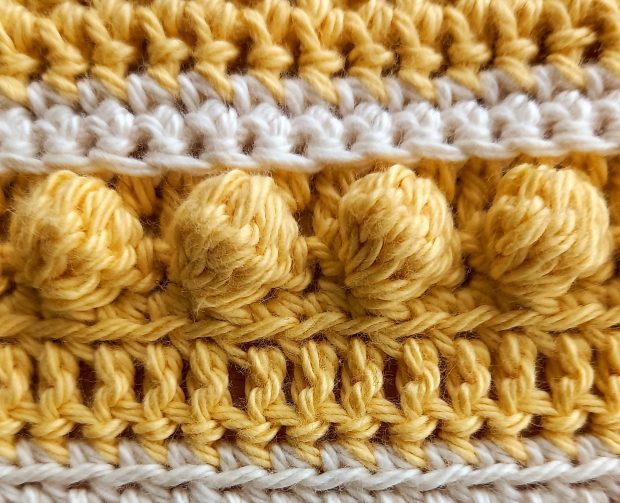
The result is a lovely, rounded little mound of texture.
Popcorns
And then there is the popcorn – a prince amongst bobbles.
If you want your texture to make a statement, the popcorn is the one to choose. A group of UK treble crochets (US double crochet) is worked into the same base stitch. The final stitch is then joined back to the first, creating a much more substantial, prominent bobble on the right side of the work.
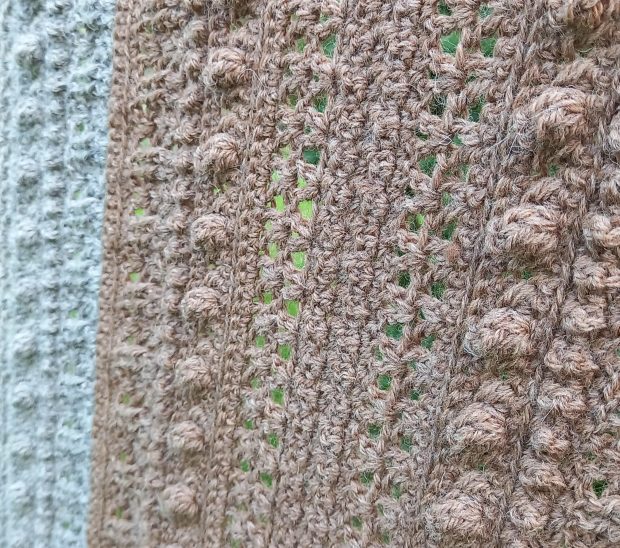
Popcorns have a definite presence. They aren’t shy little touches of texture; they want to be noticed!
From a Stitch to a Design
Sometimes a crochet design starts with a finished project in mind. I might know that I want to design a shawl, a blanket or a scarf, and then start thinking about shape, colour and stitch patterns.
But sometimes it starts much smaller.
It might be a stitch I want to play with, an interesting combination of textures, or simply a little swatch that makes me think, I like that.
From there, the questions begin. What happens if I repeat it? What if I change the spacing? Would it work as a border, a panel or an all-over texture? How would it behave in a different yarn?
And sometimes, somewhere along the way, that little piece of experimentation turns into a whole project.
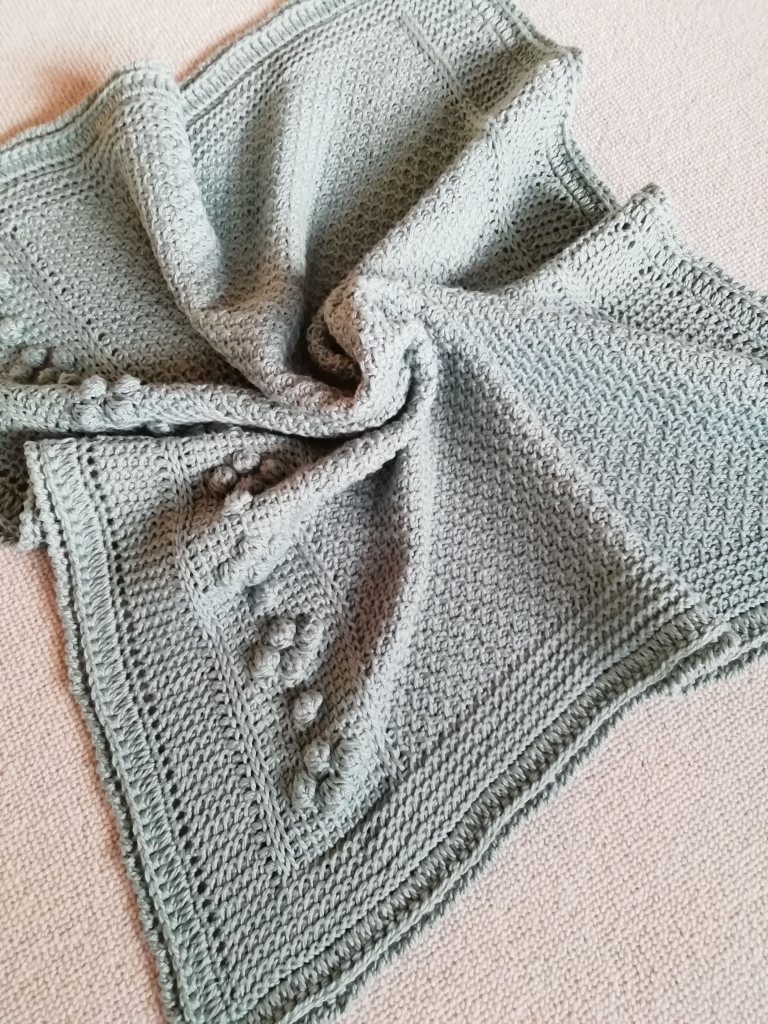
Bobbles are particularly useful in this respect because there are so many ways to use them. They can be scattered across a plain background, arranged in stripes or geometric patterns, combined with other textured stitches, or used as a simple detail to lift an otherwise straightforward design.
I suspect that’s why I keep coming back to them.
If you’d like to see more of what I’m making, I share regular updates every Work in Progress Wednesday on Facebook and Instagram. There is always something on my hook, and quite often, it includes a bobble or two.
I’d love for you to join me there.
Until next time, happy crafting!