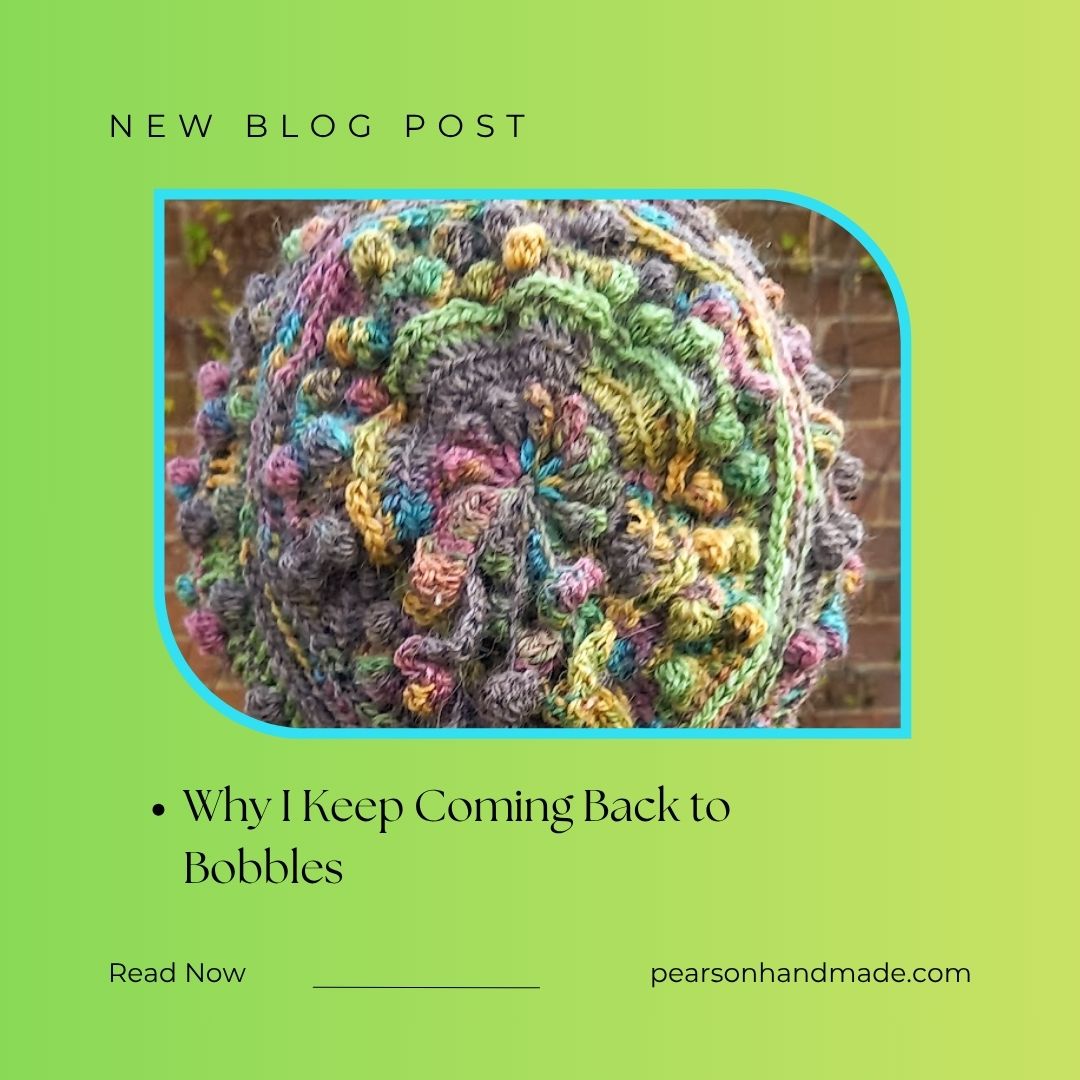
Why I Keep Coming Back to Bobbles

One little stitch, so many ways to add texture.

The Humble Bobble

In my last post, I wrote about the joy of those smaller projects that take a little less time than the big blankets and winter throws. Lately, I’ve been thinking about some of my favourite crochet stitches, particularly the ones that add surface texture to my designs. One of the elements I find myself returning to again and again is the humble bobble.

There is something very satisfying about surface texture on a garment or a throw. I’ve watched visitors, including my grandchildren, take a throw off the arm of the sofa and drape it over their lap, and their hands automatically drift towards the textured areas. There is something about crochet that makes you want to touch it, and I think texture has a lot to do with that.

Of course, a “bobble” isn’t really one particular stitch. There are several different ways of creating that lovely raised texture, each with a slightly different character. Here are a few of my favourites.

Mock Bobbles

This is one of my favourites, although I only discovered it relatively recently.
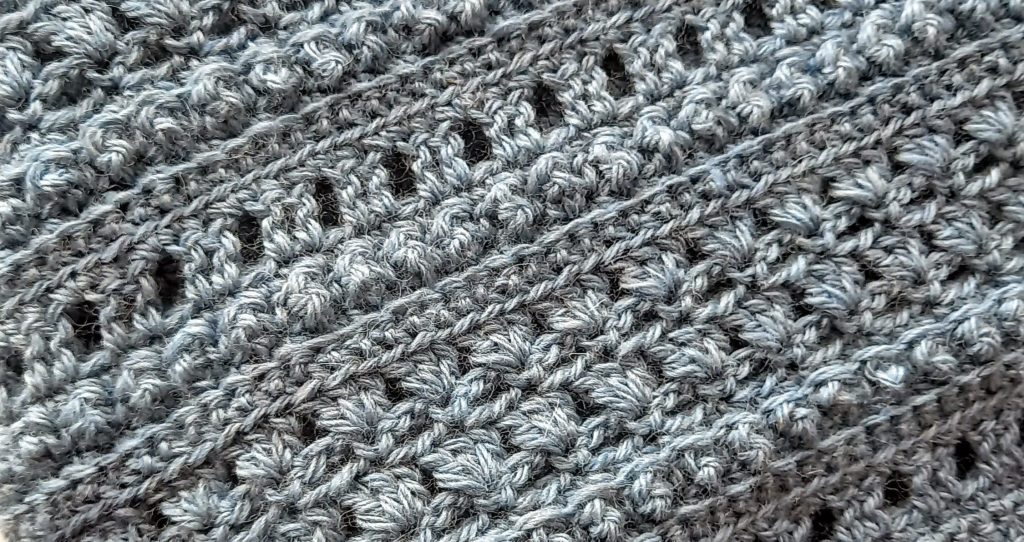
Working with the wrong side of the work facing you, you make a short stitch – a UK double crochet or US single crochet – followed by a very long stitch, a UK double treble or US treble. Repeat that across the row.

The very long stitch folds over to the front of the work, creating a surprisingly effective little bobble.

I love this technique because it gives you texture without the bulk of some of the more traditional bobble stitches. It’s also wonderfully simple once you’ve got the hang of what is happening.

Clusters

Clusters produce a much rounder, more pronounced bobble, particularly when they are followed by a UK double crochet.

Clusters are worked with the wrong side of the work facing you, with several UK treble crochets worked into the same base stitch and then closed together. The following, shorter, double crochet pulls those longer stitches down, encouraging the bobble to pop through to the right side of the work.
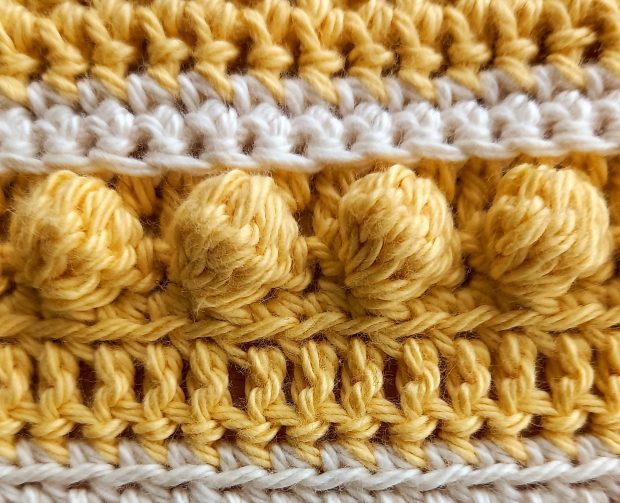
The result is a lovely, rounded little mound of texture.

Popcorns

And then there is the popcorn – a prince amongst bobbles.

If you want your texture to make a statement, the popcorn is the one to choose. A group of UK treble crochets (US double crochet) is worked into the same base stitch. The final stitch is then joined back to the first, creating a much more substantial, prominent bobble on the right side of the work.
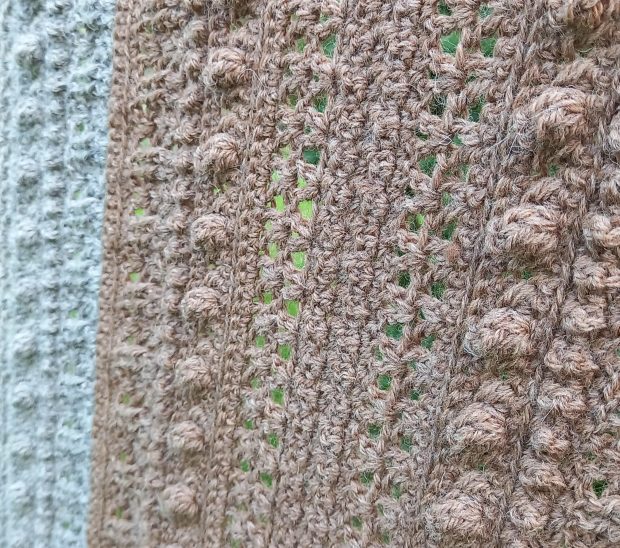
Popcorns have a definite presence. They aren’t shy little touches of texture; they want to be noticed!

From a Stitch to a Design

Sometimes a crochet design starts with a finished project in mind. I might know that I want to design a shawl, a blanket or a scarf, and then start thinking about shape, colour and stitch patterns.

But sometimes it starts much smaller.

It might be a stitch I want to play with, an interesting combination of textures, or simply a little swatch that makes me think, I like that.

From there, the questions begin. What happens if I repeat it? What if I change the spacing? Would it work as a border, a panel or an all-over texture? How would it behave in a different yarn?

And sometimes, somewhere along the way, that little piece of experimentation turns into a whole project.

Bobbles are particularly useful in this respect because there are so many ways to use them. They can be scattered across a plain background, arranged in stripes or geometric patterns, combined with other textured stitches, or used as a simple detail to lift an otherwise straightforward design.

I suspect that’s why I keep coming back to them.

If you’d like to see more of what I’m making, I share regular updates every Work in Progress Wednesday on Facebook and Instagram. There is always something on my hook, and quite often, it includes a bobble or two.

I’d love for you to join me there.

Until next time, happy crafting!

Cosy Crochet Projects for Chilly Evenings

Last week, I introduced you to my latest Tunisian crochet design, the Mistwood Hooded Scarf. This week, as the evenings draw in and the temperature drops, I wanted to share a few ideas for cosy crochet projects that are perfect for slow, comforting making on chilly nights.

For me, truly cosy projects begin with the yarn. Choosing fibres that feel warm, soft, and satisfying in the hands makes all the difference when you’re settling in for an evening of crochet.

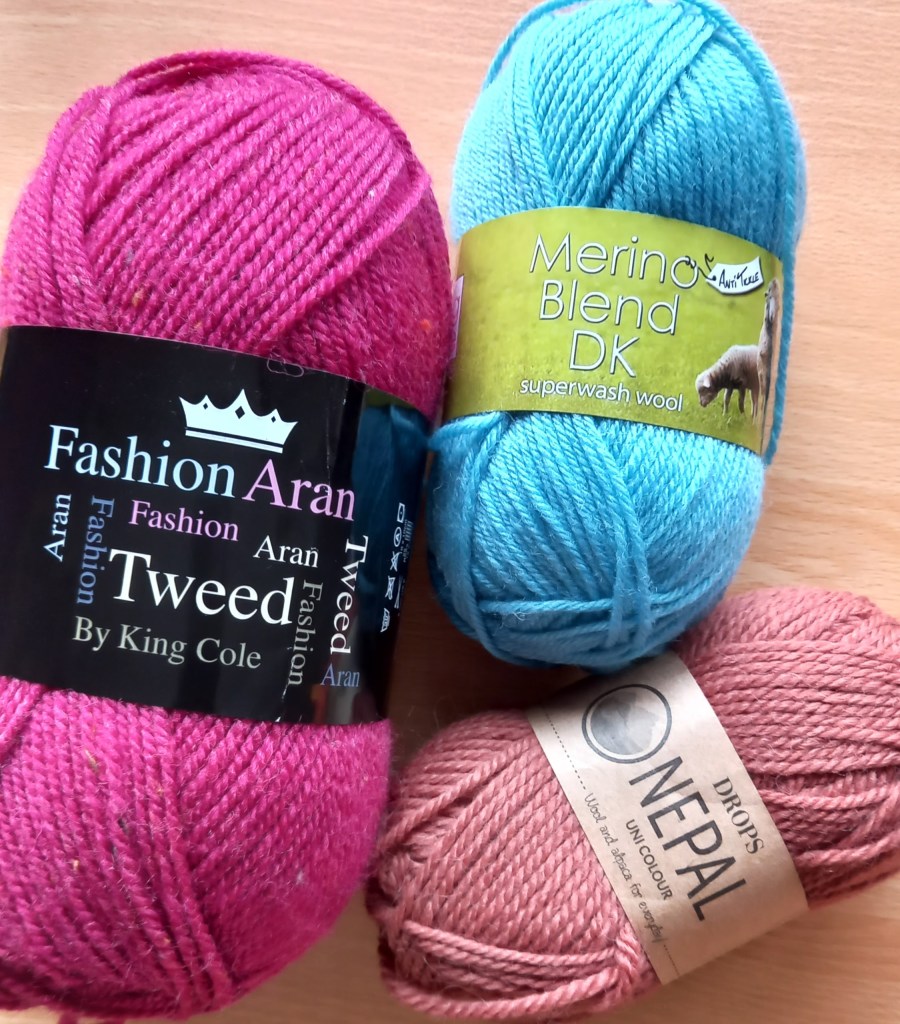
One of my long-standing favourites is Drops Nepal, a wool and alpaca blend classed as an aran weight. It has a lovely warmth and weight, and because it’s aran, projects grow quickly – always a joy when the evenings feel short. I’ve recently designed a particularly cosy project using this yarn, which will appear in the next issue of Simply Crochet magazine, out on 23rd December.

I also regularly use King Cole Fashion Aran, which comes in a huge range of colours. With 30% wool, it’s a more affordable option, making larger projects such as blankets feel achievable without worrying too much about cost. More recently, I’ve discovered King Cole Merino Blend DK, a superwash 100% wool yarn that has worked up beautifully and feels wonderfully soft.

Of course, if you’re able to spin your own yarn, you can really lean into seasonal colours and textures. This very Christmassy Corriedale and sari silk blend from Adelaide Walker, called Medina, is a perfect example – full of depth, warmth, and character.

Once you’ve chosen your yarn, it’s time to find a project you’ll genuinely enjoy. A quick search on Ravelry using the yarn weight you have to hand will reveal plenty of hats, gloves, and scarves that work up quickly and make satisfying gifts. That said, I don’t think there’s much better than crocheting a blanket or throw at this time of year. The gentle weight of the fabric resting in your lap is incredibly comforting, and as the piece grows, you almost find yourself wrapped in its warmth.

Over the years, I’ve built up a small library of pattern books, and the ones I still return to most often include:

  • Crocheted Throws and Wraps by Melody Griffiths
  • The Art of Crochet Blankets by Rachele Carmona
  • Rainbow Crocheted Blankets by Amanda Perkins
  • Beautiful Blankets, Afghans and Throws by Leonie Morgan

If you’d like to try your hand at Tunisian crochet, Toni Lipsey’s The Tunisian Crochet Handbook is full of cosy, inspiring projects. One of my own bestselling patterns, the Winterborn Throw, is a Tunisian crochet design worked in Fashion Aran yarn and is ideal for slow winter evenings.

However you choose to spend your crafting time, I hope these ideas encourage you to embrace slower making, warmer fibres, and projects that bring a little extra comfort at this time of year.

Happy crafting until next time – which will be after the Christmas break, when I’ll be turning my focus to fibre.

Sue

New in the shop: introducing my Mistwood Hooded Scarf

Last week, I explored one of my favourite topics: colour — and how to spark your imagination when choosing palettes for your next project. This week, I’m excited to share something brand new: the journey behind my latest design, from that first tiny spark of inspiration right through to the finished piece.

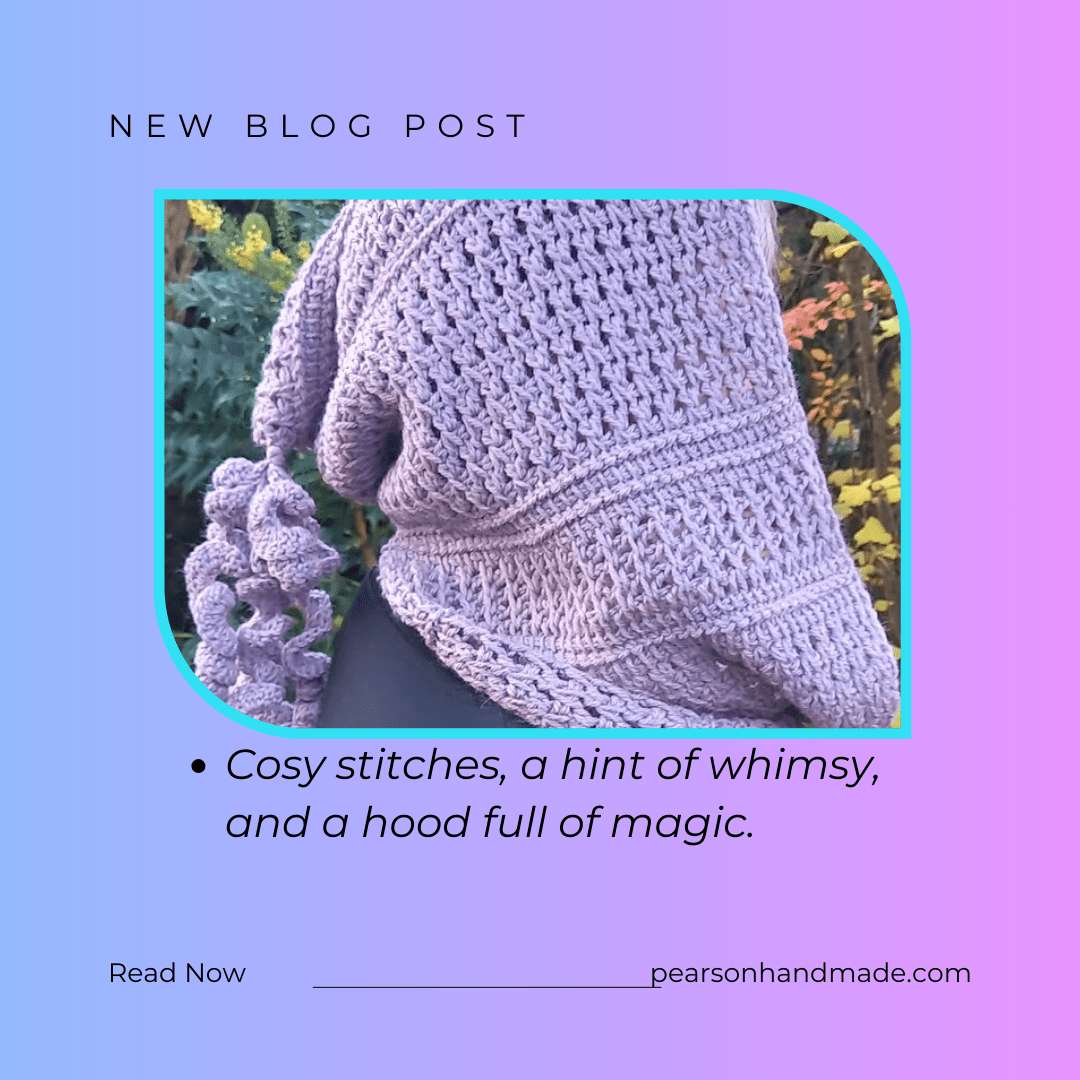
The Mistwood Hooded Scarf began as a simple question I asked myself while playing with my handspun yarn: what if that cosy autumn wrap I’d just finished… had a hood? I’d been experimenting with Tunisian crochet stitches, enjoying the textures and the meditative rhythm, and the finished wrap had such lovely weight and drape that I couldn’t help imagining more.

But as these things often go, my first attempt taught me exactly what not to do! The original shawl was far too wide to fold into a hood — a quick try-on left me with fabric flopping in front of my eyes. Practical, it was not.

So I went back to the sketchbook and re-imagined the piece as a narrower scarf: still enveloping and warm, but proportioned perfectly for a folded hood. With that settled, I knew the next step was choosing the right yarn. I loved the feel of my handspun wrap, so I set out to find a worsted-weight yarn with a high wool content and good structure.

A browse through Wool Warehouse (dangerous, as always…) led me straight to Cascade 220. It ticked every box — and then came the matter of colour. I like to pretend I considered several options, but the moment I saw Lepidolite Heather, a soft purple with subtle depth, the decision was made. A quick bit of yarn maths told me I’d need four skeins. Maths isn’t my strongest skill, but happily, I was spot on.

The scarf itself worked up quickly. The hood folded neatly, just as I’d hoped. But it needed one final playful touch — something a bit whimsical. So I crocheted a set of curly “tails” to sit at the point of the hood. Completely unnecessary… and completely delightful. They made me smile, and I hope they’ll do the same for anyone who makes or wears this piece.

The pattern is now available in my Etsy shop and on Ravelry (hence this slightly late blog post!)..

Whatever colours or yarns you choose, I hope the Mistwood Hooded Scarf brings warmth, joy, and a little touch of magic to your making.

Happy crafting until next week, when I’ll be focusing on cosy crochet projects for chilly evenings.

Sue

A New Yarn Begins: Welcome to Pearson Handmade

A new yarn (and a new adventure!) begins as I share my journey with fibre, creativity, and a touch of chaos from my handmade studio.

Hi, I’m Sue — the creative hands behind Pearson Handmade — and welcome to my very first ‘proper’ blog post!
This is my foray into writing a regular weekly blog, so wish me luck. I thought I’d start by sharing a little about what I do, why I love it, and what you can expect in future posts.

My mum taught me to knit, crochet, and cross-stitch when I was a child. Later, when I studied design at college, I discovered that it was possible to work entirely from scratch without a pattern — and that nothing is ever really a mistake (it can always be cut up and reused somewhere else!). I also fell in love with beading, feltmaking, and braiding during that time.

Fast forward to 2020: during the lockdowns, I bought some beautiful yarn and an expensive crochet pattern that turned out to be frustratingly unclear. I ended up unpicking the whole thing, tossing the pattern, and thinking “I could write a better one.”
And that’s how my journey into designing began.

More recently, I’ve taken up spinning and weaving — because, frankly, yarn is my thing and I love having it in my hands. I’m also moving more toward natural fibres and a zero-waste approach, so expect more about that in future posts.

My earlier patterns (pre-2025) are still available on Ravelry and Lovecrafts, but since Brexit, all of my work — both patterns and handmade pieces — can be found exclusively in my Etsy shop.

Thanks for reading, and I hope you’ll join me each week as I share more about my creative process, inspirations, and projects on the go.

A month of making

New textures, colours, and creative calm

Pebble and Loop Scarf Pattern

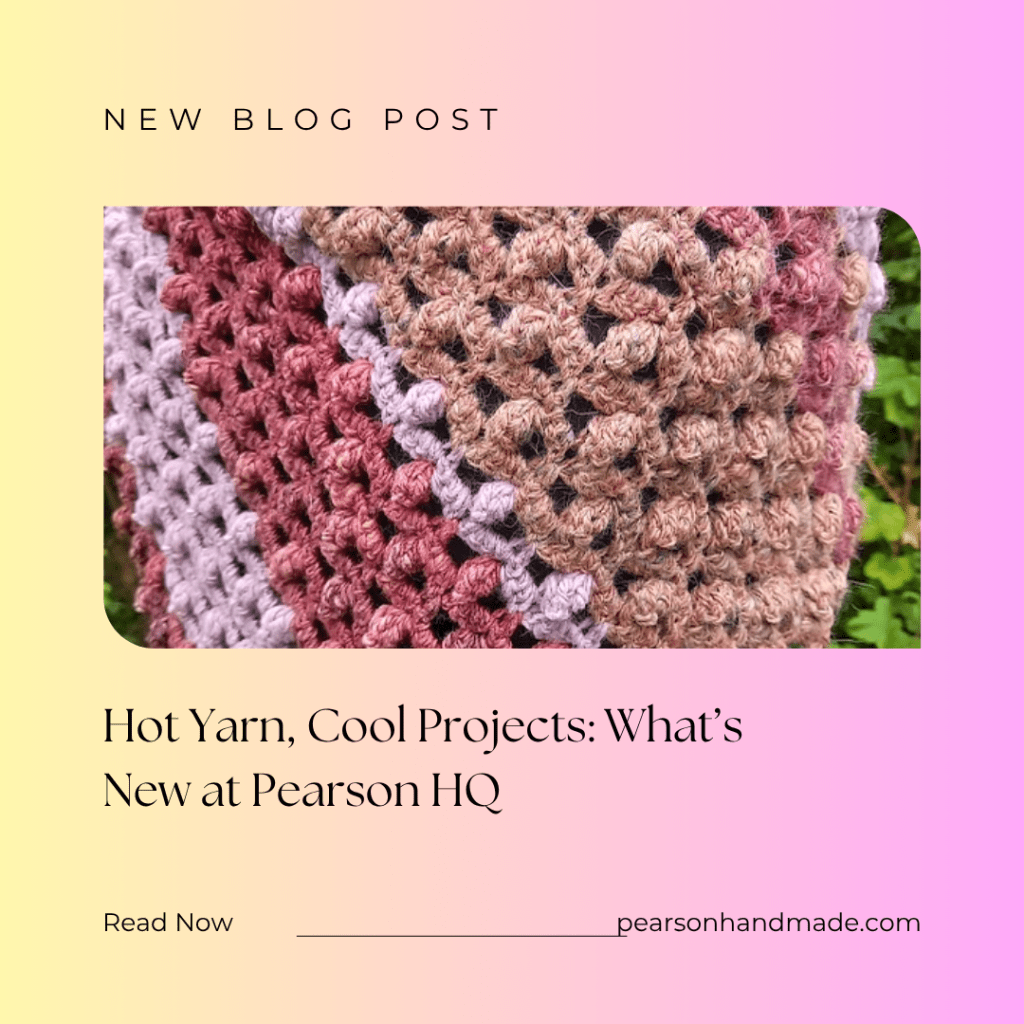
I’m excited to share my latest crochet design: Pebble and Loop. This triangular scarf blends plump popcorn stitches with airy chain spaces to create a fabric that’s both light and sculptural. It grows gently along one edge, making it easy to adjust to your preferred size—from a snug cowl to a generous wrap.

This pattern is designed with versatility in mind. It works beautifully in any yarn weight and drapes elegantly when blocked. Whether you’re using handspun or a favourite commercial yarn, Pebble and Loop offers a rhythmic, mindful stitching experience—perfect for wrapping yourself (or someone you love) in warmth and texture.

The pattern is now available on Etsy.
(Written in English using UK crochet terms.)


🎨 Colour Play & Commissions

I’ve been working on commissions for a national crochet magazine this month. One design is finished, and I’m deep into the second. I love the chance to explore new yarns and colour combinations—especially when it pushes me beyond my usual palette.

One of my favourite resources for colour inspiration is Swatch This by Haruyoshi Nagumo. It’s packed with unexpected, effective combinations, and a great tool for rethinking how stash yarns can come together in fresh ways.


🧶 Spinning Joys

July has been all about spinning for me. I took part in Tour de Fleece hosted by Adelaide Walker, and enjoyed working through a gorgeous selection of fibres—from soft blues and greys to creams and browns. Some of that handspun has already become another Pebble and Loop scarf (I will put some images up on my social media next week). It’s such a satisfying way to pair slow spinning with mindful crochet.


🧵 Weaving as Rest

Life has been wonderfully full lately, but I’ve found calm at my rigid heddle loom. I keep things simple with plain weave and let the yarns do the work. Interesting textures and colours from my local yarn shop turn into meditative projects—no pressure, just the gentle rhythm of weaving.


🛠 Free Maker Resources

If you’re looking to support your craft with a few handy tools, I’ve created these free resources:

Project Tracker Sheet
Yarn Gift Tag
Yarn Colour Sample Card
Yarn Fibre Guide
They’re all designed to help you stay organised, inspired, and ready for your next creative project.


🧣 New Crochet Patterns

A few new designs joined the collection this past month:

The Tunisian Tiles Cushion Cover
A richly textured, geometric crochet design.

The Fieldsong Shawl
A large beaded wrap full of movement and grace.

Thanks for reading and being part of this making journey. I hope you found a spark of inspiration here—whether you’re spinning, weaving, crocheting or simply dreaming up your next project.

Feel free to leave a comment and let me know what you’re working on!Happy making,
Sue