Rediscovering an Older Tunisan Crochet Pattern

In my last post, I shared some of the current  projects on my loom, wheel and hook. One of the joys of being a designer is looking back at where it all began. Sometimes you discover just how much you’ve learned. Sometimes you find a design that still makes you smile, and sometimes you realise an old favourite deserves a second chance. I’ve been writing and publishing patterns for crochet and Tunisian crochet since December 2020, and currently have over 70 active listings across Etsy and Ravelry, with some free patterns on my own website.  This week, I’m revisiting the very first Tunisian crochet pattern I ever published. 

On the origins of a Tunisan crochet blanket

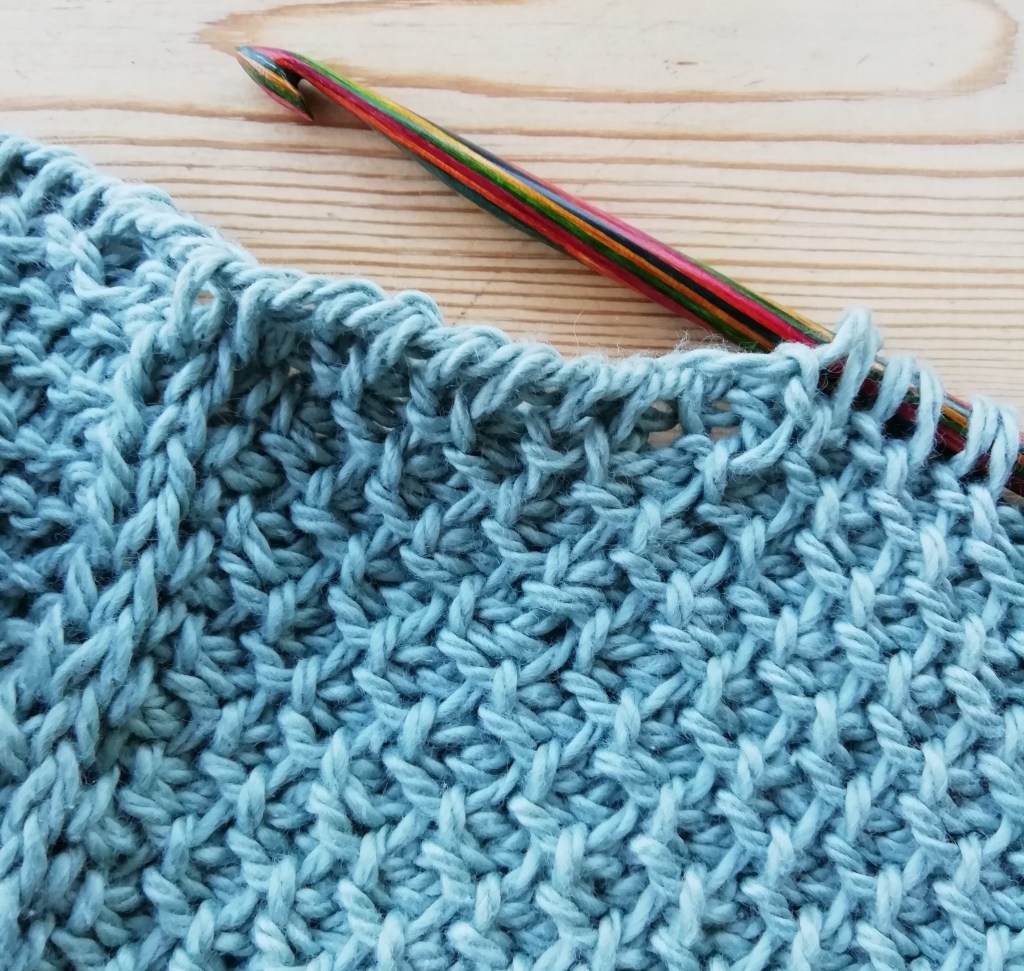
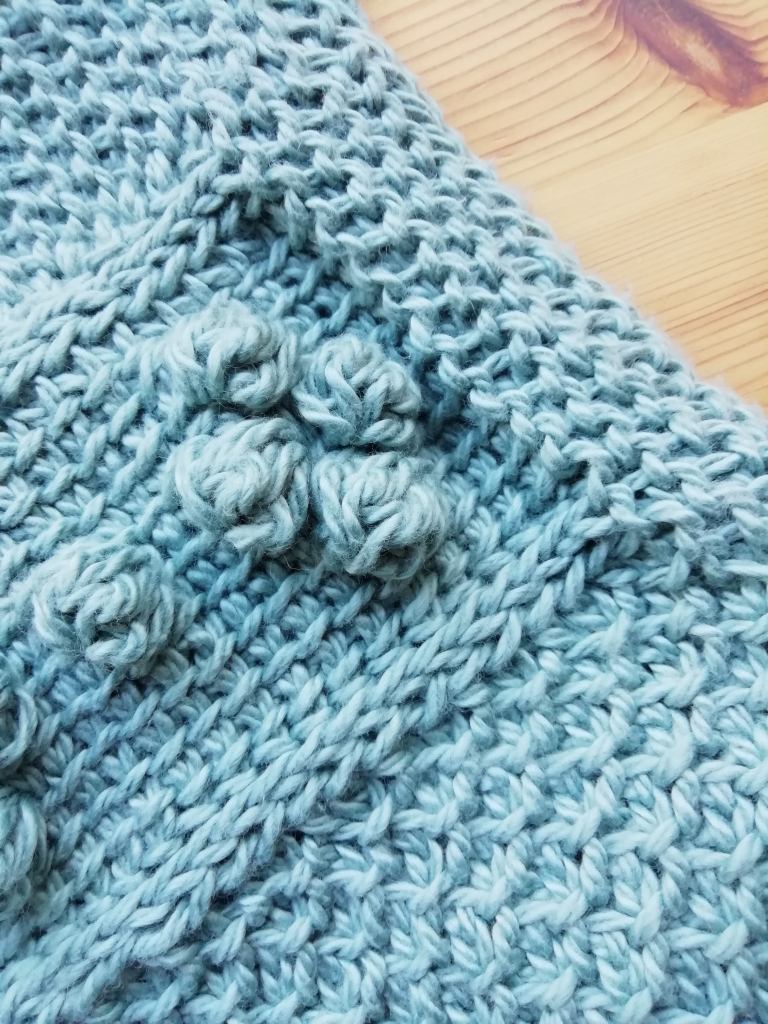
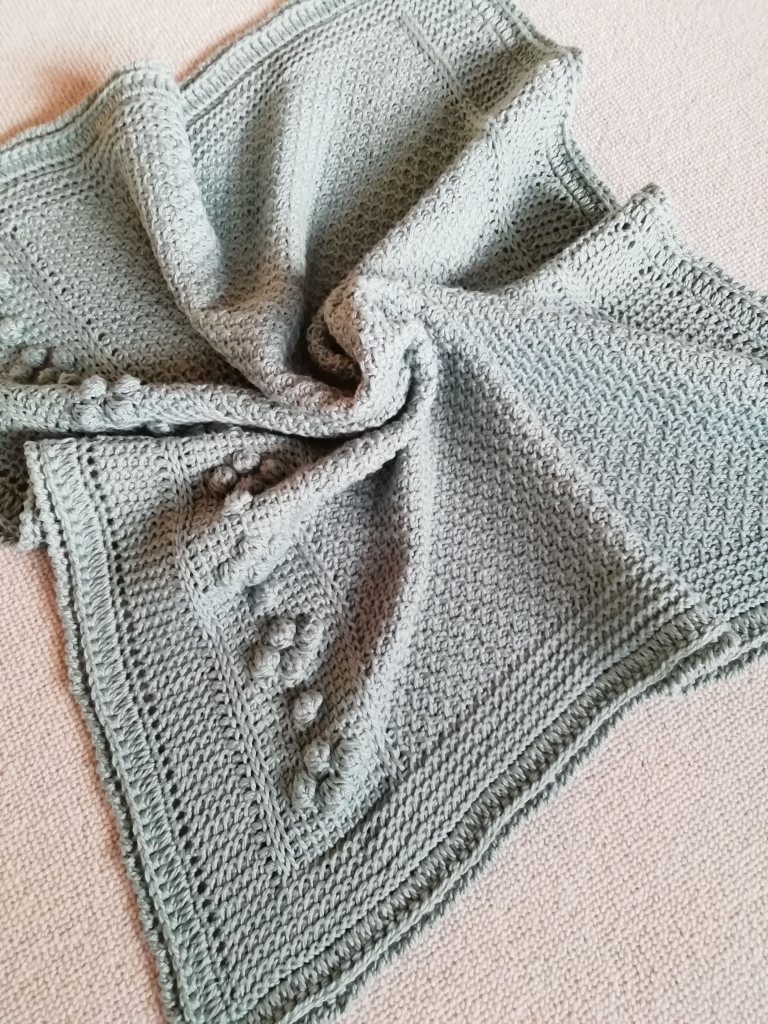
The very first pattern for Tunisian crochet that I ever published was, not very imaginatively, called the Tunisian Bobble Blanket.  It was a relatively simple pattern that involved, unsurprisingly, lots of bobbles and the lovely Honeycomb stitch that helps counteract the curling that is often an issue with Tunisian crochet.  
How it started

Back in 2020, in the midst of lockdowns, sometimes yarn became quite tricky to get hold of.  My mum had a large stash of yarns that she needed to get rid of, and so I acquired nine 50g balls of Debbie Bliss Pure Cotton, an Aran weight yarn that had ceased being made in the 2010s, so clearly my mum had stored it for some time.  It was in a soft sage green colour, not one I would have chosen but, as I say, I was not really in a position to be picky.

Armed with little more than enthusiasm and a handful of Tunisian crochet stitches, I started designing a small blanket.  I wrote the pattern, checked it carefully, and published it to Ravelry for free (because hello lack of confidence).  I never imagined how many people would download it. It remains one of the most popular patterns I’ve ever released. 
Tunisan Crochet Pattern in review

Size-wise, the blanket works as a small throw, and can easily be made bigger by working more pattern repeats.  I like that the pattern is asymmetric, and that the bobble stripe down one side adds interesting texture.  The main body of the blanket, worked in honeycomb stitch, drapes beautifully.  What needs improving is the edging.  For some reason, I worked the outer borders in Tunisian Purl Stitch, which curls greatly, and then had to counteract that by working quite a chunky edging in standard crochet.  Looking at it now, I can clearly see how much my Tunisian crochet technique has improved over the last five years.  ‘Work the end stitch’ is the instruction at the end of most rows of Tunisian crochet, but where to insert the hook is not always clear.  You can almost see my confidence growing across the blanket. By the end I’d finally worked out exactly where to place that elusive end stitch. 
For the future

Revisiting older designs reminds me that creativity is a journey. Every pattern captures what I knew at that moment, and each one has taught me something new. The Tunisian Bobble Blanket may have been my first published Tunisian crochet pattern, but I’m looking forward to giving it the update it deserves and sharing it with a whole new generation of crocheters. 

If you’d like to see more of my older designs, I share regular updates every Throwback Thursday on Facebook and Instagram. I’d love for you to join me there and see what I’ve been making each week.

Until next time, happy crafting!

Sue
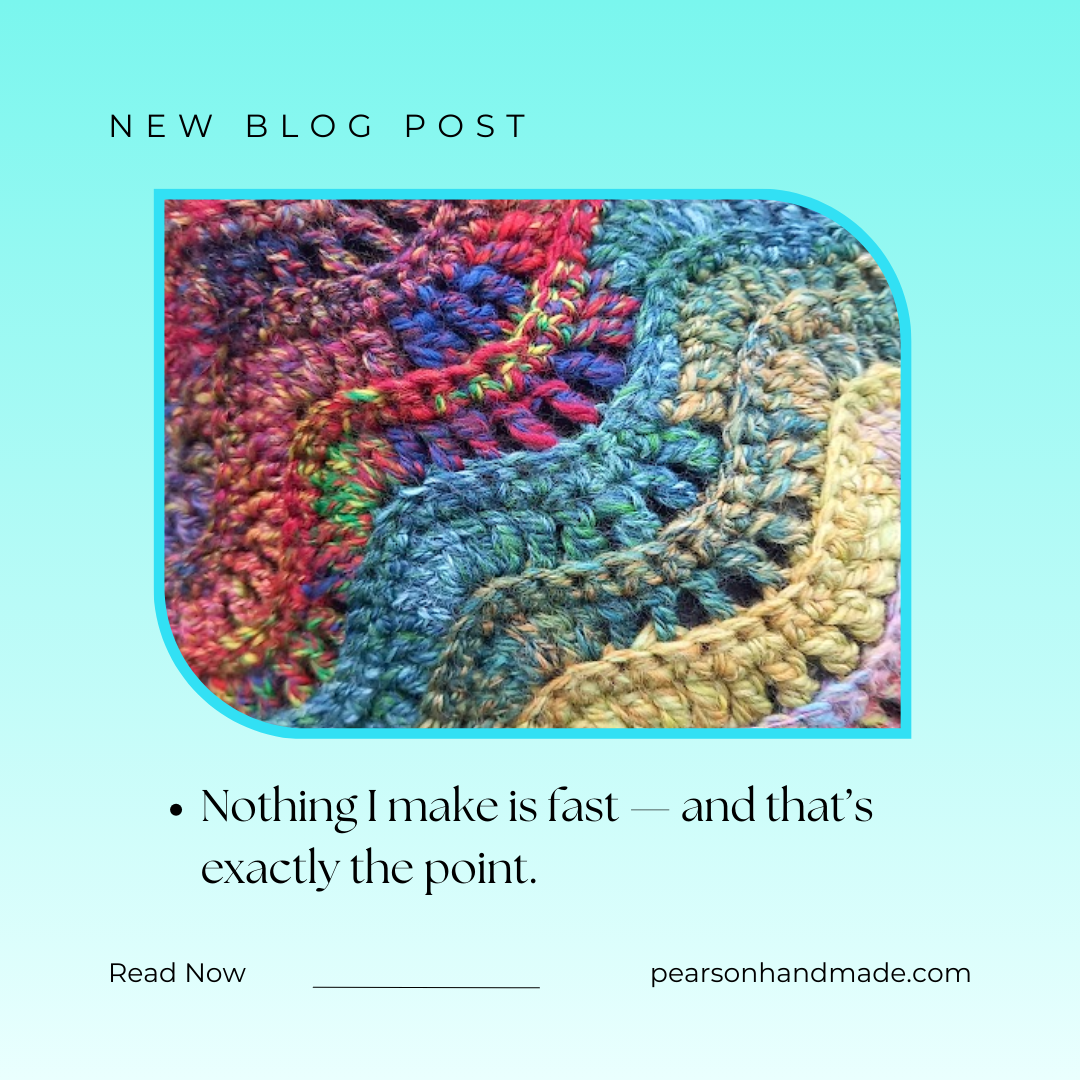
Slowness

In my last blog post I wrote about rhythm and routine. This time, I want to linger a little longer on something closely related: slow making.

Making things with yarn makes me happy. Crochet, spinning and weaving — my preferred methods of making — are, by their very nature, slow. No matter how urgent the project or how close the deadline, if something is going to be made well, it takes time. There is something quietly grounding about sitting down and picking up a project. Your breathing slows. Your shoulders soften. Your focus narrows to yarn and hook, fibre and spindle. Slowness isn’t a weakness in the process; it is the process.

Whenever I try to rush, it rarely ends well. I’ll spot a fairly calamitous mistake six inches back and end up “frogging” everything done in haste. Yarn has a way of reminding you that care and patience matter.

If you’ve seen my social media this week, it might look as though everything has happened at once. Two patterns released. A design published in a magazine. Very productive. Very busy.

But none of it was fast.

A magazine commission

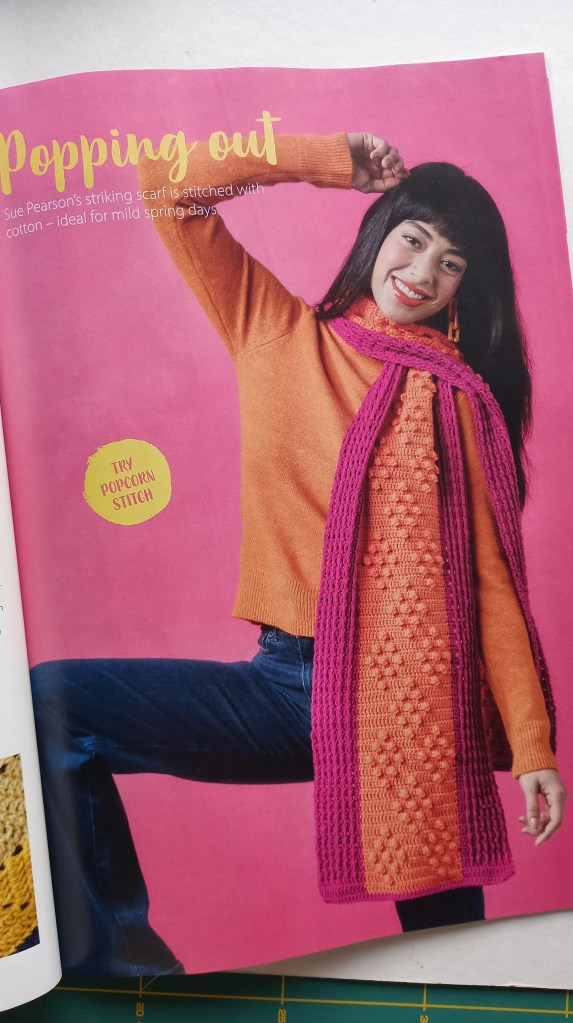
The current issue of Simply Crochet includes a scarf pattern I designed. The initial concept was sent to the editor in June 2025. Colours and yarn were agreed. The deadline for submission was December 1st. After that, the pattern was tech edited, the scarf was modelled and photographed, and the issue was published in February 2026.

From idea to publication: eight months.

Sometimes deadlines are shorter, sometimes longer, but the principle remains the same. The making must be careful. The pattern writing must be clear and accurate. Time has to be budgeted generously and realistically.

And I will admit — it is always a thrill to see my work professionally styled, modelled and photographed. That part never gets old.

Pistachio Breeze Top

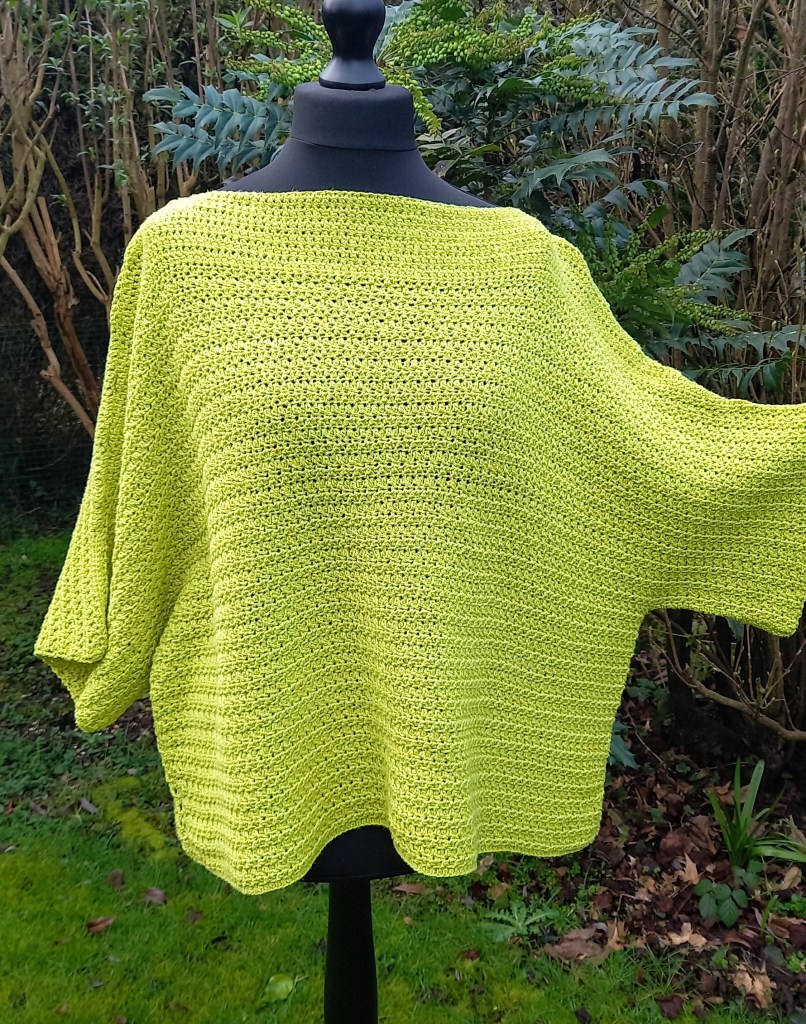
One of the patterns I released this week, the Pistachio Breeze Top, began life in November 2025.

I had a picture in my mind: an oversized top in a very particular shade of green. I spent time browsing yarns, considering weight and fibre content. Once I settled on the right yarn, I sampled. I sketched. I even cut the shape out of brown paper to create a template to work from.

From first spark of an idea to finished design, it took almost four months.

That is the reality behind what looks like a single “new release” post.

Every Last Scrap Cowl

The second pattern, the Every Last Scrap Cowl, is smaller — but no less slow in its origins.

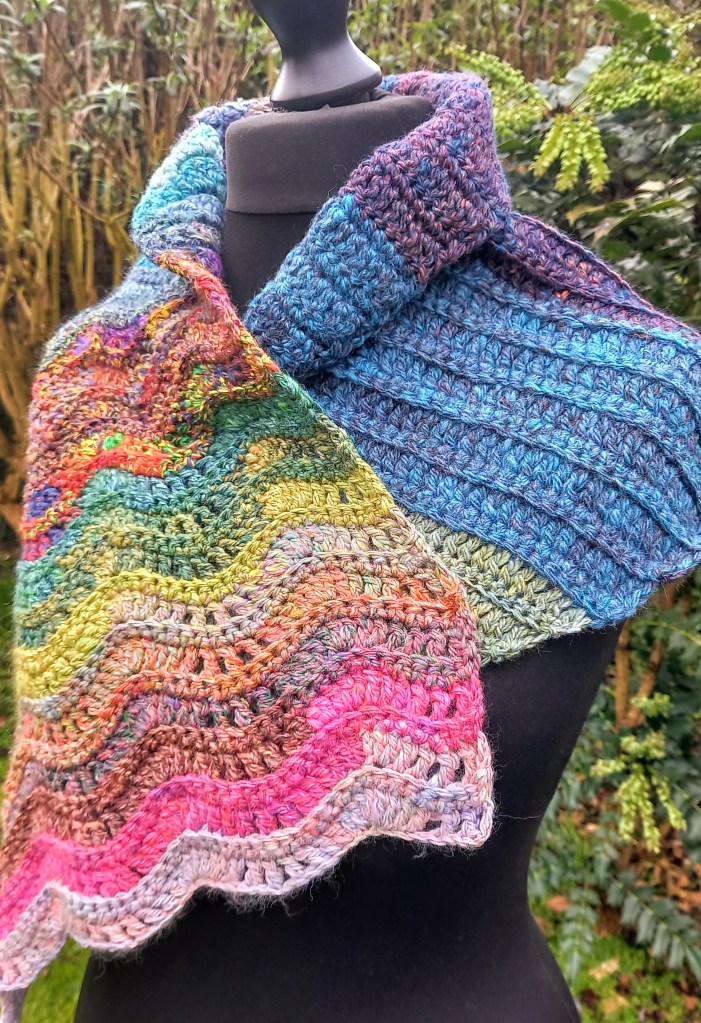
The yarn is entirely handspun. Over half of it came from a Yorkshire Blends sample box bought from Wingham Wools in January. As part of my ongoing quest to improve my spinning, I spent a lovely morning at Old School Crafts Minting with Zoe, who showed me how to chain ply.

The spinning itself was slow and thoughtful. The design process was intentionally simple — I wanted the yarn to shine. The making felt joyful and, compared to the spinning, relatively quick over a couple of weeks.

The pattern is available free on my refreshed Free Crochet Hub page — a small celebration of using every last precious length of yarn.

A slow maker’s desk

I am, unapologetically, a slow crafter — and someone who always has several works in progress.

At the moment I have:

  • A scarf on my rigid heddle loom
  • A crochet shawl design in a glorious gradient yarn (for an intermediate crocheter)
  • A bobble hat in testing (for a confident beginner)
  • A Tunisian crochet poncho design almost finished (for a confident beginner)
  • A moss stitch shawl design started purely for the pleasure of something gentle and undemanding

On the spinning wheel, I’m nearly at the end of a sample box from Adelaide Walker, a Christmas gift from my husband. I have no doubt those yarns will find their way into a future design.

Slowness doesn’t mean stagnation. It means depth. It means intention. It means allowing ideas to unfold at the pace they need.

And in a world that often feels rushed, I think that matters.

Happy crafting,
Sue