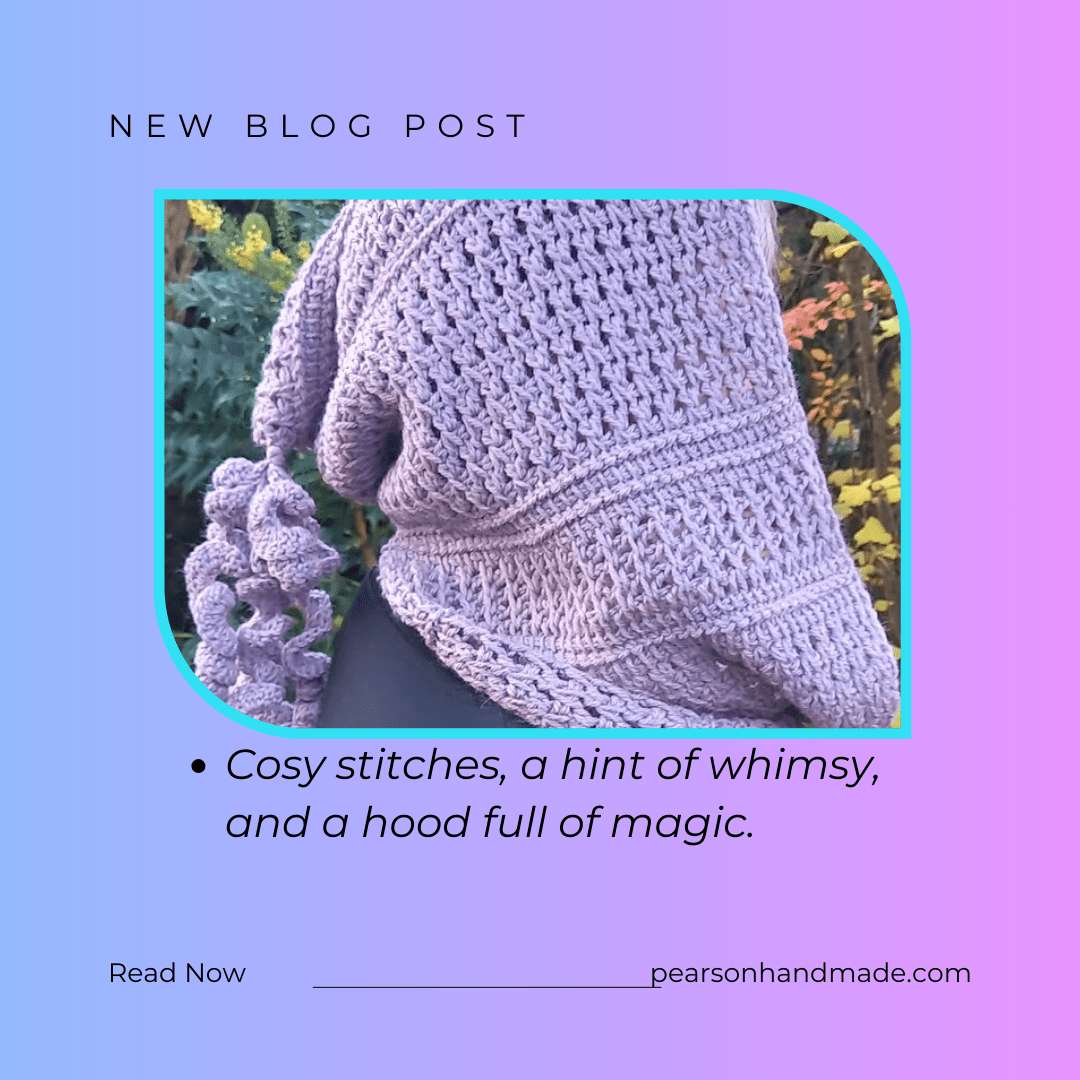

Last week, I introduced you to my latest Tunisian crochet design, the Mistwood Hooded Scarf. This week, as the evenings draw in and the temperature drops, I wanted to share a few ideas for cosy crochet projects that are perfect for slow, comforting making on chilly nights.
For me, truly cosy projects begin with the yarn. Choosing fibres that feel warm, soft, and satisfying in the hands makes all the difference when you’re settling in for an evening of crochet.
One of my long-standing favourites is Drops Nepal, a wool and alpaca blend classed as an aran weight. It has a lovely warmth and weight, and because it’s aran, projects grow quickly – always a joy when the evenings feel short. I’ve recently designed a particularly cosy project using this yarn, which will appear in the next issue of Simply Crochet magazine, out on 23rd December.
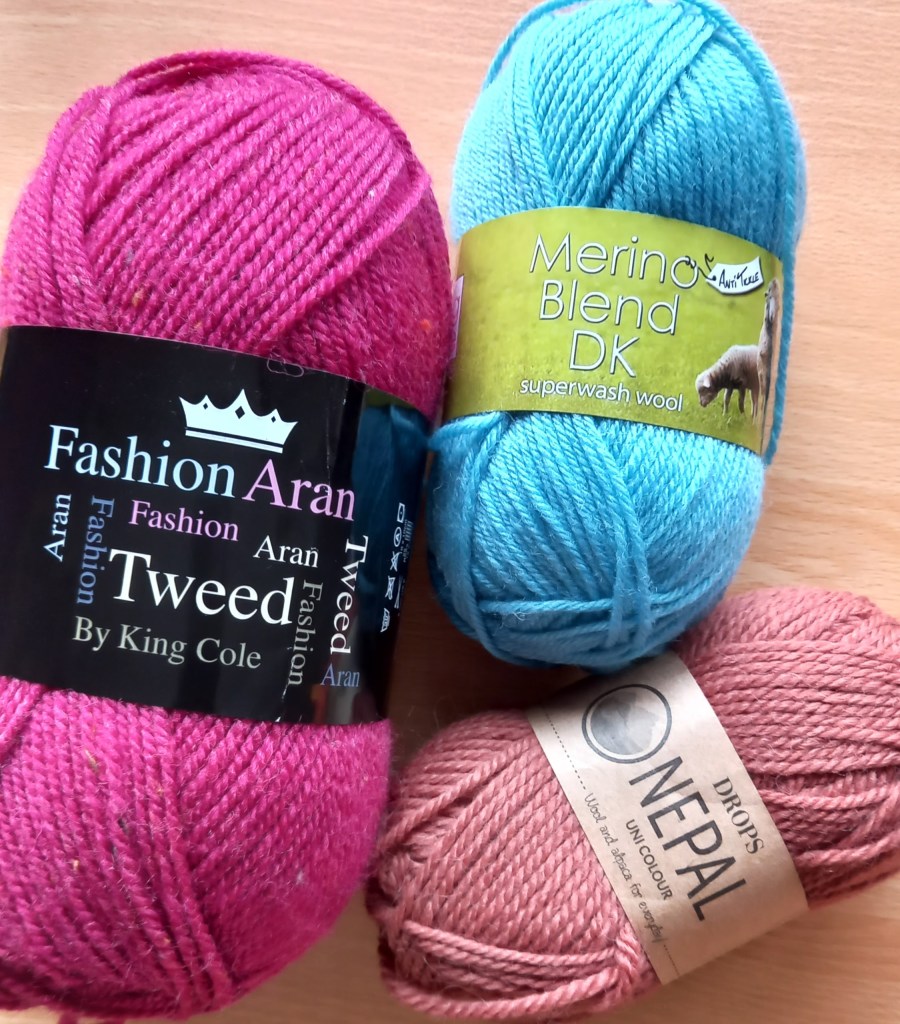
I also regularly use King Cole Fashion Aran, which comes in a huge range of colours. With 30% wool, it’s a more affordable option, making larger projects such as blankets feel achievable without worrying too much about cost. More recently, I’ve discovered King Cole Merino Blend DK, a superwash 100% wool yarn that has worked up beautifully and feels wonderfully soft.
Of course, if you’re able to spin your own yarn, you can really lean into seasonal colours and textures. This very Christmassy Corriedale and sari silk blend from Adelaide Walker, called Medina, is a perfect example – full of depth, warmth, and character.

Once you’ve chosen your yarn, it’s time to find a project you’ll genuinely enjoy. A quick search on Ravelry using the yarn weight you have to hand will reveal plenty of hats, gloves, and scarves that work up quickly and make satisfying gifts. That said, I don’t think there’s much better than crocheting a blanket or throw at this time of year. The gentle weight of the fabric resting in your lap is incredibly comforting, and as the piece grows, you almost find yourself wrapped in its warmth.
Over the years, I’ve built up a small library of pattern books, and the ones I still return to most often include:
- Crocheted Throws and Wraps by Melody Griffiths
- The Art of Crochet Blankets by Rachele Carmona
- Rainbow Crocheted Blankets by Amanda Perkins
- Beautiful Blankets, Afghans and Throws by Leonie Morgan
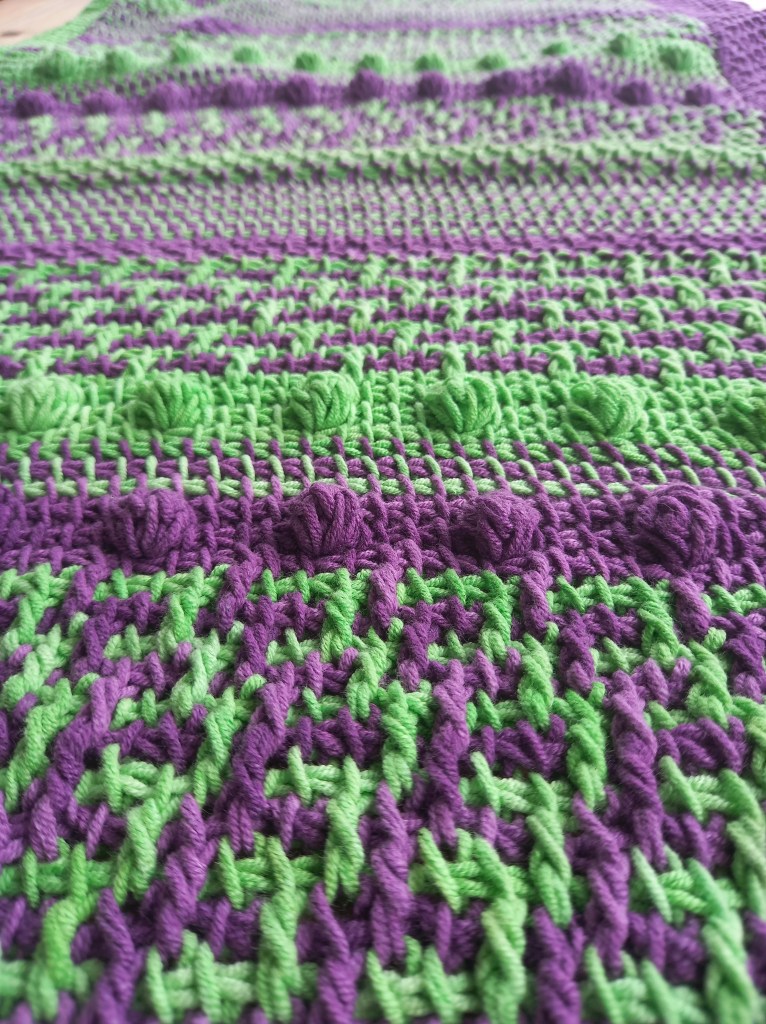
If you’d like to try your hand at Tunisian crochet, Toni Lipsey’s The Tunisian Crochet Handbook is full of cosy, inspiring projects. One of my own bestselling patterns, the Winterborn Throw, is a Tunisian crochet design worked in Fashion Aran yarn and is ideal for slow winter evenings.
However you choose to spend your crafting time, I hope these ideas encourage you to embrace slower making, warmer fibres, and projects that bring a little extra comfort at this time of year.
Happy crafting until next time – which will be after the Christmas break, when I’ll be turning my focus to fibre.
Sue