In my last post, I wrote about learning and unlearning. This time, I want to explore mistakes because, to echo the old Sinatra song, “I’ve had a few.”
The trouble with social media, I find, is that perfection is held up as the standard to which we should all aspire. Real life is rather different and, certainly in my case, full of mistakes. That’s not necessarily a bad thing, although I’ve experienced both sides of the argument.
My mum, who taught me the basics when I was a child, always worked from patterns and took enormous care to follow the instructions to the letter. Mistakes were simply not allowed, and the whole process often seemed slightly stressful. Much later, when I enrolled on a City and Guilds Design and Embroidery course at the local art college, I discovered the joy of experimentation. Trying something out simply for the pleasure of seeing what happened was positively encouraged. Even the samples that turned out “badly” could be cut up and incorporated into the next piece of work. The whole experience was incredibly freeing, and I’ve never really looked back.
Now, before we get too carried away, I should say that, in my experience, there are two kinds of mistakes in a project: those I can live with, and those I can’t.
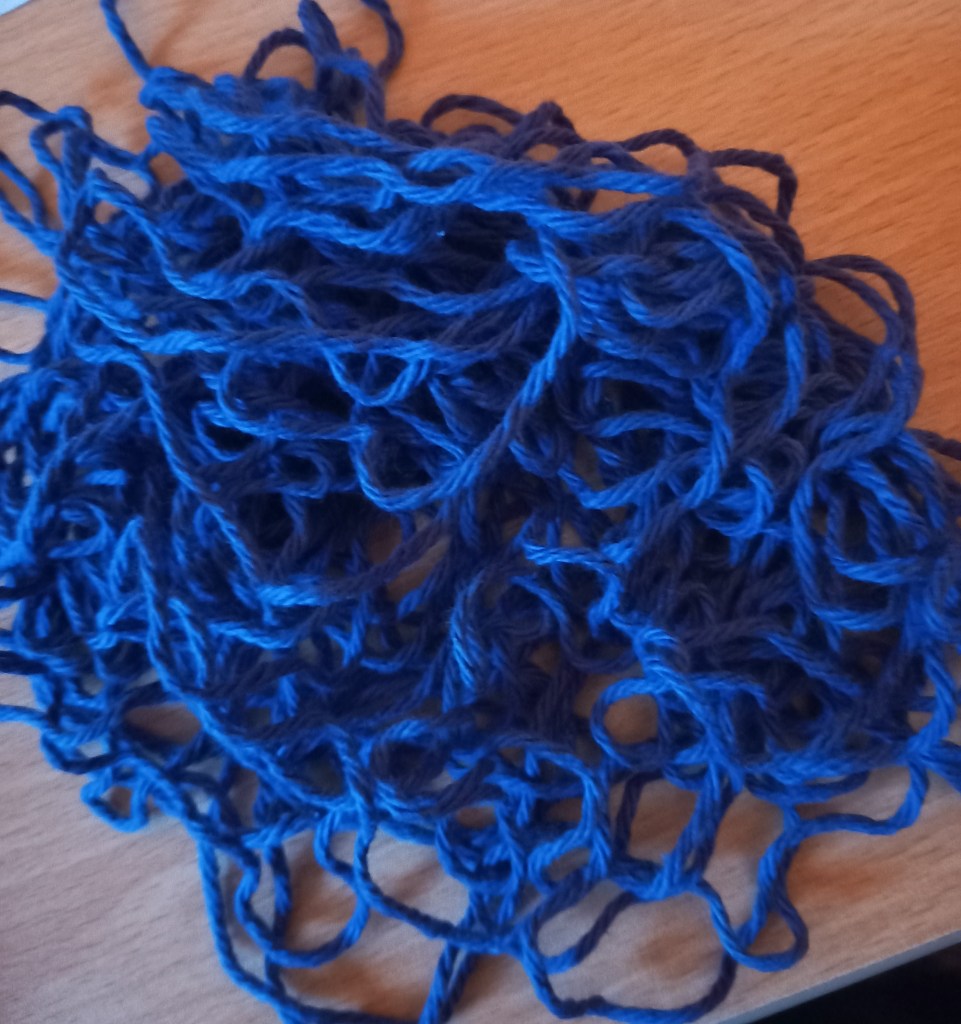
The joy of crochet is that you can put a stitch almost anywhere, so if I discover one stitch fewer than I should have across a row, the answer may simply be to add one discreetly in a suitable place — no drama required. If, however, the mistake is glaringly obvious, then the only real option is to frog the work (so called because of the sound the yarn supposedly makes as it is ripped back to the offending row). Naturally, these errors are usually discovered only after at least twelve inches of progress, which makes the frogging process particularly painful. Still, it’s better than finishing a project only to spend the rest of your life staring at the howling error in the middle of it.
Colour choices are a whole other category of mistake. Sometimes combinations simply don’t work, or you are asked to use colours for a commission that fail to fill your heart with joy. Of course, not everyone agrees on what makes a pleasing palette, and experimenting with unfamiliar colour combinations is always an adventure — and usually a learning curve as well.
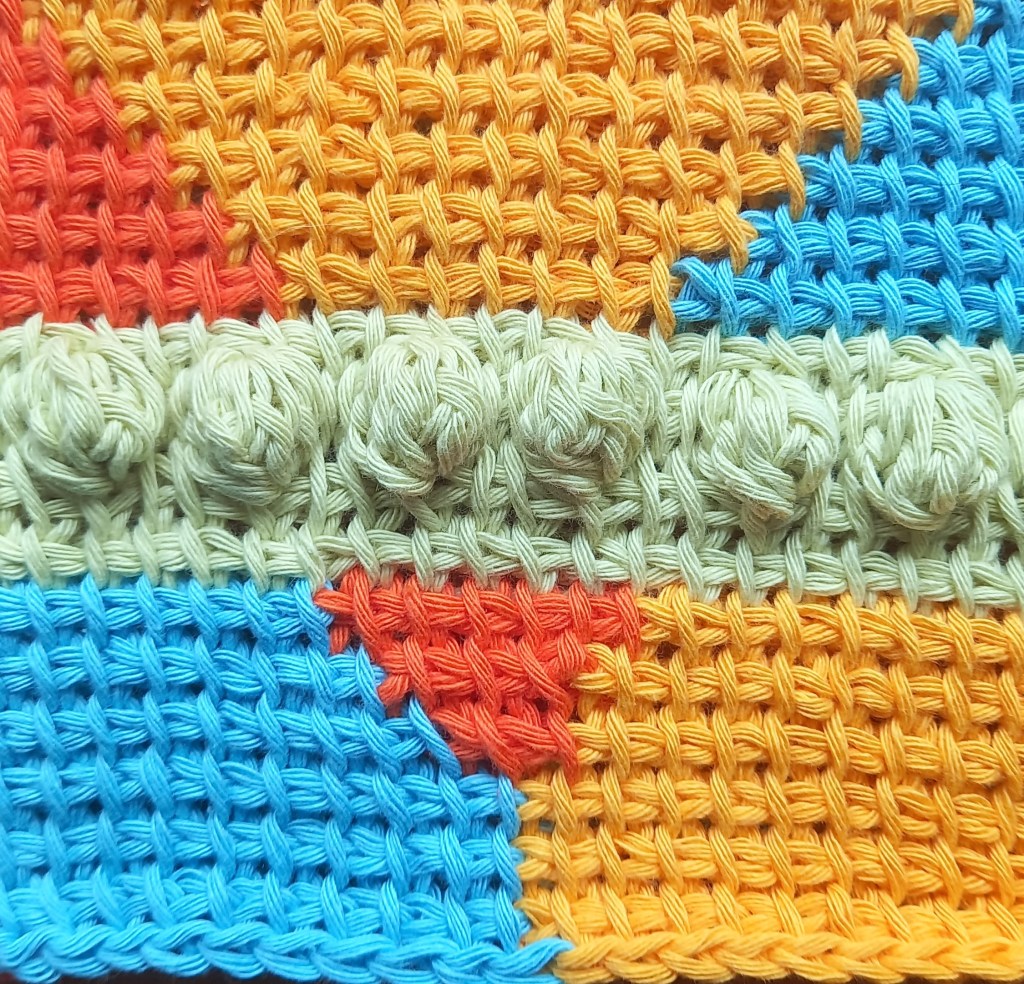
Sampling helps prevent too many disasters. It is far less painful to work out a pattern on a six-inch square than to launch into a large new design and hope for the best. All those samples — some that later became larger projects and some that never developed any further — eventually find their way into a crate. When I have enough, they become the foundation for freeform crochet pieces.
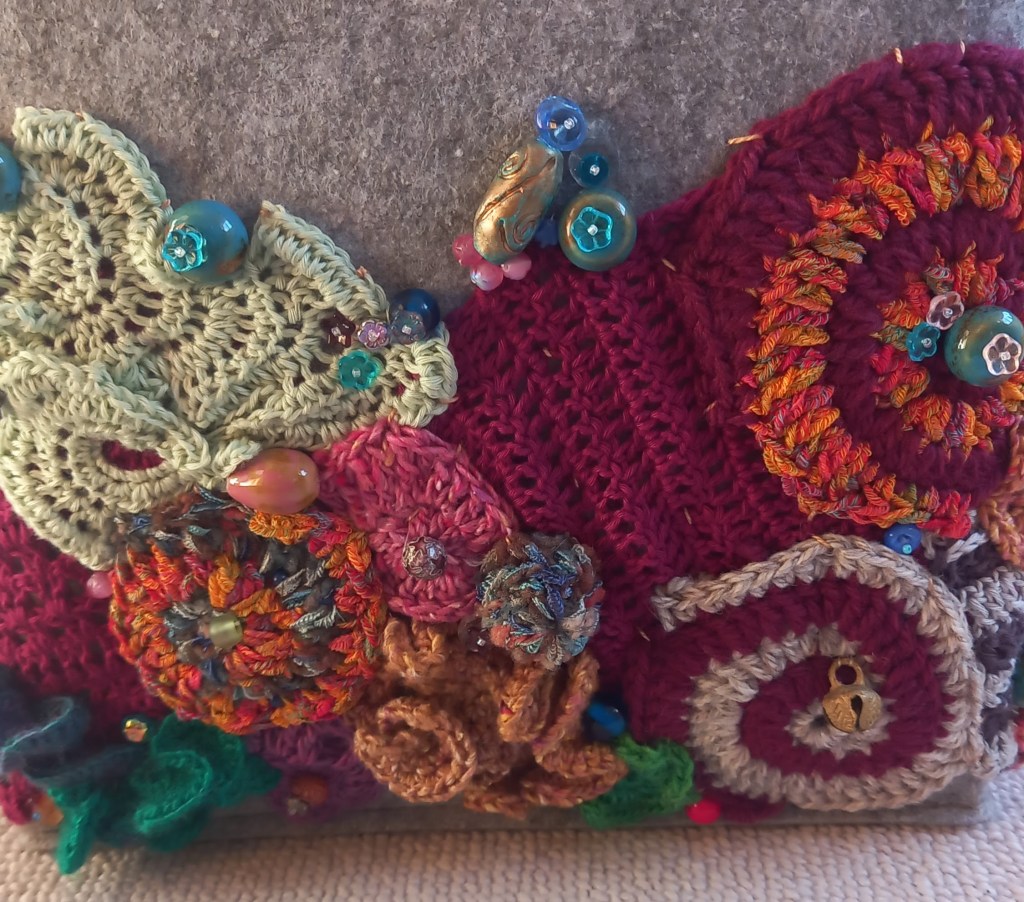
Weaving and spinning are, in some ways, even more forgiving. If my spinning turns out a little uneven, I simply label it an “art yarn” and carry on. The weaving I enjoy most leans towards freeform as well, using leftover bits and pieces or inserting random stripes of open work. Anything goes, really. I weave for the pleasure of handling the yarn, and I tend to avoid strict patterns where every small mistake immediately announces itself.
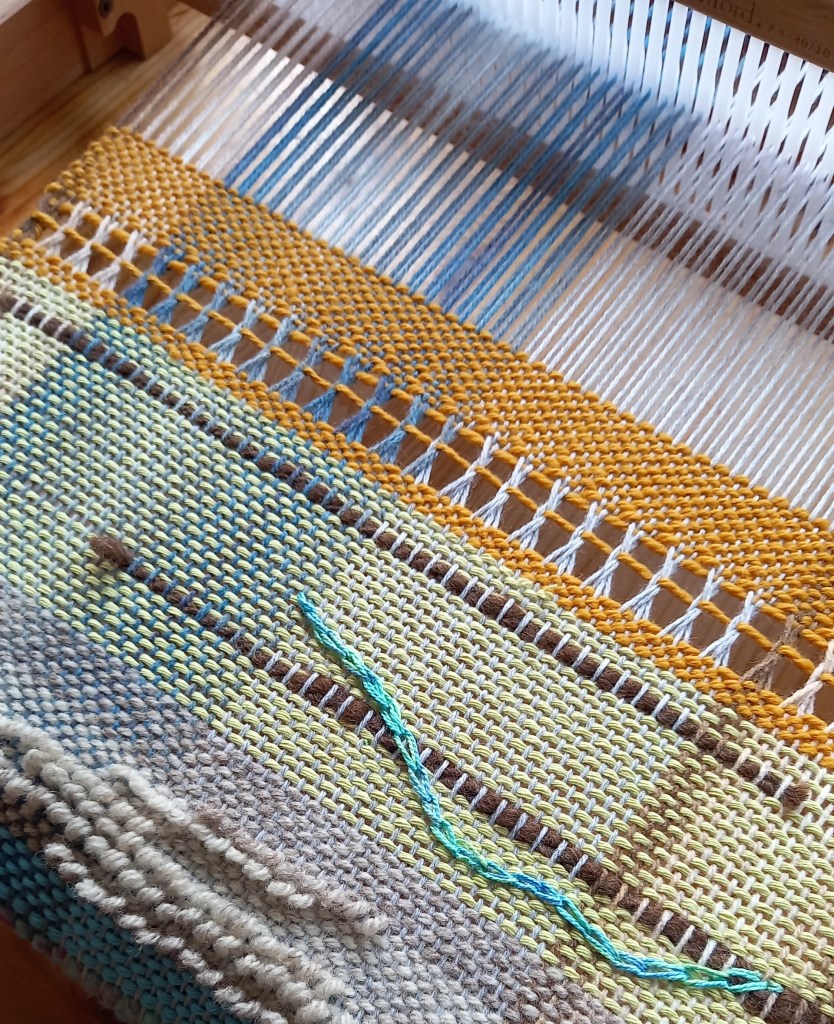
That said, I do sometimes end up with woven pieces that don’t hang quite right once they come off the loom, or whose colours don’t quite sing together, or which simply turn out shorter than intended. Some people might call these failures or mistakes, but I prefer to think of them as challenges. When I have enough of them, I weave them together into a double-thickness throw — perfect for cold winter evenings.
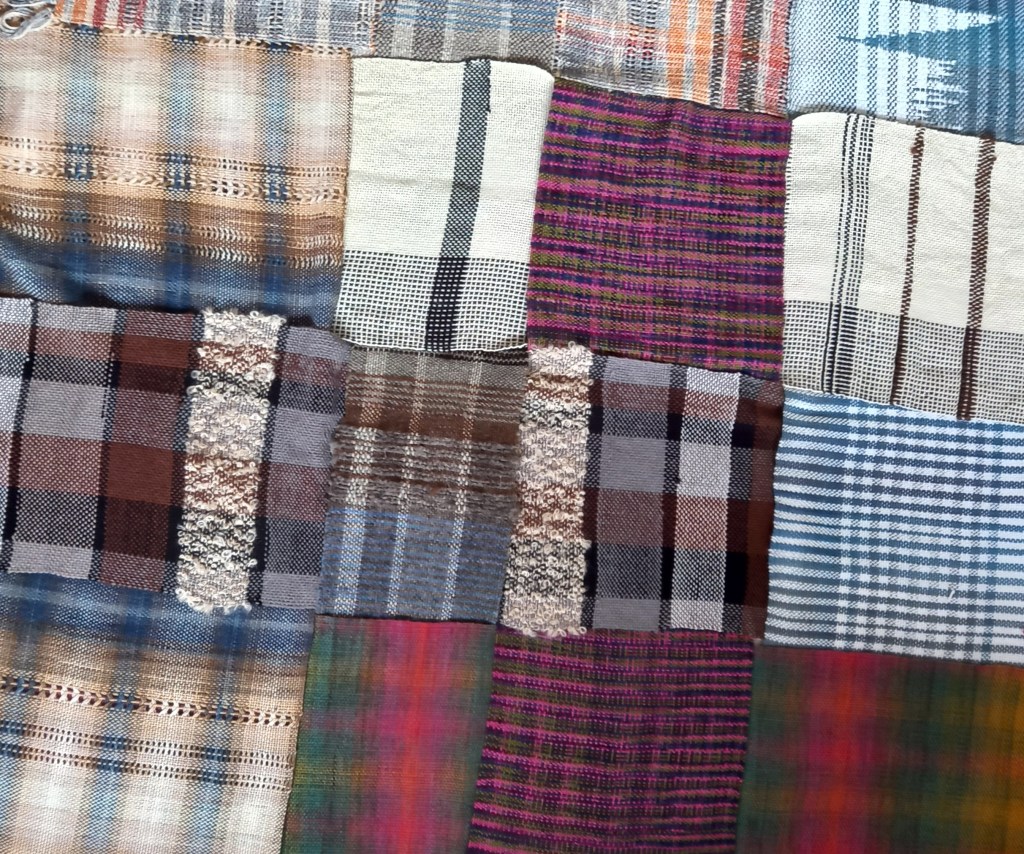
Perhaps that’s the real lesson about mistakes in crafting: very little is ever truly wasted. Even the things that don’t work out as planned usually teach us something, lead us somewhere unexpected, or become part of something new later on.
Happy crafting.
Sue


