In my last post, I wrote about colour. This time, I want to explore texture and structure—the physical qualities that shape how a piece looks, feels, and is ultimately used.
I mainly crochet using commercial yarns, which tend to fall into two broad categories: smooth and predictable, or highly textured. I almost always choose the former. I’ve realised this is because I like to be in control of where the texture sits within my work. When the yarn itself is very textured, that choice is already made for me.
Those heavily textured yarns are often acrylic, which I increasingly try to avoid. That said, in the spirit of reducing waste, I’ll happily use any yarn in the weft of my weaving. In that context, unpredictability becomes a strength—thick-and-thin textures can add real interest and depth.
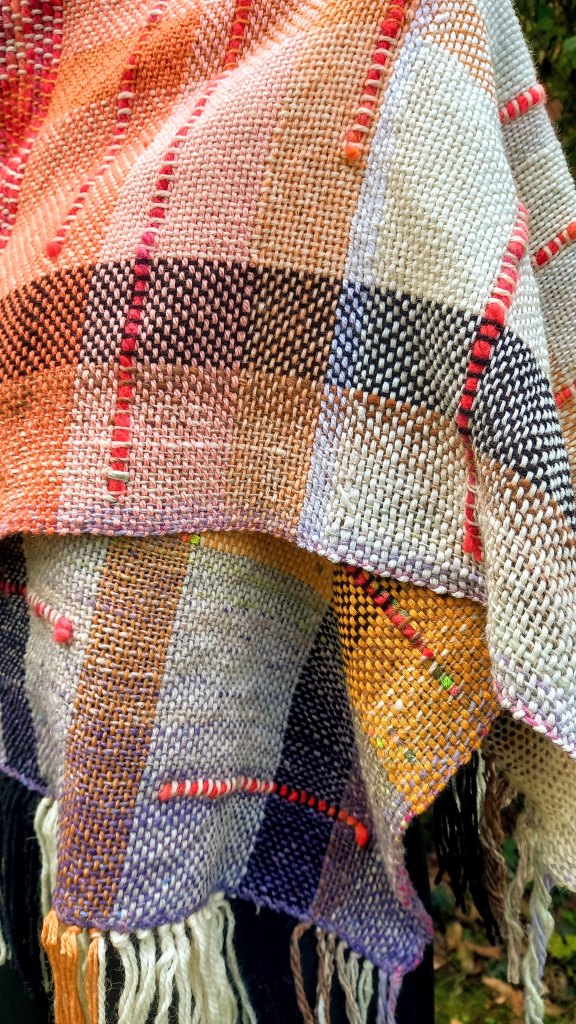
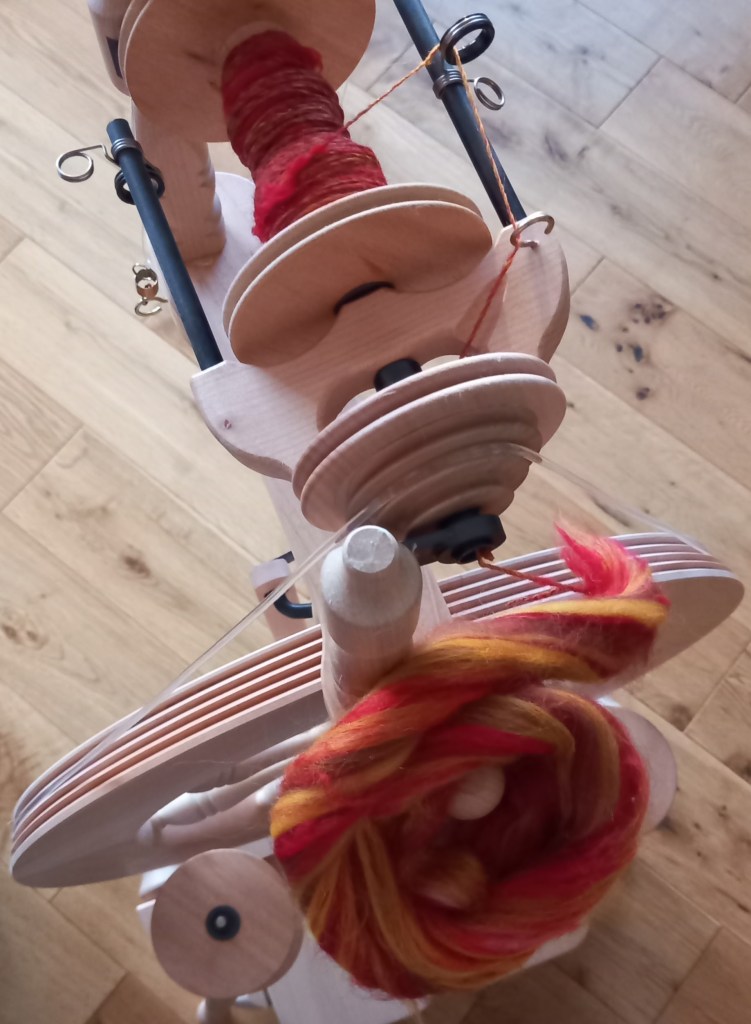
An exception to my preference for control is my own handspun yarn. As I’m still developing that skill, my yarn is naturally a little uneven—but that unevenness is part of its charm. Recently, I spun some combed tops with sari silk, and the resulting slubs were beautiful. Yarns like that feel best suited to weaving, where their texture can really shine.
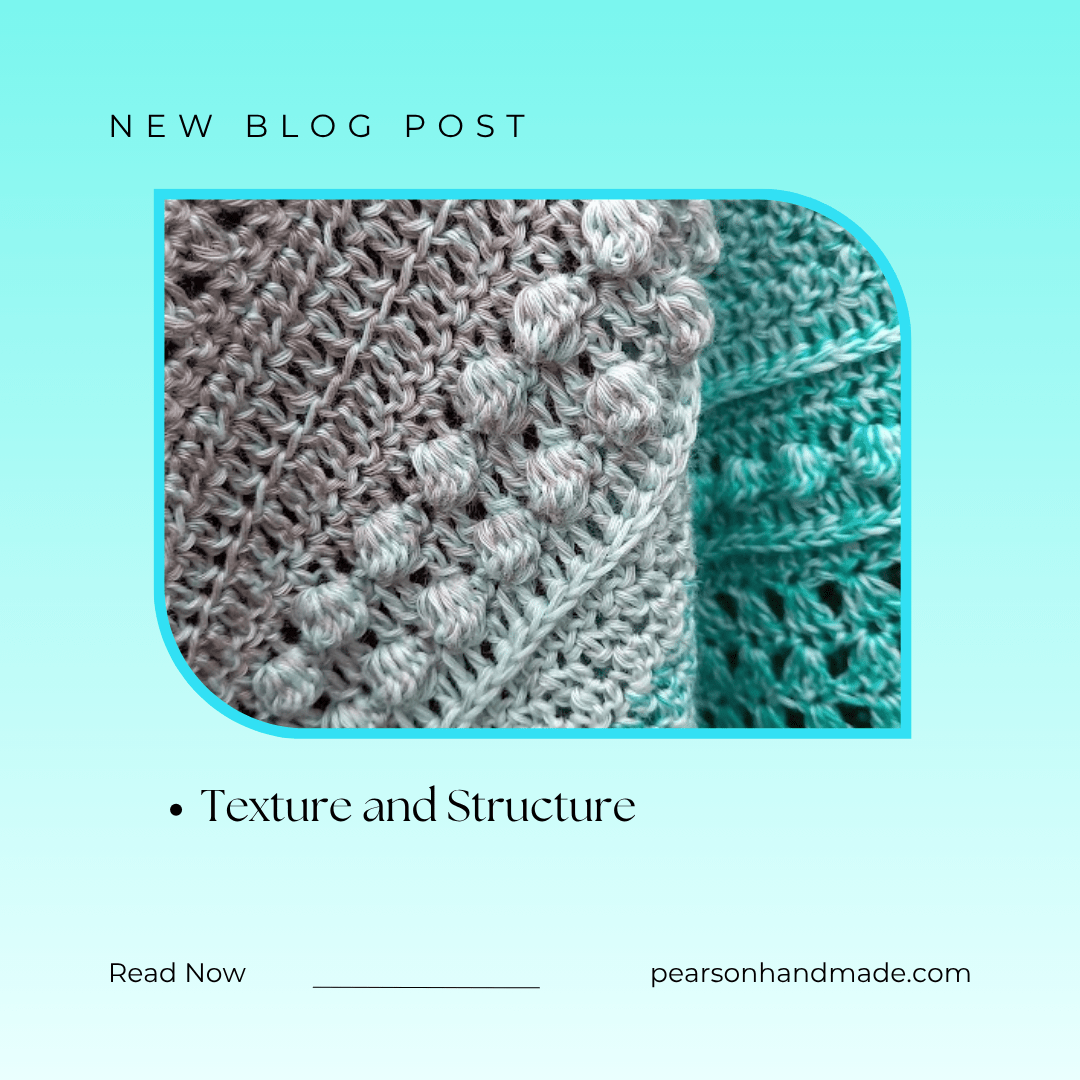
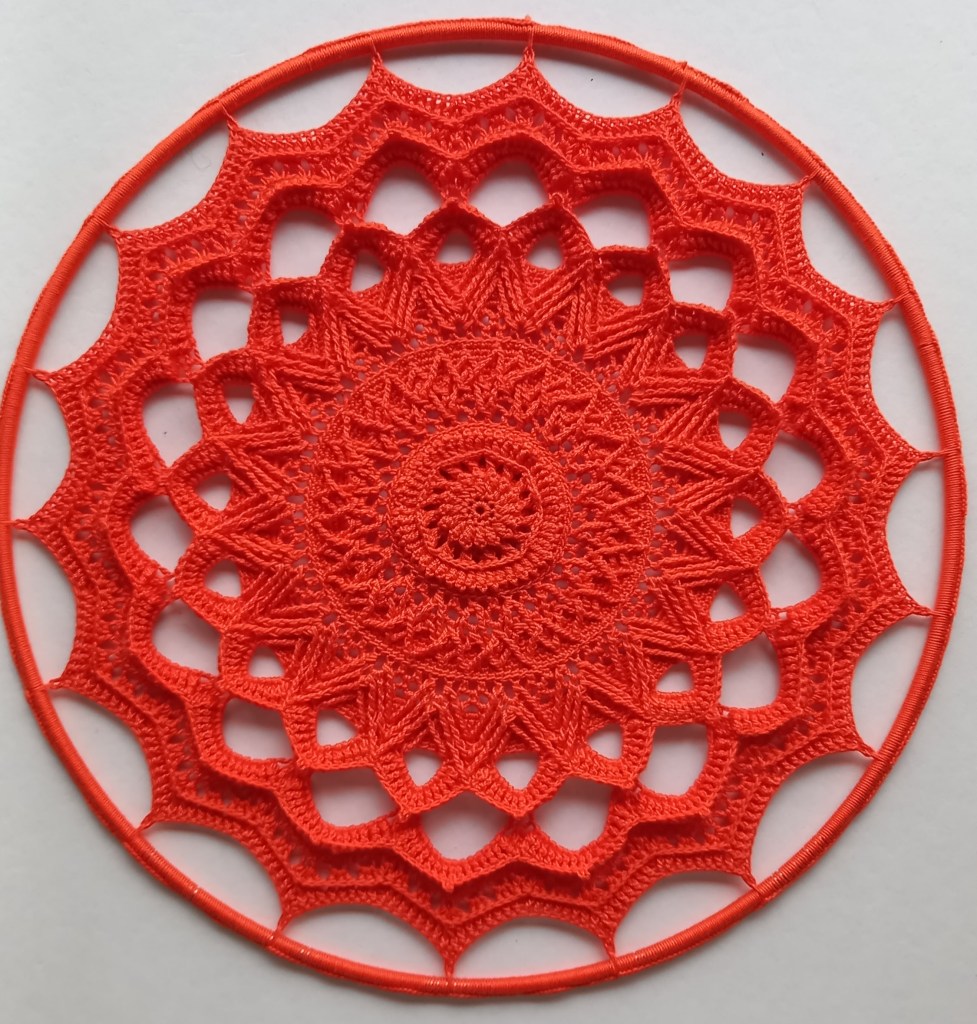
When I do choose smooth commercial yarns, the texture comes from the stitches themselves. With a fine mercerised cotton such as Scheepjes Sugar Rush, I can create detailed surface interest using popcorn stitches, back loops, and post stitches. I often turn to Grace Fearon’s designs for inspiration—her mandalas are intricate and absorbing, and I enjoy making them simply for the pleasure of the process.
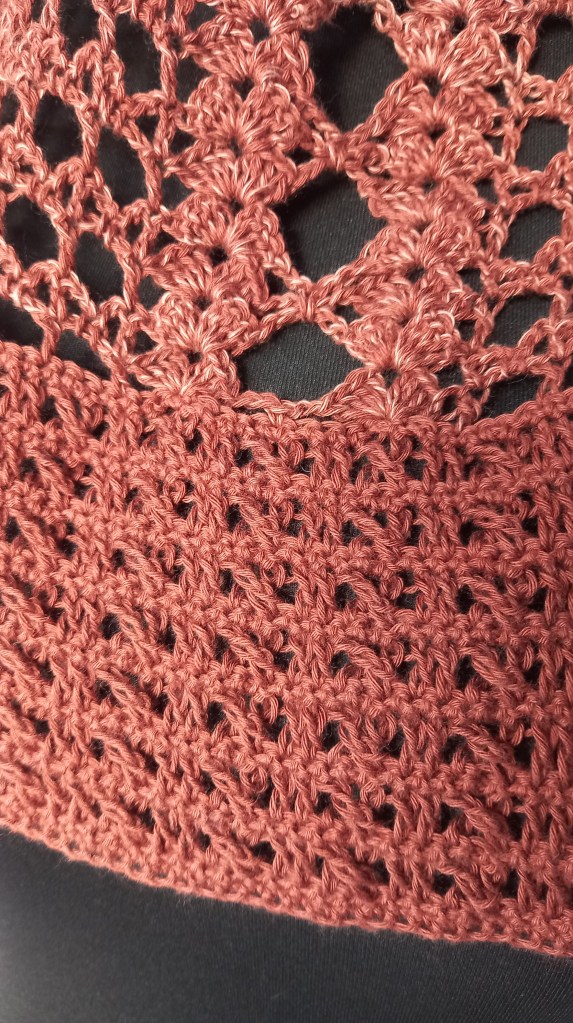
I also use a lot of gradient yarns in 3-ply or fingering weight. These naturally lend themselves to more open structures—spiders, fans, and chain spaces—that create a soft drape. The result is usually a shawl or wrap: something light, elegant, and easy to wear on a cooler evening.
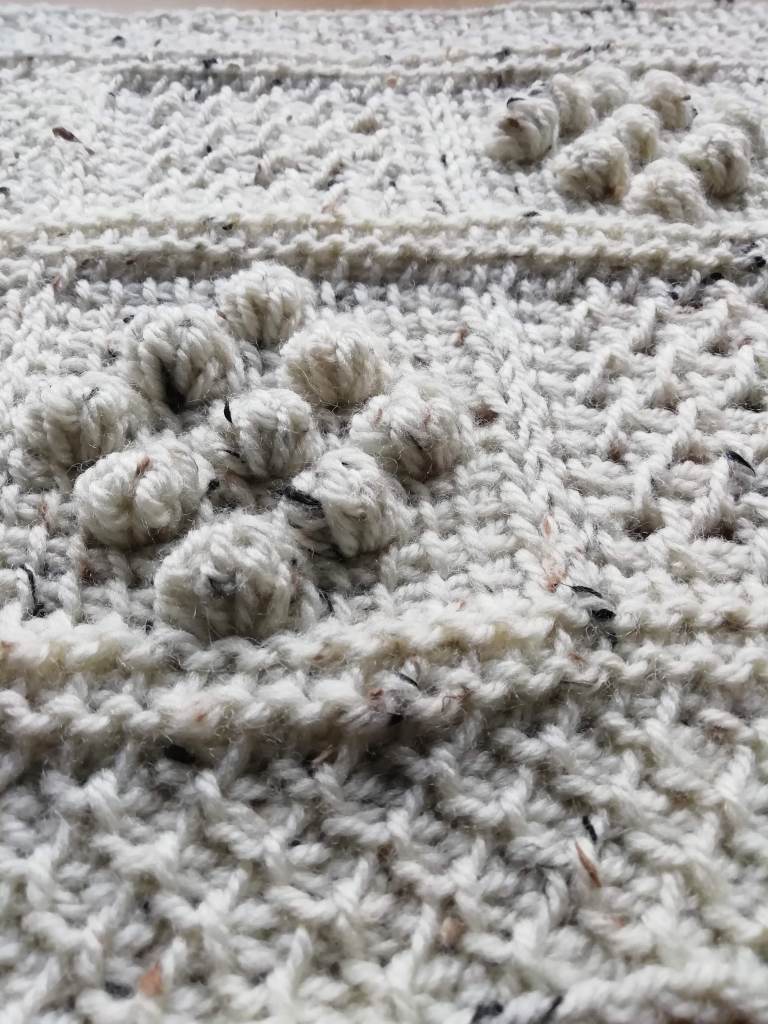
For Tunisian crochet, I tend to reach for a DK weight yarn. Here, texture might come from bobbles or a honeycomb stitch pattern, offering anything from bold definition to subtle surface detail.
Aran weight yarn is another favourite—partly because it grows quickly, but also because of its versatility. Worked densely, it creates a warm, textured fabric perfect for blankets. Worked more openly, the same yarn can produce a shawl with surprising drape and movement.
Texture and structure are not just design choices—they influence how a piece feels in the hand, how it behaves when worn, and how it fits into everyday life. For me, they are as important as colour, and just as personal.
Happy crafting


