In my last post, I wrote about slow making. This time, I want to talk about the tools that make that possible—the quiet companions that sit in our hands and shape what we create.
Mostly, I crochet. My mum taught me when I was about nine years old, showing me how to form chains with a slim metal hook. For years, those narrow hooks—sometimes metal, sometimes plastic—were all I used. I didn’t realise there were alternatives.
Then I discovered hooks with cushioned, shaped grips.
I started with KnitPro, as they were the most affordable, and gradually moved on to Clover Amour hooks. I even tried Tulip Etimo—beautiful, comfortable, and a pleasure to use. For a long time, I coveted a Furls hook. They look so elegant. I was lucky enough to receive one as a birthday gift from my daughter… but sadly (and I do mean sadly), it was simply too long for my small hands.
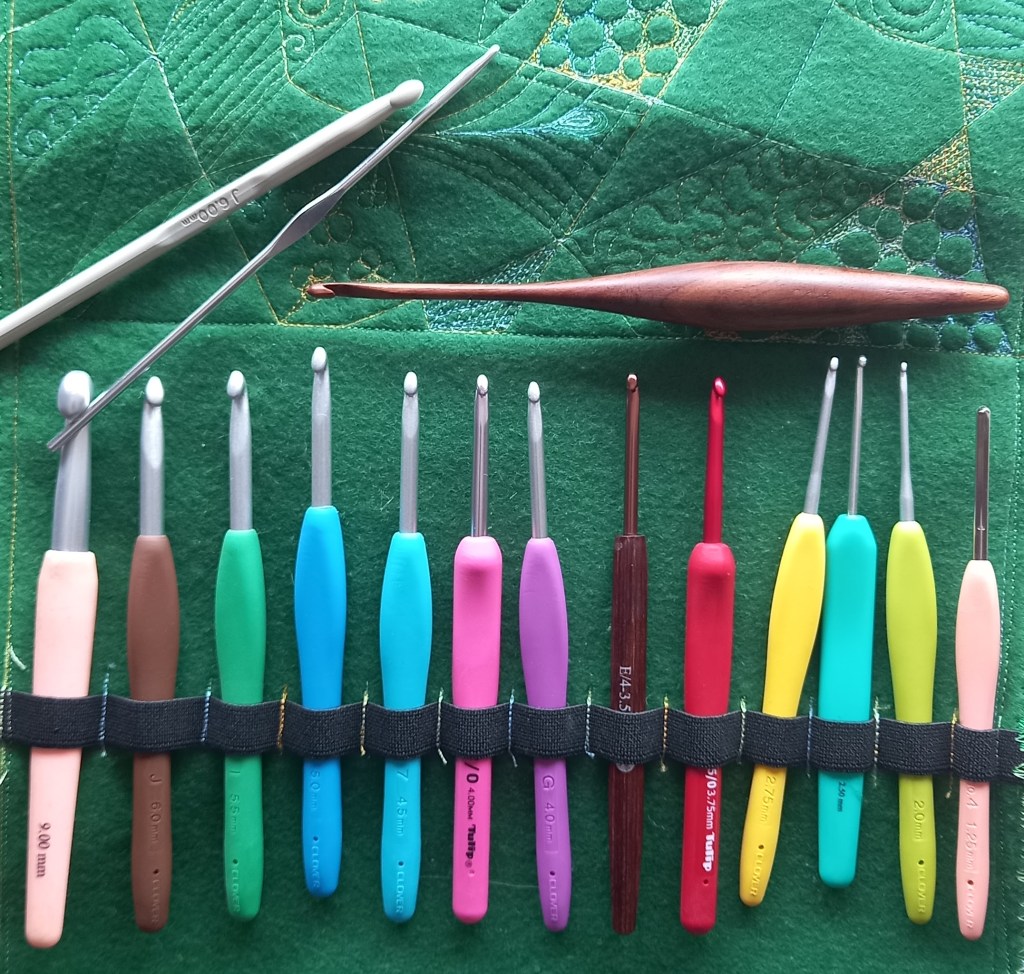
That was when I truly understood just how much variation there is in crochet hooks—and how personal the “right” tool can be.
Finding hooks that suit your hands is a game-changer. My advice? Start with the size you use most often and try different styles. You can always build your collection slowly. Of course, the temptation to buy a full matching set is real—I’m certainly not immune. The Knitter’s Pride Terra set somehow made its way into my basket one day, and I absolutely adore the wooden handles.
Some years ago, while browsing in my local wool shop, I came across a display of unusual hooks in beautiful colours. When I asked what they were for, I was introduced to Tunisian crochet—a technique I knew nothing about at the time.
Then the Covid lockdowns arrived, and suddenly I had the time to explore.
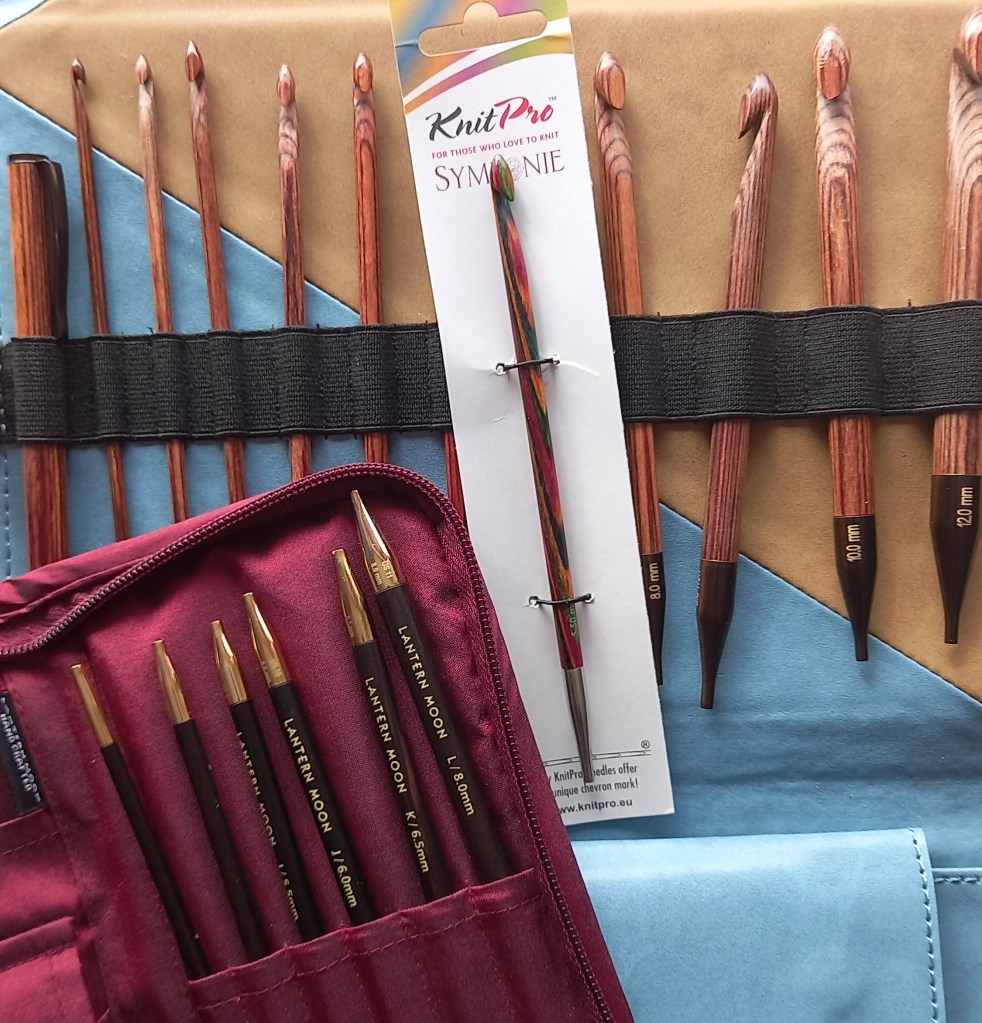
Tunisian hooks are either long, or shorter with a cable attached. I began with the KnitPro Symfonie interchangeable hooks (drawn in, I admit, by their colours). Over time, my collection has grown: a set of KnitPro Ginger hooks from my husband, which I love; a smaller set of Lantern Moon hooks, which come with the best cable key I’ve ever used; and an assortment of long, double-ended KnitPro Trendz hooks.
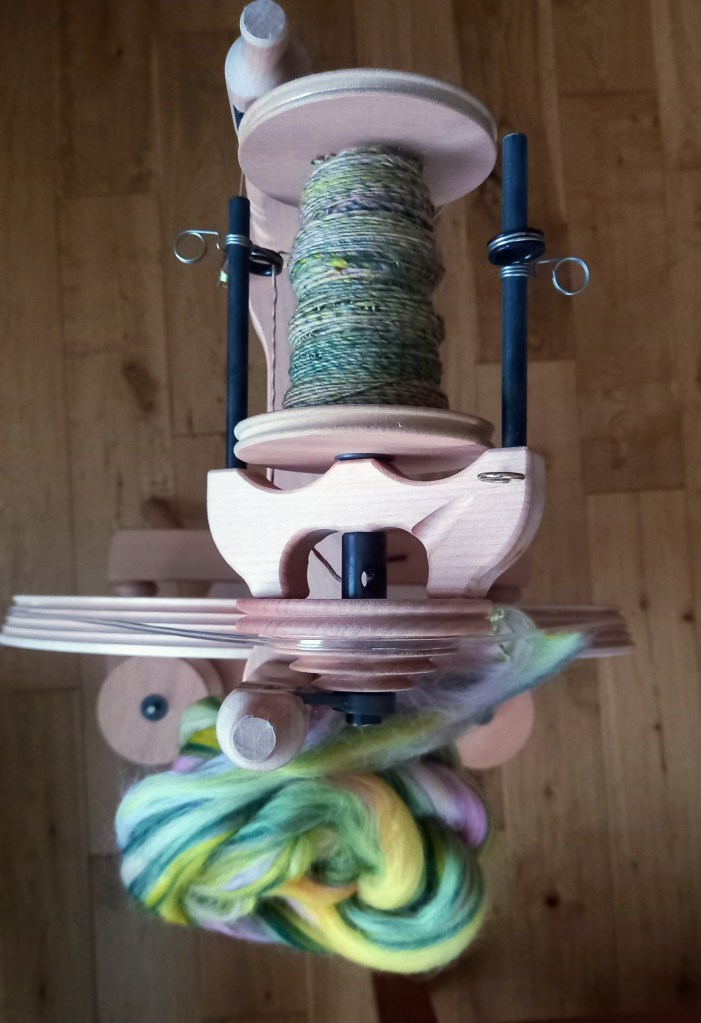
I also spin, and I’m the proud owner of an Ashford Traveller 3 spinning wheel. It’s a beautiful piece of equipment, and spinning with it feels both productive and meditative. I began with a simple drop spindle, which is still a wonderful, portable way to spin, but the wheel allows me to create yarn more efficiently while still enjoying the rhythm of the process.
Once the yarn is spun, I turn skeins into usable cakes using a yarn swift and a ball winder. Mine are the simplest (and cheapest) I could find—but they do their job perfectly well. Not every tool needs to be luxurious to be loved.
When it comes to weaving, alongside my rigid heddle loom and shuttles, the most unexpectedly useful item I own is a small wheeled trolley. It holds all my bits and pieces, moves easily to wherever I’m working, and—crucially—has space for a mug of coffee.
Because sometimes, the most valuable tools aren’t the obvious ones.
Over time, I’ve come to think of my tools not just as equipment, but as companions. Each has its own feel, its own purpose, and its own place in the rhythm of making.
Whatever tools you reach for, may they serve you well—and may they bring you joy in the making.
Happy crafting.

 Pearson Handmade